
Estimation Basic 5 Mathematics Lesson Note
Download Lesson NoteTopic: Estimation
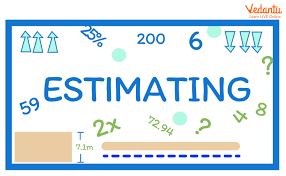
Learning Objectives: pupils should be able to
- Round up numbers to the nearest 10, 100 and whole numbers
- Rounding numbers to the nearest tenth, hundredth, and thousandth
- Estimate numbers to the nearest thousand
- Solve quantitative Aptitude problems related with binary numbers
Learning Activities:
- Pupils pupils with handful of coins, rice or beans. They are then asked how many are there without counting (estimation)
- Pupils in groups study and work on a concept of a grocery store or supermarket to practice estimation and approximation
Embedded Core Skills
- Critical thinking and problem solving skills
- Communication and Collaboration
- Leadership skills and Personal Development
Learning Resources
- Counting paper
- Number cards
- Sticky notes
- Flash cards
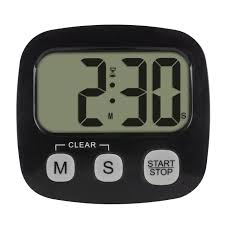
- Timer
- Whiteboard or blackboard
- Markers or pens
- Calculator

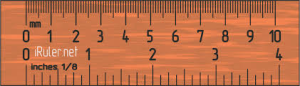
- Ruler/tape
Content
Estimation and Approximation in Mathematics
Estimation and approximation in mathematics are techniques used to find a value that is closest to a number, usually by rounding. Approximation is similar, but it refers to finding a value that is closer to but not necessarily equal to a “true” value. Both estimation and approximation can be used to simplify calculations and make them easier to work with.
Estimating can be considered as ‘roughly’ or roughly better than an educated or informed guess. If a person wants to know approximately how many people are in a 5 km crowd. Estimating or approximating, should give you an answer which is broadly correct, say to the nearest 50 or 100, if you are working with a bigger population.
How to round up numbers to the nearest 10
To round a number to the nearest 10, look at the ones digit. If the ones digit is 5 or more, round up. If the ones digit is 4 or less, round down.
- Identify the number you want to round.
- Look at the ones digit (the digit in the ones place) of the number.
- If the ones digit is 5 or greater, add 1 to the tens digit (the digit in the tens place) to round up to the nearest 10.
- If the ones digit is less than 5, leave the tens digit as it is and replace all the digits to the right of the tens digit with zeros.
- Replace all the digits to the right of the tens digit with zeros.
Examples:
- To round the number 23 to the nearest 10, we would look at the ones digit (3) and see that it is greater than 5. We would then add 1 to the tens digit (2) to get 3. And replace all the digits to the right of the tens digit with zeros, so the number rounded up to 30.
Rounding up to the nearest 10:
To round a number to the nearest 10, look at the ones digit. If the ones digit is 5 or more, round up. If the ones digit is 4 or less, round down. [the_ad id=”57209″]
| Number | Ones digit | Rounded to nearest 10 |
| 23 | 3 | 20 |
| 47 | 7 | 50 |
| 65 | 5 | 70 |
| 89 | 9 | 90 |
| 12 | 2 | 10 |
| 156 | 6 | 160 |
Examples:
- 23 → 20
- 47 → 50
- 65 → 70
Rounding up to the nearest 10:
- To round the number 23 to the nearest 10, we would look at the ones digit (3) and see that it is greater than 5. We would then add 1 to the tens digit (2) to get 3. And replace all the digits to the right of the tens digit with zeros, so the number rounded up to 30.
- To round the number 47 to the nearest 10, we would look at the ones digit (7) and see that it is greater than 5. We would then add 1 to the tens digit (4) to get 5. And replace all the digits to the right of the tens digit with zeros, so the number rounded up to 50.
- To round the number 65 down to the nearest 10, we would look at the ones digit (5) and see that it is equal to 5. We would then leave the tens digit (6) as is, and replace all the digits to the right of the tens digit with zeros, so the number rounded up to 70.
- To round the number 89 down to the nearest 10, we would look at the ones digit (9) and see that it is greater than 5. We would then add 1 to the tens digit (8) to get 9. And replace all the digits to the right of the tens digit with zeros, so the number rounded up to 90.
To round a number up to the nearest 100, you can follow these steps:
- Identify the number you want to round.
- Look at the last two digits (the digits in the tens and ones place) of the number.
- If the last two digits are 50 or greater, add 1 to the hundreds digit (the digit in the hundreds place) to round up to the nearest 100.
- If the last two digits are less than 50, leave the hundreds digit as is.
- Replace all the digits to the right of the hundreds digit with zeros.
For example, to round the number 157 up to the nearest 100, we would look at the last two digits (57) and see that it is greater than 50. We would then add 1 to the hundreds digit (1) to get 2. And replace all the digits to the right of the hundreds digit with zeros, so the number rounded up to 200.
Another example, to round the number 345 down to the nearest 100, we would look at the last two digits (45) and see that it is less than 50. We would then leave the hundreds digit (3) as is, and replace all the digits to the right of the hundreds digit with zeros, so the number rounded down to 300.
To round a number to the nearest 100, look at the tens digit. If the tens digit is 5 or more, round up. If the tens digit is 4 or less, round down.In comparison to rounding when rounding numbers you have to look at the number of decimal places you want to round to. In this case we are using two decimal places as we are rounding.
ROUNDING TO 10
| NumbEr | Rounded to nearest 10 |
| 23 | 20 |
| 47 | 50 |
| 65 | 70 |
| 89 | 90 |
Rounding up to the nearest 100:
- To round the number 157 up to the nearest 100, we would look at the last two digits (57) and see that it is greater than 50. We would then add 1 to the hundreds digit (1) to get 2. And replace all the digits to the right of the hundreds digit with zeros, so the number rounded up to 200.
- To round the number 345 down to the nearest 100, we would look at the last two digits (45) and see that it is greater than 50. We would then add 1 to the hundreds digit (3) to get 4. And replace all the digits to the right of the hundreds digit with zeros, so the number rounded up to 400.
- To round the number 678 down to the nearest 100, we would look at the last two digits (78) and see that it is greater than 50. We would then add 1 to the hundreds digit (6) to get 7. And replace all the digits to the right of the hundreds digit with zeros, so the number rounded up to 700.
- To round the number 234 down to the nearest 100, we would look at the last two digits (34) and see that it is less than 50. We would then leave the hundreds digit (2) as is, and replace all the digits to the right of the hundreds digit with zeros, so the number rounded down to 200.
- To round the number 567 down to the nearest 100, we would look at the last two digits (67) and see that it is greater than 50. We would then add 1 to the hundreds digit (5) to get 6. And replace all the digits to the right of the hundreds digit with zeros, so the number rounded up to 600.
How to round up and estimate decimal numbers to the nearest tenths, hundredths and thousandths
Round up a decimal number to the nearest tenth: you look at the digit in the hundredths place.
If the digit in the hundredths place is 5 or greater, you round up the digit in the tenths place by 1.
If the digit in the hundredths place is less than 5 or 4, you leave the digit in the tenths place as is.
You then remove all the digits to the right of the tenths place.
Round down and place zeros in their places.
[the_ad id=”40091″]
Example to understand and show better:
0.148053 | | | | | | T H Th
Where:
- T = tenths (0.1)
- H = hundredths (0.01)
- Th = thousandths (0.001)
To round 0.148053 to the nearest tenth, look at the next place value to the right (the hundredths place). In this case, the value of the digit in the place is 4. 4 is a number value 5 to make a decision about rounding. Since the digit in the hundredths place is 4 (which is less than 5), we round down.
For example: 0.148053 → 0.1 (4 < 5, so we round up to 0.1.)
To round a number to the nearest hundredth: look at the next place value to the right (the thousandths place). If the digit in the thousandths place is 5 or greater, you round up the digit in the hundredths place by 1. If the digit in the thousandths place is less than 5 or 4, you leave the digit in the hundredths place as is.
Exercises:
- What is 0.648 rounded to the nearest 10?
- 1
- What is 7.948 rounded to the nearest 100?
- 3
- What is 12.8956489 rounded to 3 decimal places?
- 12.896
- What is 12.8956489 rounded to 2 decimal places?
- 12.90
- What is 987 rounded to one significant figure?
- 1000
- What is 0.09 rounded to one significant figure?
- 0.09
- Estimate the value of 1.9 × 6:
- 12.0
- Estimate the value of 6.1 ÷ 3 = 6.1 ÷ 3:
- 2.0
- Round 1.79 to the nearest hundredth: 1.794 → 1.794 → 1.79 → 1.80 → 1.8 a. 1.794 b. 1.79 c. 1.80 d. 1.8
- Round 3.456 to the nearest tenth: a. 3.4 b. 3.5 c. 3.46 d. 3.456
- Round 2.678 to the nearest hundredth: a. 2.68 b. 2.67 c. 2.7 d. 2.68
- Round 4.999 to the nearest hundredth: a. 4.99 b. 5.00 c. 5.0 d. 5
- Round 7.235 to the nearest tenth: a. 7.2 b. 7.3 c. 7.24 d. 7.235
- Round 9.876 to the nearest whole number: a. 9 b. 10 c. 9.9 d. 9.88
- Round 6.445 to one significant figure: a. 6 b. 6.4 c. 6.45 d. 7
- Round 8.999 to the nearest hundredth: a. 8.99 b. 9.00 c. 9.0 d. 9
Second Term Mathematics Lesson Notes for Other Topics

Money
Explore lesson notes covering all topics.

Shopping
Explore lesson notes covering all topics.

Open Sentences
Explore lesson notes covering all topics.

Division Of Numbers
Explore lesson notes covering all topics.
Multiplication Of Three 1-Digit Numbers
Explore lesson notes covering all topics.
Multiplication Of Numbers
Explore lesson notes covering all topics.
Addition Of Fractions With Same Denominators
Explore lesson notes covering all topics.

Multiplication Of 2-Digit Numbers
Explore lesson notes covering all topics.
Introduction To Multiplication
Explore lesson notes covering all topics.
Open Sentences
Explore lesson notes covering all topics.

Odd And Even Numbers
Explore lesson notes covering all topics.
Subtraction Of Two 3-Digit Numbers
Explore lesson notes covering all topics.
Addition Of Two 3-Digit Numbers
Explore lesson notes covering all topics.
Subtraction With Regrouping
Explore lesson notes covering all topics.

Addition Of Two 2-Digit Numbers
Explore lesson notes covering all topics.

Lesson Notes for Other Classes

Basic 2 Lesson Note
The complete lesson note to guide your studies.
Basic 3 Lesson Note
The complete lesson note to guide your studies.

Basic 4 Lesson Note
The complete lesson note to guide your studies.

JSS1 Lesson Note
The complete lesson note to guide your studies.

JSS2 Lesson Note
The complete lesson note to guide your studies.

JSS3 Lesson Note
The complete lesson note to guide your studies.