
Deriving New Words And Meaning Basic 5 English Studies Lesson Note
Topic: Deriving New Words And Meaning
Learning Objectives
By the end of the lesson, pupils should be able to:
- Draw inferences from reading the passage ii. Differentiate between main ideas and supporting ideas from the given passage iii. Construct sentences from the given words and unfamiliar words from the Passage iv. Provide answers to the questions on the Comprehension passage v. Students will be able to define nationalism and nationalists vi. Students will be able to identify key figures and events in the history of nationalism movements in Nigeria vii. Students will be able to analyze the role of nationalism movements in shaping Nigeria’s political and social landscape
Learning Activities
- Pupils at least four of them, read the passage (a paragraph per student) and draw inferences from the passage ii. Pupils pair up to discuss the main ideas in the Comprehension passage iii. Pupils reflect on the passage by analyzing it in order to provide answers to the questions that follow the passage
Embedded Core Skills
- Communication and Collaboration ii. Critical thinking and problem solving iii. Leadership skills and Personal Development iv. Creativity and Imagination
Learning Materials
- Wall charts
- Audio player
- Video clip
- Wall charts
- Laptop
- Copies of comprehension passage on nationalism movements in Nigeria
- Review questions worksheet
Content
Nationalism can be defined as a sentiment that promotes the interests of a particular nation, especially with the aim of gaining and maintaining the nation’s sovereignty over its homeland. Nationalists, on the other hand, are individuals or groups who actively promote and defend the interests of their nation. In Nigeria, nationalism movements have played a significant role in the country’s history, shaping its political and social landscape.
Comprehension Passage: Nationalism in Nigeria
Nationalism in Nigeria can be traced back to the early 20th century, when the country was under British colonial rule. At the time, many Nigerians began to feel a sense of national consciousness and started to organize themselves to fight for independence. As a result, several nationalist movements emerged, such as the National Council of Nigeria and the Cameroons (NCNC) and the Action Group (AG).
These movements advocated for independence and self-government, and their efforts eventually led to Nigeria’s independence in 1960.
However, nationalism sentiment in Nigeria has not always been peaceful. The country has experienced periods of intense and religious tensions, and some nationalist movements have been accused of promoting divisive and discriminatory ideologies. Furthermore, the military coups and dictatorship that plagued the country in the past century were also influenced by nationalism sentiment.
Despite these challenges, nationalism sentiment in Nigeria has played a vital role in the country’s political and social development. Nationalists have fought for the rights and autonomy of their people, and have played a significant role in shaping the country’s political landscape.
Evaluation Questions:
- When did nationalist movements start to emerge in Nigeria?
- What is the National Council of Nigeria and the Cameroons (NCNC) and the Action Group (AG)?
- When did Nigeria gain independence?
- How did nationalism movements in Nigeria been viewed in the past?
- What role did Nationalism play in Nigeria’s political and social development?
- What were some challenges faced by Nationalism in Nigeria?
- What were some of the events that were influenced by Nationalism in Nigeria?
- Why has nationalism sentiment played a vital role in Nigeria’s political and social development?
- What is the relationship between Nationalism and self-rule in Nigeria?
- How do you think Nationalism will shape Nigeria’s future?
Foremost Nationalists in Nigeria
- Nnamdi Azikiwe: He was a journalist, politician, and the first indigenous Governor-General and President of Nigeria. He was one of the foremost nationalists in Nigeria and played a key role in the country’s struggle for independence and worked to unite the various ethnic groups in the country.

Obafemi Awolowo: He was a statesman, politician, and leader of the Yoruba people. He was one of the key figures in Nigeria’s struggle for independence and played a key role in the development of Nigeria’s democracy.

Ahmadu Bello: He was a statesman and the first premier of Northern Nigeria. He was a key figure in Nigeria’s struggle for independence and worked to unite the various ethnic groups in the country.
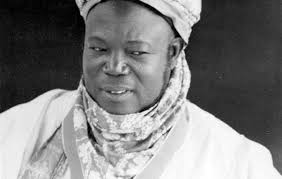
Tafawa Balewa: He was a statesman and the first Prime Minister of Nigeria. He played a key role in Nigeria’s struggle for independence and worked to unite the various ethnic groups in the country.

Herbert Macaulay: He was a surveyor, engineer, journalist, and politician. He was one of the first prominent Nigerian nationalists and was a key figure in the nationalist movement in Nigeria.
Anthony Enahoro: He was a journalist and politician. He was one of the key figures in the nationalist movement in Nigeria and played a key role in the country’s struggle for independence.
Aminu Kano: He was a politician and teacher. He was one of the key figures in Nigeria’s struggle for independence and worked to unite the various ethnic groups in Nigeria.
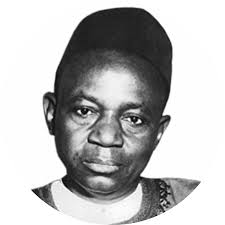
Samuel Akintola: He was a lawyer, teacher and politician. He was one of the key figures in Nigeria’s struggle for independence and served as the premier of the Western Region in Nigeria.
Funmilayo Ransome-Kuti: She was a journalist, politician, and women’s rights activist. She played a key role in Nigeria’s struggle for independence and worked to unite the various ethnic groups in the country.
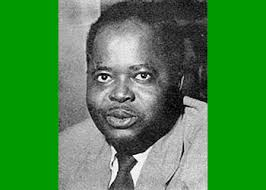
Michael Okpara: He was a medical doctor and politician. He was one of the key figures in Nigeria’s struggle for independence and worked to unite the various ethnic groups in the country.
Second Term English Studies Lesson Notes for Other Topics
Supplementary Reading
Explore lesson notes covering all topics.

Writing: Handwriting
Explore lesson notes covering all topics.

Oral And Written Comprehension
Explore lesson notes covering all topics.
Pronunciation Of Consonants And Consonant Clusters
Explore lesson notes covering all topics.

Structure: Making Simple Statements And Responding To Commands
Explore lesson notes covering all topics.

Oral And Written Comprehension
Explore lesson notes covering all topics.
Writing: Composition On What I Do On Sundays
Explore lesson notes covering all topics.

Pronunciation Of Consonants And Consonant Clusters
Explore lesson notes covering all topics.

Structure: Making Simple Statements And Responding To Commands
Explore lesson notes covering all topics.
Vocabulary Building
Explore lesson notes covering all topics.
Oral And Written Comprehension
Explore lesson notes covering all topics.
Structure: Regular And Irregular Plurals
Explore lesson notes covering all topics.
Vocabulary Building
Explore lesson notes covering all topics.

Vocabulary Building: Teaching Of New Words
Explore lesson notes covering all topics.

Structure: Use Of Auxiliary Verbs
Explore lesson notes covering all topics.

Lesson Notes for Other Classes

Basic 2 Lesson Note
The complete lesson note to guide your studies.
Basic 3 Lesson Note
The complete lesson note to guide your studies.

Basic 4 Lesson Note
The complete lesson note to guide your studies.

JSS1 Lesson Note
The complete lesson note to guide your studies.
JSS2 Lesson Note
The complete lesson note to guide your studies.
JSS3 Lesson Note
The complete lesson note to guide your studies.