
Windows, Doors, and Roofs: Building Components II – JSS3 Basic Technology Lesson Note (Second Term)
Download Lesson NoteLesson note at a glance
- Subject
- Basic Technology
- Class
- JSS3
- Term
- Second Term
- Topic
- Windows, Doors, and Roofs: Building Components II
- Order
- Topic 2 of 4 this term
- Reading time
- 6 min
Doors, and roofs.
Content
- Definition of Building Construction
- Types of Building
- Stages In Building Construction
- Doors
- Windows
Definition of Building construction:
These are the techniques and industries involved in the assembly and erection of structures. Early humans built primarily for shelter, using simple methods. Building materials came from the land, and fabrication was dictated by the limits of the materials and the builder’s hands. The erection sequence involved, as now, first placing a foundation (or using the ground). The builder erected the structural system; the structural material (masonry, mud, or logs) served as both skeleton and enclosure. Traditional bearing-wall and post-and-beam systems eventually gave way to framed structures, and builders became adept at sealing and fireproofing with a variety of claddings (exterior coverings) and finishes. Steel-framed buildings are usually enclosed by curtain walls. In modern-day construction, sheathing the skeleton of the building is only the beginning; specialists then begin the bulk of the work inside, installing plumbing, electrical wiring, HVAC (heating, ventilating, and air-conditioning), windows, floor coverings, plasterwork, mouldings, ceramic tile, cabinets, and other features.
Evaluation
- Define building construction
- Briefly explain important steps in building construction
Types of building
- Bungalow: It is a dwelling built in a style developed from that of a form of rural house in India. The original bungalow typically has one story, few rooms, and a maximum of cross drafts, with high ceilings, unusually large window and door openings, and verandas on all sides to shade the rooms from the intense light and tropical heat. A house that is built on one level
- One-storey building: A house that has a ground floor and the first floor only.
- Multi-story building: A house that has many levels.
- Skyscrapers: A very tall building.
- Detached building: A house that is joined with another building on one side.
- Semi-detached building: A house that is joined by another building on one side.
- Duplex: A house that is made up of two apartments.
- Mansion: A very large house.
- Terraced houses: These are blocks of building that are constructed together side by side.
Evaluation
- State 10 types of buildings and explain.
Stages in building construction
- Deciding on the types of buildings and where to locate them.
- Designing the building and producing the working drawings for the builders.
- Building operations:
- Setting out the size
- laying the foundation
- Erection of the walls
- Construction of the floors
- Roofing of the building.
Evaluation
- Briefly explain the blueprint of the above building plan
- State the stages of building construction
DOORS
A door is a movable barrier installed at the entry of a room or building to restrict access or provide visual privacy. Early doors were hides or textiles. With monumental architecture came pivoting doors of rigid, permanent materials; important chambers often had stone or bronze doors. Pompeiian doors looked much like modern wooden doors; they were constructed of stiles (vertical planks) and rails (horizontal planks) fastened together to support panels and occasionally equipped with locks and hinges. The typical Western medieval door was of vertical planks backed with horizontal or diagonal bracing. In the 20th century, a single, hollow-core panel door became most common. Other types include the revolving door, folding door, sliding door (inspired by the Japanese shoji), rolling door, and Dutch door (divided horizontally so that the lower or upper part can be opened separately).
Functions of doors
- They serve means of shutting and opening the entrance or exit.
- They serve as barriers against dangers and attacks
- They serve as protection of lives and properties.
- They serve as a means of ventilation.
Types of doors
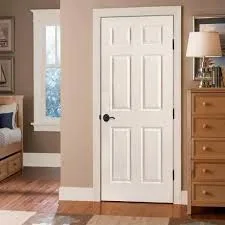
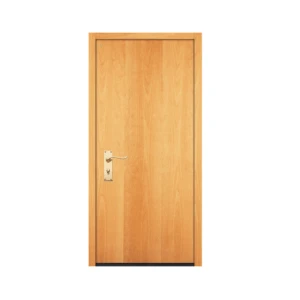
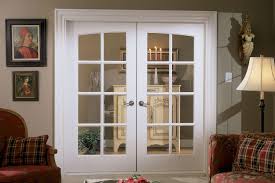
- Interior doors – These are doors used in inside a building or where security is not very much needed. Examples of interior doors include;
Panel doors
Flush doors
French doors
Louver doors

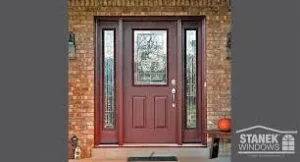
Exterior doors: They are used for decorative purposes only. They are carefully chosen to suit the architectural design of the building.
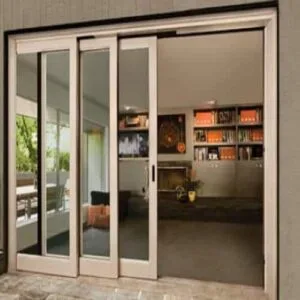
Sliding doors: They are space-saving doors, which are for closets in bedrooms.
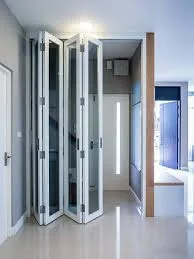
Folding Doors: These are doors, which are easily installed.
Revolving Doors: They are usually traffic control doors within a building

Evaluation
- State 4 functions of doors
- State 5 types of doors
WINDOWS
Windows, today, are more of architectural features rather than mere necessary openings in a wall.
Types of windows
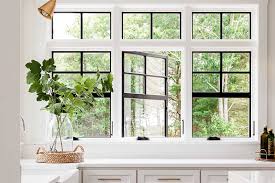
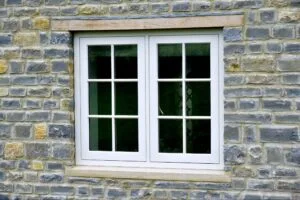
Casement windows
This is the oldest type of window frame that is made of wood or metal with a casement hung on one side of the frame to open out.
Louvre windows
These windows have glass blades divided into several glassing bars. Within the frame, louvre blades are opened and closed.

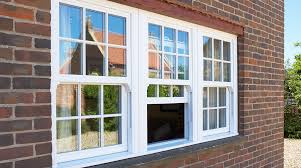
Sliding sash windows
In this type of window, the sashes are hung to slide vertically inside the frame. The main advantage of this type of window is that as sashes are suspended vertically, they do not tend to sink and lose shape as casements do.
Function of windows
- It is used for admitting light and air.
- It serves as a barrier to dangers and attacks.
- It is used to allow ventilation.
- It allows the inhabitants to see outside from within the building
We have the following architectural designed windows:
- Bull’s eye windows
- Semi-circular-headed windows.
- Cant bay windows
- Dormer windows
Roof
A roof is the top covering of a building or structure, protecting it from weather elements such as rain, snow, sunlight, and wind. Roofs are designed to shed water and prevent it from entering the building. Roofs can be constructed from materials like shingles, tiles, metal, or concrete, depending on factors such as climate, aesthetics, and budget.
Types of roof
The following are some common types of roofs:
- Gable Roof: It is a triangular-shaped roof with two sloping sides meeting at a ridge.
- Flat Roof: It is a virtually horizontal, often used in modern architecture.
- Mansard Roof: Has four sides with a double slope on each side, creating a distinct profile.
- Shed Roof: A single, sloping plane, commonly used for additions or modern designs.
- Hambrel Roof: It is similar to a mansard roof but with a steeper lower slope.
Uses of roof
Roofs serve several crucial functions in a building:
- Roofs shield the interior of a building from weather elements such as rain, snow, wind, and sunlight.
- Roofs provide structural support to the building, distributing its weight and ensuring stability.
- Insulated roofs help regulate indoor temperatures by minimizing heat transfer between the interior and exterior.
- The design and material of the roof contribute to the overall aesthetics of a building, enhancing its visual appeal.
- Roofs are designed to shed water efficiently, preventing water accumulation and potential damage to the structure.
- Well-designed roofs with appropriate insulation can contribute to energy efficiency by reducing heating and cooling needs.
- Roofs can serve as platforms for solar panels, harnessing renewable energy from the sun.
- Roof design can influence natural ventilation, helping to regulate airflow within the building.
Evaluation
- State 4 functions of windows
- State 5 types of windows
Reading Assignment
Read BUILDING CONSTRUCTION I
Reference Materials
- NERDC, Introductory Technology for JSS, book 3, pages 218 -228
- EVANS, Introductory Technology for JSS, book 3, pages 130 -138
Weekend Assignment
- The following are types of buildings except (a) Terraced house (b) Sheraton hotel (c) Bungalow (d) Skyscraper.
- Blocks of a building that are constructed together side by side are called ____ (a) Terraced house (b) one-story (c) Bungalow (d) Skyscraper.
- The following are building operations except (a) setting out (b) erection of walls (c) roofing (d) contracting.
- The type of floor that consists of a series of closely spaced reinforced I-beams framing into girders is called __ (a) one-way ribbed slab (b) one-way reinforced floors (c) two-way reinforced floors (d) pre-cast concrete floors.
- The following are examples of interior doors except for (a) panel doors (b) flush doors (c) French doors (d) revolving doors.
This term's Basic Technology topics
JSS3 Second Term · 4 topics
- Building Construction I: Building Components
- Windows, Doors, and Roofs: Building Components II
- Woodwork Projects: Woodwork Joints
- Foundation: Walls and Floors
Second Term Basic Technology Lesson Notes for Other Topics

Games - Basic Skills in Ball Games
Read the full lesson note.

Starting Up a Computer
Read the full lesson note.
Demonstrating Air in Space
Read the full lesson note.

Games (Local Games)
Read the full lesson note.

Parts of a Computer (Peripherals)
Read the full lesson note.

Air
Read the full lesson note.

Starting Up a Computer
Read the full lesson note.

Basic Safety for Computers
Read the full lesson note.

Safety Rules in Football Games
Read the full lesson note.
Light Energy, Uses of Light and Colour
Read the full lesson note.

Computer Room
Read the full lesson note.

Swimming (Aquatic)
Read the full lesson note.

Colour Identification 1 - Colours of Objects
Read the full lesson note.

Computer Room
Read the full lesson note.

Colour Identification II- Road Traffic Light Signs
Read the full lesson note.
Lesson Notes for Other Classes

Basic 1 Lesson Note
The complete lesson note to guide your studies.

Basic 2 Lesson Note
The complete lesson note to guide your studies.

Basic 3 Lesson Note
The complete lesson note to guide your studies.

Basic 4 Lesson Note
The complete lesson note to guide your studies.

Basic 5 Lesson Note
The complete lesson note to guide your studies.

Basic 6 Lesson Note
The complete lesson note to guide your studies.

