
Solar System Basic 6 Basic Technology Lesson Note
Download Lesson NoteTopic: Solar System
Learning Objectives
By the end of the lesson, pupils should be able to:
- Name and recognize natural bodies in the sky
- Identify components of the solar system
- List all planets in order
- Demonstrate that Earth exerts pull on objects
- Explain weightlessness in space
- Contrast objects on Earth vs space
Content
Natural Bodies in the Sky
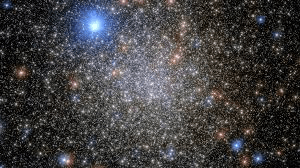
- Stars – Burning balls of gas
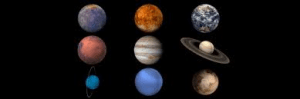
- Planets – Large bodies orbiting stars
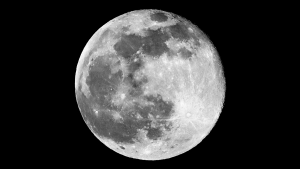
- Moons – Natural satellites orbiting planets
- Asteroids – Rocky objects
- Comets – Icy bodies with tails
- Meteoroids – Small space rocks
- Galaxies – Systems of billions of stars
- Nebulae – Gas and dust clouds
The Solar System
Components:
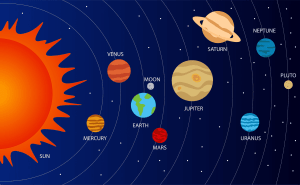
- The Sun (central star)
- Eight planets
- Dwarf planets (Pluto, Eris, Ceres, etc.)
- Moons (200+)
- Asteroid Belt (between Mars and Jupiter)
- Kuiper Belt (beyond Neptune)
- Oort Cloud (outermost region)
The Eight Planets (In Order)
Memory Aid: “My Very Educated Mother Just Served Us Noodles”
- MERCURY – Smallest, closest to Sun, no atmosphere
- VENUS – Hottest planet, thick atmosphere
- EARTH – Only planet with life, 71% water
- MARS – Red planet, has ice caps
- JUPITER – Largest planet, Great Red Spot
- SATURN – Famous rings, gas giant
- URANUS – Ice giant, rotates on side
- NEPTUNE – Farthest, strongest winds
Classification:
- Inner/Terrestrial: Mercury, Venus, Earth, Mars (rocky)
- Outer/Gas Giants: Jupiter, Saturn, Uranus, Neptune (gaseous)
Gravity
Definition: Force of attraction between objects with mass.
Key Points:
- More mass = stronger gravity
- Closer distance = stronger pull
- Keeps planets orbiting Sun
- Gives objects weight
- Creates tides on Earth
Earth’s Gravity:
- Acceleration: 9.8 m/s²
- Pulls everything toward center
- Keeps atmosphere in place
- Keeps us on ground
- Same for all objects (ignoring air resistance)
Gravity on Different Bodies:
| Body | Relative Gravity |
| Sun | 28× Earth |
| Jupiter | 2.5× Earth |
| Earth | 1 (reference) |
| Mars | 0.38× Earth |
| Moon | 0.17× Earth |
Weightlessness in Space
What it is:
- Condition where objects appear to have no weight
- Still affected by gravity
- Continuous free fall
- Microgravity environment
Why astronauts float:
- Spacecraft and astronaut fall together toward Earth
- Both falling at same rate
- Creates sensation of floating
- Gravity still present but effects not felt
Differences: Earth vs Space
| Aspect | On Earth | In Space |
| Weight | Objects have weight | Appear weightless |
| Movement | Gravity pulls down | Float freely |
| Liquids | Pour downward | Form spheres |
| Fire | Flame points up | Flame is spherical |
| Muscles | Support body | Weaken without use |
| Bones | Stay strong | Lose density |
Effects on Astronauts:
- Muscle atrophy
- Bone loss
- Fluid shift to head
- Height increase (spine stretches)
- Space sickness
Solutions:
- Exercise 2-3 hours daily
- Resistance training
- Special diet
- Calcium supplements
Second Term Basic Technology Lesson Notes for Other Topics
First Elements on Periodic Table
Explore lesson notes covering all topics.
Recreation
Explore lesson notes covering all topics.
Scratch - Conversation Program
Explore lesson notes covering all topics.
Gymnastics with Apparatus
Explore lesson notes covering all topics.
Computer Networks
Explore lesson notes covering all topics.

Physical Fitness
Explore lesson notes covering all topics.
Computer Networks Cont'd
Explore lesson notes covering all topics.
Colours
Explore lesson notes covering all topics.
Physical Fitness Cont'd
Explore lesson notes covering all topics.
Computer Networks Cont'd
Explore lesson notes covering all topics.
Scratch Programming I
Explore lesson notes covering all topics.
Introduction to Wood Hand Tools
Explore lesson notes covering all topics.
Gymnastics
Explore lesson notes covering all topics.
Scratch Programming II
Explore lesson notes covering all topics.
Water - Purifying Water
Explore lesson notes covering all topics.
Lesson Notes for Other Classes

Basic 2 Lesson Note
The complete lesson note to guide your studies.
Basic 3 Lesson Note
The complete lesson note to guide your studies.

Basic 4 Lesson Note
The complete lesson note to guide your studies.
Basic 5 Lesson Note
The complete lesson note to guide your studies.
JSS1 Lesson Note
The complete lesson note to guide your studies.
JSS2 Lesson Note
The complete lesson note to guide your studies.