
Colours Basic 6 Basic Technology Lesson Note
Download Lesson NoteTopic: Colours
Learning Objectives
By the end of the lesson, pupils should be able to:
- Mention and identify components of light (rainbow)
- Differentiate between primary and secondary colours
- Name objects with characteristic natural colours
- Mix colours practically
Content
Components of Light – The Spectrum
Visible Spectrum: When white light passes through a prism, it separates into seven colours forming a rainbow.
The Seven Colours (in order):
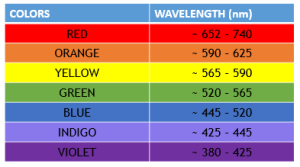
- Red – Longest wavelength (620-750 nm)
- Orange – (590-620 nm)
- Yellow – (570-590 nm)
- Green – (495-570 nm)
- Blue – (450-495 nm)
- Indigo – (425-450 nm)
- Violet – Shortest wavelength (380-425 nm)
Memory Aid: “Richard Of York Gave Battle In Vain” or “ROY G. BIV”
How Rainbows Form:
- Sunlight enters water droplets
- Light refracts (bends) entering droplet
- Light reflects inside droplet
- Light refracts again exiting
- Different wavelengths bend at different angles
- Creates spectrum of colours
Primary Colours
In Pigment/Paint (Subtractive Model):
- Red
- Yellow
- Blue
Characteristics:
- Cannot be created by mixing other colours
- All other colours come from these three
- Used in painting, printing, art
In Light (Additive Model):
- Red
- Green
- Blue
Used in: Screens (TV, computer, phone), stage lighting
Secondary Colours
Created by mixing two primary colours in equal proportions.
In Pigment/Paint:
- ORANGE = Red + Yellow
- GREEN = Yellow + Blue
- PURPLE/VIOLET = Red + Blue
In Light:
- Yellow = Red + Green light
- Cyan = Green + Blue light
- Magenta = Red + Blue light
Tertiary Colours
Created by mixing primary and secondary colours:
- Red-Orange
- Yellow-Orange
- Yellow-Green
- Blue-Green (Turquoise)
- Blue-Violet
- Red-Violet
The Colour Wheel
Relationships:
- Complementary colours: Opposite on wheel (Red & Green, Blue & Orange, Yellow & Purple)
- Analogous colours: Next to each other (harmonious)
- Warm colours: Red, Orange, Yellow (energetic)
- Cool colours: Blue, Green, Violet (calming)
Natural Colours in Objects
Why Objects Have Colour: Objects absorb some wavelengths and reflect others. The reflected colour is what we see.
Example – Red Apple:
- White light (all colours) hits apple
- Apple absorbs all colours except red
- Red light reflects to our eyes
- We see apple as red
Natural Colours Examples:
Plants:
- Grass/Leaves: Green (chlorophyll)
- Sunflowers: Yellow petals
- Roses: Red, pink, yellow, white
- Violets: Purple
Fruits:
- Bananas: Yellow (when ripe)
- Oranges: Orange
- Apples: Red, green, yellow
- Grapes: Purple, green
- Tomatoes: Red (when ripe)
- Watermelon: Green outside, red inside
Animals:
- Flamingos: Pink (from diet)
- Cardinals: Red
- Peacocks: Blue and green
- Tigers: Orange with black stripes
- Zebras: Black and white
- Parrots: Multiple bright colours
Natural Phenomena:
- Sky: Blue (light scattering)
- Sunset: Orange/Red (light through atmosphere)
- Ocean: Blue (absorbs red light)
- Clouds: White (scatter all light)
- Soil: Brown (organic matter)
Colour Mixing Experiments
Experiment 1: Primary to Secondary (Paint) Materials: Red, yellow, blue paint; palette; paper
- Mix red + yellow → Creates orange
- Mix yellow + blue → Creates green
- Mix blue + red → Creates purple
Experiment 2: Colour Intensity
- Add white to colour → Makes it lighter (tint)
- Add black to colour → Makes it darker (shade)
- Add grey to colour → Makes it duller (tone)
Experiment 3: Spinning Colour Wheel Materials: Cardboard circle, markers, pencil
- Divide circle into 7 sections
- Colour with rainbow colours
- Poke pencil through center
- Spin rapidly
- Colours blend to appear white/light grey
Applications of Colour Knowledge:
- Art and design
- Psychology (colours affect mood)
- Safety (warning colours)
- Nature (camouflage, attraction)
- Technology (RGB screens)
- Fashion and decoration
Second Term Basic Technology Lesson Notes for Other Topics
Games - Basic Skills in Ball Games
Explore lesson notes covering all topics.
Starting Up a Computer
Explore lesson notes covering all topics.

Demonstrating Air in Space
Explore lesson notes covering all topics.
Games (Local Games)
Explore lesson notes covering all topics.

Parts of a Computer (Peripherals)
Explore lesson notes covering all topics.
Air
Explore lesson notes covering all topics.

Starting Up a Computer
Explore lesson notes covering all topics.

Basic Safety for Computers
Explore lesson notes covering all topics.
Safety Rules in Football Games
Explore lesson notes covering all topics.

Light Energy, Uses of Light and Colour
Explore lesson notes covering all topics.

Computer Room
Explore lesson notes covering all topics.
Swimming (Aquatic)
Explore lesson notes covering all topics.
Colour Identification 1 - Colours of Objects
Explore lesson notes covering all topics.

Computer Room
Explore lesson notes covering all topics.

Colour Identification II- Road Traffic Light Signs
Explore lesson notes covering all topics.
Lesson Notes for Other Classes

Basic 1 Lesson Note
The complete lesson note to guide your studies.

Basic 2 Lesson Note
The complete lesson note to guide your studies.

Basic 3 Lesson Note
The complete lesson note to guide your studies.

Basic 4 Lesson Note
The complete lesson note to guide your studies.
Basic 5 Lesson Note
The complete lesson note to guide your studies.

JSS1 Lesson Note
The complete lesson note to guide your studies.