
Action Of Running Water SS2 Geography Lesson Note
Download Lesson NoteTopic: Action Of Running Water
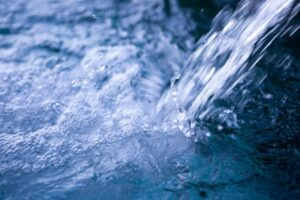
Running water is one of the most important agents of denudation. Rivers are involved in erosion, transportation and deposition of materials.
TERMS ASSOCIATED WITH RIVERS
- Source Of A River: The source of a river refers to where a river starts or begins, usually around highlands.
- Course Of A River: This refers to the path or channel through which the river flows.
- Mouth of a River: This is where the river ends or where it enters into the sea, ocean or lake.
- River Basin Or Catchment Area: It refers to all the areas drained by a river and its tributaries.
- Watershed Or Water Divide: It is the highland area which separates two or more rivers or two river basins. It is from the watershed that rivers take their sources.
- River Regime: This refers to the seasonal changes in the volume of water in a river in a year. It could be a single regime where there is one period of high volume and one period of low volume and a double regime where there are two distinct periods of high volume of water in a year. Knowledge of a river regime is important to man in controlling floods, storing up water for irrigation and human consumption and also for planning H.E.P production.
- Confluence Of A River: This refers to the meeting point of two rivers.

8. Tributaries: These are smaller rivers or streams that join together to form a larger river.
9. Distributaries: These are channels formed by the division of a river as it flows into the sea. They are usually found in the delta region of a river.
10. River Energy: It refers to the velocity of a river. The efficiency of a river to erode and transport the eroded materials depends very much on its velocity.
FACTORS AFFECTING THE VELOCITY OF A RIVER
- The volume of water released.
- Slope of the river valley.
- Shape of the river valley.
- Amount and size of materials.
STAGES OF A RIVER
The entire length, valley or course of a river is divided into three main stages:
- The upper course or mountain course (Youthful stage).
- The middle course or valley course (Mature stage).
- The lower course or plain course (Old stage).

- UPPER COURSE OF A RIVER
Characteristics Of the Upper Course Of A River:
- It marks the beginning or source of a River.
- It is found around highland areas.
- It has steep sides.
- The river flows swiftly down the steep slope.
- The dominant work of the river is vertical corrosion or erosion.
Processes Of River Erosion
The load or materials carried by a river are the main agents of erosion, but the erosive work of a river consists of four processes. These are:
a) Hydraulic action: In this process, fast-flowing water forces itself into cracks and joints within the valley under pressure and enlarges the cracks.
b) Corrosion: Corrosion is the wearing away of the sides and floor of the river with the aid of sand, pebbles, silts and boulders which are being transported. These materials eventually widen and deepen the river valley.
c) Attrition: This is the wearing down of the load as they collide with one another and with the floor and side of the valley. Large boulders are broken down into small pieces like pebbles.
d) Solution: This refers to the chemical action of water on materials it comes in contact with while flowing. Here, rock salt is dissolved and carried away in solution.
FEATURES OF UPPER COURSE OF A RIVER
- V-Shaped Valley
- Gorge
- River Capture
- Rapid and Cataracts
- Waterfall
- MIDDLE COURSE OF A RIVER
Characteristics of Middle Course of a River
- Lateral erosion is dominant over vertical erosion, resulting in the widening of the river valley.
- There is an increase in the volume of water due to the addition of more water from tributaries.
- There is an increase in the load of the river.
- The work of the river is mainly transportation with little deposition.
Processes Of River Transportation
The load of a river is carried or transported along the course of a river through four main processes. These are:
a) Solution
b) Suspension
c) Saltation
d) Traction
Features Of Middle Course Of A River
- Wide V-shaped Valley
- Meander
- River Cliff and Slip – off Slopes
- Interlocking Spur
- LOWER COURSE OF A RIVER
Characteristics Of The Lower Course Of A River
- The main work of the river is the deposition of materials.
- There is active lateral erosion.
- There is a lowering of the gradient of the valley floor.
- There is a drastic reduction in the speed of the river.
Features Of the Lower Course Of A River:
- Flood plain
- Levees
- Ox-bow lake
- Braided River
- Delta
DRAINAGE PATTERN
A river system which includes the main river and its tributaries may develop certain patterns from their basin and the types of drainage patterns include:
- Dendritic Drainage Pattern: In this type, the tributaries called the subsequent rivers join the main river called the consequent river at an oblique angle. It is a tree-like structure i.e. like branches of a tree which develop on homogenous rocks of bed.
- Trellised Drainage Pattern: This is formed due to the alternate layers of hard and soft rocks, resulting in the tributaries following the pattern of the rock structure and an angle to the main river in the form of a rectangular shape.
- Radial Drainage Pattern: The streams or tributaries flow outward and down the hill thus giving rise to a radial drainage pattern like the shape of a bicycle wheel.
- Centripetal Drainage Pattern: In this type, many rivers or streams flow from different directions into a lake.
- Annular Drainage Pattern: The main stream or river almost forms a concentric ring around a highland i.e. it almost flows around or encircles a hill.
IMPORTANCE OF RIVERS
- Medium of transportation.
- Generation of hydroelectric power (H.E.P) where rapids and waterfalls exist.
- It provides water for irrigation purposes.
- Provision of water for domestic and industrial purposes.
- Formation of floodplains by rivers also provides fertile soil for agricultural activities.
- Rivers provide food e.g. fish, prawns, crabs, etc.
- It employs many people e.g. fishermen and canoe builders.
- Some rivers act as political boundaries between states, regions and nations.
- Some rivers are centres of tourist attraction and may generate foreign exchange.
ASSIGNMENT
- With the aid of a diagram, describe river piracy.
- With the aid of a diagram, describe the oxbow lake.
First Term Geography Lesson Notes for Other Topics

Action Of Wind
Explore lesson notes covering all topics.

Glacial Action
Explore lesson notes covering all topics.

Action Of Wave
Explore lesson notes covering all topics.

Climate & Climate Classification
Explore lesson notes covering all topics.

Climate & Climate Classification II
Explore lesson notes covering all topics.

Vegetation
Explore lesson notes covering all topics.

Environmental Resources
Explore lesson notes covering all topics.

Renewable And Non-Refundable Resources
Explore lesson notes covering all topics.

Environmental Problems
Explore lesson notes covering all topics.

Rocks
Explore lesson notes covering all topics.
Mountains
Explore lesson notes covering all topics.

Lowlands
Explore lesson notes covering all topics.

The Environment - Ecosystem & Its Component
Explore lesson notes covering all topics.
Geography: An Introduction
Explore lesson notes covering all topics.
The Earth's Structure
Explore lesson notes covering all topics.

Lesson Notes for Other Classes

Basic 2 Lesson Note
The complete lesson note to guide your studies.
Basic 3 Lesson Note
The complete lesson note to guide your studies.

Basic 4 Lesson Note
The complete lesson note to guide your studies.
Basic 5 Lesson Note
The complete lesson note to guide your studies.

JSS1 Lesson Note
The complete lesson note to guide your studies.

JSS2 Lesson Note
The complete lesson note to guide your studies.