
Assets And Liabilities SS1 Book Keeping Lesson Note
Download Lesson NoteTopic: Assets And Liabilities
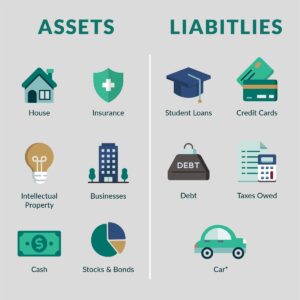
WHAT ARE ASSETS?
These are the resources, properties or possessions owned by the business as well as what other people or firms owed the business. Examples are Land and Buildings, Motor Vehicles, Furniture, Equipment, Machinery, Tools, Stock, Cash at hand, Cash at the Bank, Debtors etc. Assets can be divided into fixed assets and current assets.
Fixed Assets are long-lasting assets which are acquired for use rather than for resale. Fixed assets help the business to earn revenue. Examples are Land and Buildings, Plants, Machinery, Motor Vehicles, Furniture, Fittings, Tools, Equipment etc.
Current Assets are assets which are usually held by the business for a short period. They are usually converted from one form to another in the course of business. Current assets are either in the form of cash or can be turned into cash relatively easily. Examples are Stock (Inventory), Trade Debtors (or Sundry Debtors), Bank and Cash.
WHAT ARE LIABILITIES?
These are obligations arising from past transactions. It is a claim by outsiders on the assets of the business. Liabilities represent what the business owes other people or firms. Liabilities can be classified as current liabilities and long-term liabilities.
Current Liabilities are short-term liabilities. They are the amounts owed by the business which are due for settlement (repayment) within the next twelve months (i.e. one year) of the date of the Balance Sheet. Examples are Trade Creditors (or Sundry Creditors), Bank Overdrafts etc.
Long – Long-term liabilities are amounts owed by the business which are not due for repayment within the next twelve months (i.e. one year) of the date of the Balance Sheet. Examples are Long-term loans, Mortgages, Debentures etc
DIFFERENCES BETWEEN ASSETS AND LIABILITIES
The key difference between assets and liabilities is that assets are resources that a company owns, while liabilities are financial obligations that a company owes to others. In other words, assets represent what a company has, while liabilities represent what a company owes. A company’s goal is to have more assets than liabilities, which will make it financially stable and able to meet its obligations.

First Term Book Keeping Lesson Notes for Other Topics
Source Documents
Explore lesson notes covering all topics.

Debtors And Creditors
Explore lesson notes covering all topics.

Business Transactions
Explore lesson notes covering all topics.

Stock Valuation
Explore lesson notes covering all topics.
Introduction To Bookkeeping
Explore lesson notes covering all topics.
Business Organization
Explore lesson notes covering all topics.
Business Organization II - Sole Trader, Partnership & Limited Liability Companies
Explore lesson notes covering all topics.
Purchase of Business
Explore lesson notes covering all topics.
Departmental and Branch Account
Explore lesson notes covering all topics.

Hire Purchase
Explore lesson notes covering all topics.

Product and Service Marketing
Explore lesson notes covering all topics.


Lesson Notes for Other Classes

JSS1 Lesson Note
The complete lesson note to guide your studies.

JSS2 Lesson Note
The complete lesson note to guide your studies.
SS2 Lesson Note
The complete lesson note to guide your studies.

SS3 Lesson Note
The complete lesson note to guide your studies.