
Perimeters and Areas of Plane Shapes – Basic 6 Mathematics Lesson Note (Second Term)
Download this term · ₦1,000Lesson note at a glance
- Subject
- Mathematics
- Class
- Basic 6
- Term
- Second Term
- Topic
- Perimeters and Areas of Plane Shapes
- Order
- Topic 8 of 9 this term
- Reading time
- 4 min
Regular Shapes – Formulas and Properties
Rectangle

Properties:
- 4 sides, opposite sides equal
- 4 right angles (90°)
- Opposite sides parallel
Formulas:
- Perimeter = 2(length + width)
- Area = length × width
Square
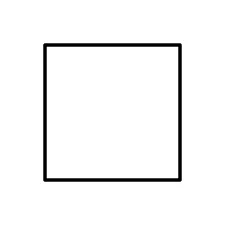
Properties:
- 4 equal sides
- 4 right angles (90°)
- All sides parallel to opposite sides
Formulas:
- Perimeter = 4 × side
- Area = side × side = side²
Triangle
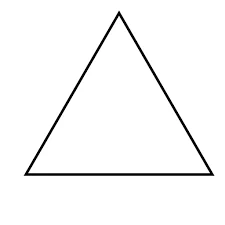
Properties:
- 3 sides, 3 angles
- Sum of angles = 180°
Formulas:
- Perimeter = side 1 + side 2 + side 3
- Area = ½ × base × height
Parallelogram
Properties:
- Opposite sides equal and parallel
- Opposite angles equal
- Adjacent angles add up to 180°
Formulas:
- Perimeter = 2(length + width)
- Area = base × height
Trapezium
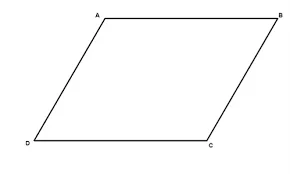
Properties:
- One pair of parallel sides
- Non-parallel sides may be equal or unequal
Formulas:
- Perimeter = sum of all four sides
- Area = ½ × (sum of parallel sides) × height
Circle
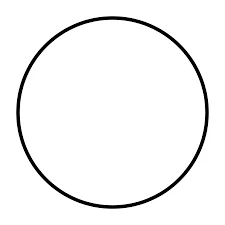
Properties:
- All points on edge are equal distance from center
- No corners or sides
Formulas:
- Perimeter (Circumference) = 2πr or πd
- Area = πr²
- π ≈ 3.14 or 22/7
Exercise A – Regular Shape Properties
Match each shape with its properties:
- Rectangle – ________________
- Square – ________________
- Circle – ________________
- Parallelogram – ________________
Properties to choose from:
- All points equal distance from center
- 4 equal sides, 4 right angles
- Opposite sides equal and parallel, 4 right angles
- Opposite sides equal and parallel, opposite angles equal
Exercise B – Perimeter Calculations
Find the perimeter of these shapes:
- Rectangle: length = 8 cm, width = 5 cm Perimeter: ______ cm
- Square: side = 7 cm Perimeter: ______ cm
- Triangle: sides = 6 cm, 8 cm, 10 cm Perimeter: ______ cm
- Circle: radius = 14 cm (use π = 22/7) Perimeter: ______ cm
- Parallelogram: length = 12 cm, width = 7 cm Perimeter: ______ cm
- Trapezium: sides = 5 cm, 8 cm, 6 cm, 9 cm Perimeter: ______ cm
Exercise C – Area Calculations
Find the area of these shapes:
- Rectangle: length = 12 cm, width = 8 cm Area: ______ cm²
- Square: side = 9 cm Area: ______ cm²
- Triangle: base = 10 cm, height = 6 cm Area: ______ cm²
- Circle: radius = 7 cm (use π = 22/7) Area: ______ cm²
- Parallelogram: base = 15 cm, height = 8 cm Area: ______ cm²
- Trapezium: parallel sides = 12 cm and 8 cm, height = 5 cm Area: ______ cm²
Mixed Problems – Regular Shapes
Exercise D – Shape Comparisons
Compare areas and perimeters:
- Shape A: Square with side 6 cm Shape B: Rectangle with length 8 cm, width 4 cm Which has larger area? ______ Which has larger perimeter? ______
- Circle: radius = 10 cm Square: side = 10 cm Which has larger area? ______ (use π = 3.14) Which has larger perimeter? ______
Exercise E – Finding Missing Measurements
Use area or perimeter to find missing dimensions:
- Rectangle: Area = 72 cm², length = 9 cm Width: ______ cm
- Square: Perimeter = 36 cm Side: ______ cm
- Circle: Area = 154 cm² (use π = 22/7) Radius: ______ cm
- Triangle: Area = 24 cm², base = 8 cm Height: ______ cm
- Parallelogram: Area = 56 cm², height = 7 cm Base: ______ cm
Irregular Shapes
Finding Area of Irregular Shapes
Methods:
- Divide into regular shapes
- Count squares on grid paper
- Subtract areas (for shapes with holes)
Example: L-shaped Figure
Break into two rectangles:
- Rectangle 1: 8 cm × 3 cm = 24 cm²
- Rectangle 2: 5 cm × 4 cm = 20 cm²
- Total Area = 24 + 20 = 44 cm²
Exercise F – Irregular Shapes
Find areas by breaking into regular shapes:
- T-shaped figure:
- Top rectangle: 12 cm × 3 cm
- Bottom rectangle: 4 cm × 8 cm Total Area: ______ cm²
- House shape:
- Rectangle base: 10 cm × 8 cm
- Triangle roof: base 10 cm, height 6 cm Total Area: ______ cm²
- L-shaped garden:
- Large rectangle: 15 m × 8 m
- Small rectangle cut out: 5 m × 3 m Remaining Area: ______ m²
- Plus sign (+):
- Horizontal rectangle: 15 cm × 5 cm
- Vertical rectangle: 5 cm × 15 cm
- Overlap: 5 cm × 5 cm Total Area: ______ cm² (subtract overlap)
Real Life Problems
Exercise G – School and Classroom
Solve these practical problems:
- Classroom Floor: A rectangular classroom is 12 meters long and 8 meters wide. What area of tiles is needed to cover the floor? Answer: ______ m²
- School Compound: A square school compound has perimeter 400 meters. What is the area of the compound? Answer: ______ m²
- Circular Flower Bed: A circular flower bed has radius 3.5 meters. How much fencing is needed around it? (use π = 22/7) Answer: ______ meters
- Basketball Court: A rectangular basketball court is 28 meters long and 15 meters wide. What is its area and perimeter? Area: ______ m² Perimeter: ______ m
Exercise H – Home and Garden
Apply to household situations:
- Rectangular Garden: Mama wants to fence a rectangular garden 20 meters by 15 meters. How much fencing does she need? Answer: ______ meters
- Circular Pond: A circular fish pond has diameter 14 meters. What is its area? (use π = 22/7) Answer: ______ m²
- Living Room Carpet: A living room is 6 meters by 4 meters. Carpet costs ₦2,500 per square meter. What is the total cost? Answer: ₦______
- Triangular Plot: A triangular plot of land has base 50 meters and height 30 meters. What is its area? Answer: ______ m²
Exercise I – Construction and Planning
Solve building-related problems:
- House Foundation: A house foundation is rectangular, 15 m by 12 m, with a circular pool of radius 3 m inside. What area needs concrete? (use π = 3.14) Answer: ______ m²
- Parking Lot: A rectangular parking lot is 40 m by 25 m. If each car space is 3 m by 5 m, how many cars can park? Answer: ______ cars
- Sports Field: A football field is 100 m by 64 m. It needs grass costing ₦500 per m². What is the total cost? Answer: ₦______
Exercise J – Farm and Agriculture
Apply to farming scenarios:
- Rice Field: A farmer has a rectangular rice field 200 m by 150 m. What is the area in hectares? (1 hectare = 10,000 m²) Answer: ______ hectares
- Circular Farm: A circular farm has radius 100 meters. How much fencing is needed around it? (use π = 3.14) Answer: ______ meters
- Mixed Crops: A rectangular farm (80 m × 60 m) is divided equally for maize and yam. What area is used for each crop? Answer: ______ m² each
Answer Key
Exercise B:
- 26 cm, 2. 28 cm, 3. 24 cm, 4. 88 cm, 5. 38 cm, 6. 28 cm
Exercise C:
- 96 cm², 2. 81 cm², 3. 30 cm², 4. 154 cm², 5. 120 cm², 6. 50 cm²
Exercise D:
- Shape A (36 cm² vs 32 cm²), Equal (24 cm each)
- Circle (314 cm² vs 100 cm²), Circle (62.8 cm vs 40 cm)
Exercise E:
- 8 cm, 2. 9 cm, 3. 7 cm, 4. 6 cm, 5. 8 cm
Exercise F:
- 68 cm², 2. 110 cm², 3. 105 m², 4. 100 cm²
Exercise G:
- 96 m², 2. 10,000 m², 3. 22 meters, 4. 420 m², 86 m
Exercise H:
- 70 meters, 2. 154 m², 3. ₦60,000, 4. 750 m²
Exercise I:
- 151.74 m², 2. 66 cars, 3. ₦3,200,000
Exercise J:
- 3 hectares, 2. 628 meters, 3. 2,400 m² each
This term's Mathematics topics
Basic 6 Second Term · 9 topics
- Revision of First Term’s Topic
- Ratio and Proportion
- Percentages
- Indices
- Open Sentences
- Length and Pythagoras Rule
- Commercial Arithmetic: Money
- Perimeters and Areas of Plane Shapes
- Weight
Get Mathematics as PDF and Word
Every week of Basic 6 Mathematics, Second Term, formatted and ready to print. Ad-free, and the copy lock comes off.
Get this term Card, bank transfer, USSD or OPay
Basic 6 Mathematics Lesson Notes for Other Topics
Revision of First Term's Topic
Read the full lesson note.
Ratio and Proportion
Read the full lesson note.
Percentages
Read the full lesson note.
Indices
Read the full lesson note.
Open Sentences
Read the full lesson note.
Length and Pythagoras Rule
Read the full lesson note.
Commercial Arithmetic - Money
Read the full lesson note.
Weight
Read the full lesson note.

Whole Numbers
Read the full lesson note.
Addition and Subtraction of Whole Numbers
Read the full lesson note.
Addition and Subtraction of Whole Numbers
Read the full lesson note.
Division of Whole Numbers
Read the full lesson note.
L.C.M and H.C.F
Read the full lesson note.

Fractions and Decimals
Read the full lesson note.
Order of Basic Operation
Read the full lesson note.
Lesson Notes for Other Classes

Basic 1 Lesson Note
The complete lesson note to guide your studies.

Basic 2 Lesson Note
The complete lesson note to guide your studies.

Basic 3 Lesson Note
The complete lesson note to guide your studies.

Basic 4 Lesson Note
The complete lesson note to guide your studies.

Basic 5 Lesson Note
The complete lesson note to guide your studies.
