
Rocks Basic 5 Basic Science Lesson Note
Download Lesson NoteTopic: Rocks
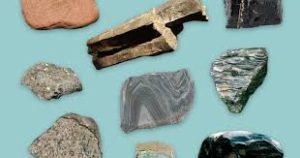
Learning Objectives: By the end of the lesson, pupils should be able to:
- Explain the meaning of rock
- Identify rocks and classify rocks
- Enumerate the uses of rocks
- Mention some landmark rocks in Nigeria
- Classify landmark rocks in Nigeria
What are Rocks?
Rocks are naturally occurring solid substances made up of one or more minerals. They form the Earth’s crust and are found everywhere on our planet – on land, under oceans, and even deep underground.
Key characteristics of rocks:
- Natural formation – Created by natural processes over long periods
- Solid substances – Hard, firm materials (though some can be soft)
- Made of minerals – Contain one or more mineral components
- Different sizes – Range from tiny pebbles to massive mountains
- Varied appearance – Come in many colors, textures, and shapes
How rocks are formed:
- Heat and pressure – Underground forces change existing rocks
- Cooling of molten material – Hot liquid rock cools and hardens
- Accumulation of sediments – Layers of materials compress over time
- Chemical processes – Minerals crystallize and bond together
Classification of Rocks:
CLASSIFICATION BY FORMATION PROCESS:
- IGNEOUS ROCKS
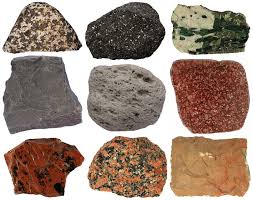
- Formation: Created when molten rock (magma or lava) cools and hardens
- Types:
- Intrusive – Cooled slowly underground (granite, diorite)
- Extrusive – Cooled quickly on surface (basalt, obsidian)
- Characteristics: Usually hard, crystalline structure
- Examples: Granite, basalt, pumice, obsidian
- SEDIMENTARY ROCKS
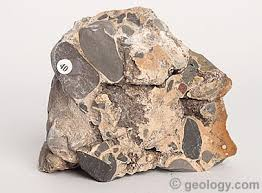
- Formation: Formed from layers of sediments pressed together over time
- Process: Weathering → Transport → Deposition → Compression
- Characteristics: Often layered, may contain fossils
- Examples: Sandstone, limestone, shale, conglomerate
- METAMORPHIC ROCKS
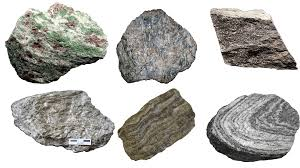
- Formation: Existing rocks changed by heat and pressure
- Process: Original rock → Heat/Pressure → New rock
- Characteristics: Changed texture and mineral composition
- Examples: Marble (from limestone), slate (from shale), quartzite (from sandstone)
CLASSIFICATION BY COLOR:
Light-Colored Rocks:
- White rocks: Marble, white limestone, quartz
- Light gray rocks: Granite, light sandstone
- Pink rocks: Pink granite, rose quartz
- Cream/beige rocks: Some limestone, light sandstone
Medium-Colored Rocks:
- Brown rocks: Some sandstone, mudstone
- Gray rocks: Slate, some granite
- Green rocks: Some marble, serpentine
- Yellow rocks: Some sandstone, sulfur-bearing rocks
Dark-Colored Rocks:
- Black rocks: Basalt, obsidian, coal
- Dark gray rocks: Some granite, slate
- Dark green rocks: Some metamorphic rocks
- Red rocks: Red sandstone, some granite
CLASSIFICATION BY HARDNESS:
Very Hard Rocks (Difficult to scratch):
- Granite – Very hard igneous rock
- Quartzite – Extremely hard metamorphic rock
- Basalt – Hard volcanic rock
- Gneiss – Hard metamorphic rock
Medium Hard Rocks:
- Sandstone – Moderately hard sedimentary rock
- Marble – Medium hardness metamorphic rock
- Slate – Fairly hard metamorphic rock
Soft Rocks (Easy to scratch or crumble):
- Limestone – Relatively soft sedimentary rock
- Chalk – Very soft form of limestone
- Shale – Soft sedimentary rock
- Coal – Soft sedimentary rock
CLASSIFICATION BY TEXTURE:
Coarse-Grained Texture:
- Large crystals visible to naked eye
- Examples: Granite, conglomerate, some marble
- Formation: Slow cooling allows large crystals to form
Fine-Grained Texture:
- Small crystals need magnification to see
- Examples: Basalt, fine-grained limestone
- Formation: Quick cooling creates small crystals
Glassy Texture:
- No visible crystals smooth, glass-like surface
- Examples: Obsidian, pumice
- Formation: Very rapid cooling
Layered Texture:
- Visible layers or bands of different materials
- Examples: Sedimentary rocks, some metamorphic rocks
- Formation: Deposition in layers over time
Uses of Rocks:
CONSTRUCTION USES:
Building Materials:
- Granite – Kitchen countertops, monuments, building facades
- Marble – Flooring, sculptures, decorative elements
- Limestone – Cement production, building blocks
- Sandstone – Building blocks, paving stones
- Slate – Roofing tiles, flooring, blackboards
Infrastructure:
- Crushed stone – Road construction, concrete aggregate
- Gravel – Drainage, concrete mixing, road surfaces
- Sand – Concrete, mortar, glass production
- Clay – Bricks, ceramics, pottery
BEAUTIFICATION USES:
Landscaping:
- Decorative stones – Garden borders, pathways
- Rock gardens – Ornamental arrangements
- Water features – Fountains, ponds, waterfalls
- Retaining walls – Functional and attractive boundaries
Art and Decoration:
- Sculptures – Carved from marble, granite, soapstone
- Jewelry – Precious and semi-precious stones
- Ornamental objects – Vases, decorative items
- Monuments – Memorials, statues, landmarks
INDUSTRIAL USES:
Manufacturing:
- Glass production – Sand (silica) as main ingredient
- Metal extraction – Iron ore, bauxite for metals
- Chemical industry – Limestone for chemicals, salt for various processes
- Electronics – Quartz for electronic components
Energy:
- Coal – Fuel for electricity generation
- Oil shale – Source of petroleum products
- Uranium ore – Nuclear fuel
- Geothermal – Hot rocks for energy
AGRICULTURAL USES:
- Soil amendment – Limestone to reduce soil acidity
- Fertilizer production – Phosphate rock for fertilizers
- Animal feed – Limestone as calcium supplement
- Drainage – Gravel for field drainage systems
Major Landmark Rocks in Nigeria:
NORTHERN NIGERIA:
- Zuma Rock (Niger State)
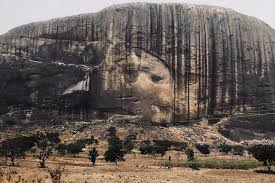
- Type: Igneous rock (granite)
- Classification: Intrusive igneous, light-colored, very hard, coarse-grained
- Location: Near Abuja, along Abuja-Kaduna highway
- Description: Massive granite monolith, approximately 725 meters high
- Significance: National landmark, appears on Nigerian currency
- Features: Human face-like appearance on the surface
- Aso Rock (Federal Capital Territory)

- Type: Igneous rock (granite)
- Classification: Intrusive igneous, light-colored, very hard, coarse-grained
- Location: Abuja, houses the Presidential Villa
- Description: Large granite outcrop, about 400 meters high
- Significance: Seat of Nigerian government, national symbol
- Features: Distinctive shape, numerous caves
- Riyom Rock Formation (Plateau State)
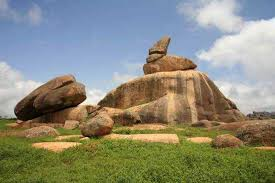
- Type: Igneous rock (granite)
- Classification: Intrusive igneous, light-colored, very hard, coarse-grained
- Location: Riyom Local Government Area, Plateau State
- Description: Spectacular granite hills and rock formations
- Significance: Tourist attraction, unique landscape
- Features: Balanced rocks, unusual formations
MIDDLE BELT:
- Kura Falls Rock (Plateau State)

- Type: Sedimentary and igneous rocks
- Classification: Mixed rock types, various colors and hardness
- Location: Near Jos, Plateau State
- Description: Rocky terrain with waterfalls
- Significance: Tourist destination, natural beauty
- Features: Waterfalls cascading over rock formations
- Wase Rock (Plateau State)
- Type: Igneous rock (granite)
- Classification: Intrusive igneous, light-colored, very hard, coarse-grained
- Location: Wase Local Government Area, Plateau State
- Description: Large granite hill rising from surrounding plains
- Significance: Wildlife park, tourist attraction
- Features: Wildlife reserve, scenic views
WESTERN NIGERIA:
- Olumo Rock (Ogun State)
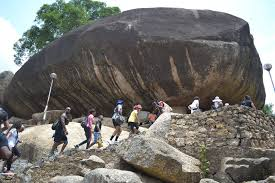
- Type: Igneous rock (granite)
- Classification: Intrusive igneous, light-colored, very hard, coarse-grained
- Location: Abeokuta, Ogun State
- Description: Large granite outcrop with caves and tunnels
- Significance: Historical landmark, tourist attraction
- Features: Natural caves, stairs to summit, historical importance
- Idanre Hills (Ondo State)
- Type: Igneous rock (granite and gneiss)
- Classification: Igneous and metamorphic, various colors, very hard
- Location: Idanre, Ondo State
- Description: Series of granite hills and rocky outcrops
- Significance: UNESCO World Heritage site candidate
- Features: Ancient palace ruins, 600+ steps to summit
EASTERN NIGERIA:
- Ngwo Pine Forest Rocks (Enugu State)
- Type: Sedimentary rocks (sandstone and shale)
- Classification: Sedimentary, various colors, medium hardness, layered
- Location: Ngwo, Enugu State
- Description: Rocky terrain with caves and pine forest
- Significance: Tourist attraction, natural preserve
- Features: Caves, waterfalls, unique ecosystem
- Awhum Waterfall Rocks (Enugu State)
- Type: Sedimentary rocks
- Classification: Sedimentary, layered texture, medium hardness
- Location: Awhum, Enugu State
- Description: Rocky cliff with waterfall and cave
- Significance: Religious pilgrimage site, tourist attraction
- Features: Waterfall, cave monastery, religious significance
SOUTHERN NIGERIA:
- Ikogosi Warm Springs Rocks (Ekiti State)
- Type: Igneous and metamorphic rocks
- Classification: Mixed types, various colors and hardness
- Location: Ikogosi, Ekiti State
- Description: Rocky area where warm and cold springs meet
- Significance: Unique geological phenomenon, resort destination
- Features: Natural warm springs, confluence of different temperature waters
Classification of Nigerian Landmark Rocks:
BY ROCK TYPE:
Igneous Rocks (Most Common):
- Zuma Rock (granite)
- Aso Rock (granite)
- Olumo Rock (granite)
- Riyom Rock Formation (granite)
- Wase Rock (granite)
- Idanre Hills (granite and gneiss)
Sedimentary Rocks:
- Ngwo Pine Forest Rocks (sandstone/shale)
- Awhum Waterfall Rocks (sedimentary)
Mixed Rock Types:
- Ikogosi Warm Springs (igneous/metamorphic)
- Kura Falls (mixed types)
BY GEOGRAPHIC REGION:
Northern Nigeria:
- Zuma Rock, Aso Rock, Riyom Rock Formation
Middle Belt:
- Kura Falls Rock, Wase Rock
Western Nigeria:
- Olumo Rock, Idanre Hills
Eastern Nigeria:
- Ngwo Pine Forest Rocks, Awhum Waterfall Rocks
Southern Nigeria:
- Ikogosi Warm Springs Rocks
BY SIZE AND PROMINENCE:
Major Landmarks:
- Zuma Rock (725 meters high)
- Aso Rock (400 meters high)
- Olumo Rock (significant height)
Medium Landmarks:
- Idanre Hills, Wase Rock, Riyom Rock Formation
Local Landmarks:
- Ngwo Pine Forest, Awhum Waterfall, Ikogosi Springs
Rock Identification Tips:
Visual Inspection:
- Color – Note primary and secondary colors
- Texture – Smooth, rough, layered, crystalline
- Grain size – Large crystals, fine grains, or glassy
- Layering – Presence of bands or layers
Physical Tests:
- Hardness – Try to scratch with coin or nail
- Weight – Heavy or light for its size
- Feel – Smooth, rough, or sharp edges
- Sound – Ring when struck (metallic content)
Simple Tools for Rock Study:
- Magnifying glass – To see crystal structure
- Coin or nail – To test hardness
- Small hammer – To break samples (safely)
- Collection bag – To store specimens
Conservation of Rock Landmarks:
Importance of Protection:
- Natural heritage – Preserve for future generations
- Tourist attractions – Economic benefits from tourism
- Scientific value – Geological research and education
- Cultural significance – Historical and spiritual importance
Threats to Rock Landmarks:
- Quarrying – Mining activities destroy formations
- Vandalism – Graffiti and damage by visitors
- Erosion – Natural weathering accelerated by human activity
- Development – Construction near sensitive areas
Conservation Efforts:
- Protected status – Government designation as monuments
- Visitor management – Controlled access and education
- Restoration – Repair damage from human activities
- Research – Study geological processes and preservation methods
ASSESSMENT QUESTIONS
LESSON 1: ROCKS (Multiple Choice Questions)
- Rocks are: a) Only found in mountains b) Naturally occurring solid substances made of minerals c) Always the same color d) Only used for building
- Igneous rocks are formed by: a) Layers of sediment pressed together b) Heat and pressure changing existing rocks c) Cooling and hardening of molten rock d) Weathering of other rocks
- Which is a famous landmark rock in Nigeria? a) Mount Everest b) Zuma Rock c) Uluru Rock d) Gibraltar Rock
- Granite is classified as: a) Sedimentary rock b) Metamorphic rock c) Igneous rock d) Artificial rock
- Rocks are used for construction because they are: a) Always colorful b) Light in weight c) Hard and durable d) Easy to break
Third Term Basic Science Lesson Notes for Other Topics

Meaning And Characteristics Of Plants
Explore lesson notes covering all topics.

Uses Of Plants
Explore lesson notes covering all topics.

Plants - As Living Things
Explore lesson notes covering all topics.
Plants Exhibiting Characteristics Of Living Things
Explore lesson notes covering all topics.

Meaning And Characteristics Of Animals
Explore lesson notes covering all topics.

Uses Of Animals
Explore lesson notes covering all topics.

How Animals Help Us
Explore lesson notes covering all topics.

Animals - As Living Things (Characteristics)
Explore lesson notes covering all topics.

Road Users
Explore lesson notes covering all topics.

Water - Objects That Sink
Explore lesson notes covering all topics.

Water - Objects That Float
Explore lesson notes covering all topics.

Air Flotation
Explore lesson notes covering all topics.

Air: Meaning, Uses & Gases in Air
Explore lesson notes covering all topics.

Colour: Meaning, Types, & Uses of Colour
Explore lesson notes covering all topics.

Sound Energy
Explore lesson notes covering all topics.
Lesson Notes for Other Classes

Basic 2 Lesson Note
The complete lesson note to guide your studies.

Basic 3 Lesson Note
The complete lesson note to guide your studies.

Basic 4 Lesson Note
The complete lesson note to guide your studies.

JSS1 Lesson Note
The complete lesson note to guide your studies.

JSS2 Lesson Note
The complete lesson note to guide your studies.

JSS3 Lesson Note
The complete lesson note to guide your studies.