Arms of Government – Basic 5 Civic Education Lesson Note (Second Term)
Download Lesson NoteLesson note at a glance
- Subject
- Civic Education
- Class
- Basic 5
- Term
- Second Term
- Topic
- Arms of Government
- Order
- Topic 3 of 7 this term
- Reading time
- 3 min
Learning Objectives
Students will be able to:
- Identify the three arms of government in Nigeria (Executive, Legislative, Judiciary)
- Explain the meaning and functions of each arm
- Mention the head of each arm of government
- Understand the concept of separation of powers
- Identify functions and responsibilities of each arm
- Understand the importance of separation of powers in a democratic system
Core Skills
- Communication and Collaboration
- Critical thinking and problem solving
- Leadership and Personal Development
- Creativity and Imagination
- Citizenship
The Three Arms of Government in Nigeria
Executive Arm
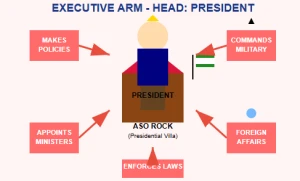
Head: The President (assisted by Vice President) Function: Responsible for the administration and implementation of laws and policies
Key Responsibilities:
- Makes policies
- Appoints top government officials
- Represents the country in international relations
- Executes laws when there is a need for it
- Transmits law and order (money should be spent by government)
- Signs laws into effect before they become law
- Prosecutes those who break the law
Structure: Includes the President, Vice President, ministers appointed by the President, and other executive agencies and departments.
Legislative Arm
Head: Senate President and Speaker of House of Representatives Function: Responsible for making laws in Nigeria
Key Responsibilities:
- Makes laws
- Controls how money should be spent in the country
- Approves the appointment of ministerial nominees
- Makes enquiry about complaints against government officials
- Discusses different plans made by the government
Structure: Consists of two chambers:
- Senate: Made up of three senators from each of the 36 states and one senator from Federal Capital Territory (FCT)
- House of Representatives: Made up of 360 members elected from each of the 360 federal constituencies in Nigeria
The legislative consists of the National Assembly (Senate and House of Representatives), which all sit at the National Assembly complex in Abuja.
Judicial Arm
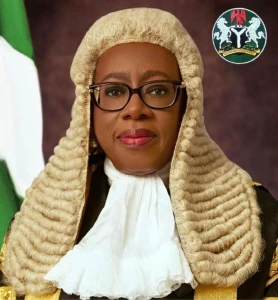
Head: Chief Justice of Nigeria Function: Responsible for interpreting laws and resolving legal disputes
Key Responsibilities:
- Interpreting state laws
- Settling legal disputes
- Punishing violators of the law
- Hearing civil cases
- Protecting individual rights granted by the state constitution
- Determining guilt or innocence of those accused of violating criminal laws
Structure: Includes various courts from lower courts to the Supreme Court, with the Chief Justice as the highest judicial officer responsible for ensuring individual rights and freedoms.
Separation of Powers
The concept of separation of powers ensures that no single arm of government becomes too powerful. Each arm has distinct functions and serves as a check on the others, promoting accountability and preventing abuse of power in a democratic system.
Learning Activities
Opening Activity (10 minutes)
Students individually define the three arms of government based on prior knowledge
Main Activity (25 minutes)
- Class Discussion: Students discuss the arms of government in Nigeria
- Group Work: Students work in pairs to identify the head of each arm of government
- Presentation: Groups present their findings to the class
Closing Activity (10 minutes)
Students create a simple chart showing the three arms, their heads, and main functions
Learning Resources
- Posters showing government structure
- Pictures of government officials
- Resource materials/textbooks
- Newspapers with government news
Instructional Techniques
- Identification exercises
- Explanations and discussions
- Questions and answers
- Demonstrations
- Story telling
- Videos from reliable sources
Assessment
Students will be evaluated on their ability to:
- Mention the arms of government
- State three differences between the three arms of government
- Identify the head of each arm
- Explain the importance of the separation of powers
Materials Needed
- Chart paper and markers
- Handouts with the government structure
- Pictures of key government officials
- Whiteboard/projector for presentations
This term's Civic Education topics
Basic 5 Second Term · 7 topics
Second Term Civic Education Lesson Notes for Other Topics
Food Safety
Read the full lesson note.

Rules and Regulations
Read the full lesson note.
Gains of Obeying
Read the full lesson note.

Results of Disobeying Rules and Regulations
Read the full lesson note.
Importance of School Rules and Regulations
Read the full lesson note.
Why Rules and Regulations are Necessary
Read the full lesson note.

Results of Not Obeying Government Rules and Regulations
Read the full lesson note.

Obedience
Read the full lesson note.
Types of Values that Promote Peace - Part II
Read the full lesson note.

Concept of Cooperation
Read the full lesson note.
Concept of Tolerance
Read the full lesson note.
Concept of Forgiveness
Read the full lesson note.
Concept of Self-control
Read the full lesson note.

Concept of Moderation
Read the full lesson note.
Concept of Compassion
Read the full lesson note.
Lesson Notes for Other Classes

Basic 1 Lesson Note
The complete lesson note to guide your studies.
Basic 2 Lesson Note
The complete lesson note to guide your studies.

Basic 3 Lesson Note
The complete lesson note to guide your studies.

Basic 4 Lesson Note
The complete lesson note to guide your studies.

Basic 6 Lesson Note
The complete lesson note to guide your studies.

JSS1 Lesson Note
The complete lesson note to guide your studies.