
Drawing Nature And Man-Made Objects SS1 Visual Arts Lesson Note
Download Lesson NoteTopic: Drawing Nature And Man-Made Objects
What Is Nature Drawing?
Nature drawing refers to the act of creating artwork that depicts the natural world, including:
- Landscapes: mountains, valleys, skies, and seascapes.
- Flora: plants, trees, flowers, and foliage.
- Fauna: animals, birds, insects, and wildlife.
- Elements: water, fire, earth, and air.
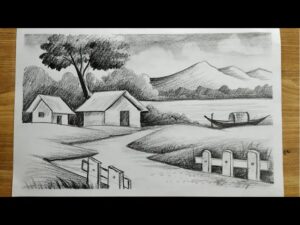
Nature drawing can be done in various mediums, such as:
- Pencils
- Charcoal
- Paints (watercolour, acrylic, oil)
- Ink
- Mixed media
What Is Life Drawing?
Life drawing, also known as figure drawing, is the act of drawing a human figure from observation, typically from a live model. The model poses in a studio or classroom setting, and artists draw or paint the figure, focusing on its proportions, anatomy, gesture, and expression.
Life drawing helps artists:
- Develop observational skills: Observe the human form in various poses and lighting conditions.
- Understand anatomy: Study the structure and proportions of the body.
- Capture gesture and movement: Depict the figure’s pose, balance, and energy.
- Improve drawing skills: Practice rendering the figure’s contours, shapes, and textures.
- Enhance creativity: Explore various mediums, styles, and interpretations.
Life drawing sessions often involve:
- Short poses: Quick sketches (1-5 minutes) to capture gesture and movement.
- Long poses: More detailed drawings (15-60 minutes) to focus on anatomy and proportions.
- Varied poses: Models pose in different positions, such as standing, sitting, or reclining.
- Lighting effects: Models are lit from different angles, creating challenging shading and shadowing effects.
Life drawing is a fundamental practice for artists, helping them develop skills, confidence, and creativity. It’s a great way to connect with the human form and express artistic vision!
FIGURE DRAWING (ANATOMICAL STUDY OF THE HUMAN BODY)
Life drawing, also known as figure drawing, is the act of drawing a human figure from observation, typically from a live model. It’s a fundamental skill for artists, helping them develop:
- Observational Skills: Accurately rendering the model’s pose, proportions, and anatomy.
- Understanding Of Human Anatomy: Familiarity with the body’s structure and proportions
- Rendering Techniques: Capturing the model’s texture, tone, and volume using various media.
- Gesture And Movement: Conveying the model’s energy and movement through expressive lines and marks.
- Proportion And Measurement: Accurately depicting the model’s proportions and relationships between body parts.
Life drawing involves:
- Short poses (1-5 minutes): Capturing the model’s gesture and movement.
- Long poses (15-60 minutes): Focusing on anatomy, proportion, and detail.
- Different media: Using various drawing tools, like pencils, charcoal, ink, or paint.
Life drawing benefits artists by:
- Improving their understanding of human anatomy and proportion.
- Enhancing their observational and rendering skills.
- Developing their ability to capture gesture and movement.
- Building confidence in drawing the human figure.
Life drawing is a practice that requires patience, dedication, and continuous learning.
First Term Visual Arts Lesson Notes for Other Topics

Introduction To Visual Arts
Explore lesson notes covering all topics.

Visual Sense
Explore lesson notes covering all topics.

Professions And Job Opportunities
Explore lesson notes covering all topics.

Drawing Lines
Explore lesson notes covering all topics.

Drawing And Shading
Explore lesson notes covering all topics.

Drawing Still-Life Objects
Explore lesson notes covering all topics.

Drawing Human Figures
Explore lesson notes covering all topics.

Introduction To Art Appreciation
Explore lesson notes covering all topics.


Lesson Notes for Other Classes

Basic 2 Lesson Note
The complete lesson note to guide your studies.
Basic 3 Lesson Note
The complete lesson note to guide your studies.

Basic 4 Lesson Note
The complete lesson note to guide your studies.

Basic 5 Lesson Note
The complete lesson note to guide your studies.

JSS1 Lesson Note
The complete lesson note to guide your studies.

JSS2 Lesson Note
The complete lesson note to guide your studies.