
Capital SS2 Commerce Lesson Note
Download Lesson NoteTopic: Capital
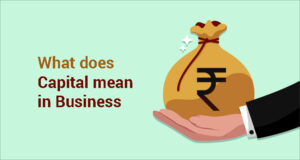
Capital in business refers to all the assets and property of a firm.
TYPES OF CAPITAL
- Fixed Capital: This refers to the assets of a firm which the business is carried on, and which are used continuously in the process of earning income e.g. Buildings, machinery fixtures and fittings
- Circulating Or Floating Capital: This is the capital which is required regularly for production and which is always changing as the business operates e.g. raw materials and finished goods (i.e. stock, cash, debtors etc).
- Liquid Capital: This is made up of cash-in-hand, debtors and bank balances of a firm. These are liquid assets because they can easily be converted into cash.
- Working Capital: This is the excess of the current assets over the current liabilities. In calculating working capital, therefore, the current liabilities are subtracted from the current assets.
- Capital Employed: This is the amount of capital invested by the owner or owners into the business and is calculated by subtracting current liabilities from the total assets.
IMPORTANCE OF WORKING CAPITAL
- Working capital helps to determine the liquidity position of an organization.
- It determines the funds available for the day-to-day running of the business.
- Since it is used to purchase stock for sale, more working capital indicates higher profit.
- It checks against tying down capital.
- It is used to determine the solvency of the organization.
- It indicates that the organization is not relying on finances from suppliers.
OTHER TYPES OF CAPITAL
- Owners Equity Or Net Worth Or Capital Owned: This refers to the excess of total assets over liabilities i.e. excess of fixed and current assets over total liabilities (long-term and current liabilities).
- Loan Capital Or Capital Borrowed: This refers to long-term liabilities. For example, debenture stocks long-term loans from banks are repayable after one year.
- Reserve Capital: This is the part of issued capital not yet called up. It is also known as uncalled capital. Reserve Capital = Issued Capital – Paid Up Capital
- Nominal or Authorized Capital: This is the maximum amount of capital which a company is authorized to raise as stated in its memorandum of Association.it is also referred to as nominal capital or registered capital
- Issued Capital: This is the part of the authorized capital that has been issued to shareholders for subscriptions. It may be the same or less than the authorized capital.
- Called-up Capital: This is the part of the issued capital that shareholders have been required to pay up to date.
E.g. A company which has issued shares of =N=115,000 out of the normal capital of =N= 200,000 may require shareholders to pay =N= 0.60 for the time being out of the =N=1 due on each share. In this case, the called-up capital will be =N=90,000 and the remaining =N=60,000 will be the uncalled capital
- Paid-Up Capital: This is the part of the called-up capital which shareholders have paid for. It refers to the sum received in cash by the company when it called on the shareholders to pay.
For out of the =N=90,000 called up, what was paid up by (or received from) shareholders might be =N=87,000.
- Uncalled Capital: This is the total amount that has not been called up on the issued capital. It refers to the balance between the called-up capital and the issued capital. This may be called on later when more capital is required.
- Call In Arrears: This is the difference between the called-up capital and the paid-up capital. It represents part of the Called-up capital which is yet to be paid by the shareholders after the call for payment has been made.
- Calls Paid In Advance: This is the money received in advance of calls i.e. the sum the company receives before calls are made for payment.
ASSIGNMENT
- The amount of capital which a new company proposes to be registered is called ___(a) called-up capital(b) nominal capital (c) issued capital (d) fixed capital
- The excess value of the assets of a business over its liabilities is ____(a) capital owned(b) working capital (c) issued capital (d) reserve capital
- Debenture is an example of ______(a) fixed capital (b) share capital (c) loan capital (d) working capital
- Assets of business which cannot be changed easily to cash are known as _____(a) floating capital (b) fixed capital (c) working capital (d) current capital
- Capital owned is the same as _________(a) authorized capital(b) issued capital (c) net worth of a business (d) fixed assets of a business

Third Term Commerce Lesson Notes for Other Topics

Turnover
Explore lesson notes covering all topics.

Communication
Explore lesson notes covering all topics.
Warehousing
Explore lesson notes covering all topics.

The Stock Exchange
Explore lesson notes covering all topics.

The Second Tier Securities Market
Explore lesson notes covering all topics.

Money
Explore lesson notes covering all topics.

Partnership II
Explore lesson notes covering all topics.

Partnership
Explore lesson notes covering all topics.

Sole Proprietorship
Explore lesson notes covering all topics.

Commodity Exchange
Explore lesson notes covering all topics.


Lesson Notes for Other Classes

JSS1 Lesson Note
The complete lesson note to guide your studies.
JSS2 Lesson Note
The complete lesson note to guide your studies.

SS1 Lesson Note
The complete lesson note to guide your studies.

SS3 Lesson Note
The complete lesson note to guide your studies.