
Crop Improvement SS2 Agricultural Science Lesson Note
Download Lesson NoteTopic: Crop Improvement
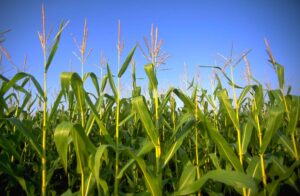
Crop improvement is defined as the science that deals with the development of new crop varieties with superior quality and quantity.
AIMS OF CROP IMPROVEMENT
- To increase yield.
- To improve the quality of produce.
- To adapt to climatic conditions.
- To increase resistance to diseases.
- To increase resistance to pests.
- To meet the needs of growers.
- To produce crops with uniform agronomic characteristics.
- To breed crops with early maturity.
- To improve the nutrient value of the produce.
- To meet the needs of consumers.
DEFINITION OF SOME GENETIC TERMS
- Genes: These are hereditary units or basic units of inheritance.
- Chromosomes: They are rod or thread-like bodies found in the nucleus of a cell.
- Character or Trait: These are the inheritance attributes or features possessed by an organism e.g. seed colour.
- Gamete: It is a mature sex cell.
- Zygote: a single cell formed as a result of the union of a male gamete with a female gamete.
- Allelomorphs (allele): These are pairs of genes on the position of a chromosome that controls a character.
- Phenotype: is the total of all observable features of an organism i.e. physical, physiological and behavioural traits e.g. height, weight and skin colour.
- Genotype: the total of the genes inherited from parents.
- Dominant character: This is a trait or character that is expressed in an offspring when two individuals with contrasting characters or traits are crossed.
- Recessive character: This is the character or trait which does not produce the effect in the presence of the dominant character.
- Homozygous: An individual is said to be homozygous if it has two similar genes for the same character, i.e. the pair of genes controlling a given pair of contrasting characteristics are identical e.g TT for height T for Tall or tt for height t for short
- Heterozygous: An individual is said to be heterozygous if the two members of a pair of genes controlling a pair of contrasting characters are different. e.g Tt for height T for Tall and t for short
- Filial generation: The offspring of parents make up the filial generation. The first, second and third filial generations are represented by F1, F2 and F3 respectively.
- Hybrid: These are offspring from a cross between parents that are genetically different but of the same species.
- Hybridization: This is the crossing of plants with contrasting characters. There are two major types of hybridization, this includes mono-hybridization and Di hybridization.
Di hybridization involves the crossing of plants with two pairs of contrasting characters.
Mono Hybridization involves the crossing of two pure traits.
- Mutation: a change in the genetic makeup of an organism resulting in a new characteristic that is inheritable.
MENDELIAN LAWS
The first law of Mendel also called the law of segregation of genes states that; genes are responsible for the development of the individual and that they are independently transmitted from one generation to another without undergoing any alteration. This is seen in monohybrid crossings.
The second law of Mendel which is also called the law of independent assortment of genes states that each character behaves as a separate unit and is inherited independently of any other character. This is seen in the dihybrid crossing.
PROCESS OF CROP IMPROVEMENT
These include; the introduction, selection and breeding of hybridization.
- Introduction: This involves the importation or introduction of some varieties of crops with desirable characteristics into areas where they have not existed before.
Advantages
- It helps in bringing a new variety to new areas.
- It may enhance greater productivity.
- It may perform better if there is a better climate condition.
- The past of the crop of the crops is usually absent in the new area.
Disadvantages
- There is a possibility of introducing new diseases.
- The crop may not be able to adapt to the climatic conditions of the new environment.
- It may introduce pests to the new environment.
- It may not be able to adapt to the soil condition of the area.
- Selection: This involves the picking of crops with desirable characteristics which are most favoured by the environment. Selection could be natural or artificial.
Natural selection involves the ability of a crop to survive a wide range of environmental conditions and remain standing.
Artificial selection involves the use of man’s intelligence to retain crops with desired traits on the farm.
Methods of artificial selection include;
- Mass Selection: Crops with desirable characteristics are selected among others.
- Pure line Selection: Only one crop plant with good characteristics is selected
- Pedigree Selection: Crop plants are selected based on the performance of their ancestors
- Progeny Selection: Crop plants are selected based on the performance of their offspring
Advantages Of Selection
- It ensures that only the best naturally available crop is grown.
- Crops with desired qualities are selected.
- Seeds from the best stands are multiplied for distribution.
- It reduces the spread of diseases and pests.
Disadvantages Of Selection
- Selection is tedious and time-consuming.
- It is very expensive in terms of time and money.
- It requires expertise.
- It causes the elimination of some desirable traits of the parent stick.
- Breeding Or Hybridization: is a method by which an offspring is produced through the crossing of two different plant varieties of the same spices
Types Of Breeding
- Inbreeding: This is the pollination and fertilization of closely related crop plants. This can lead to a pure breed or pure line.
Pure line: It is obtained when a plant is being self-fertilized or crossed continuously with a closely related species for many generations so that the desirable qualities it possesses do not change from one generation to another.
- Cross-breeding: This is the pollination and fertilization of unrelated crop plants belonging to different breeds. This results in the production of hybrids
Advantages Of Breeding
- It can produce superior offspring resulting in hybrid vigor or heterosis.
- Progeny grows more rapidly in cross-breeding.
- Offsprings can withstand the variation of environment.
Disadvantages Of Breeding
- Inbreeding leads to depression or loss in vigour and performance of offspring.
- There is a drop in production of the crops in quantity and quality in inbreeding.
- It may lead to poor or low resistance to disease attacks in inbreeding.
METHODS OF IMPROVING CROP PRODUCTIVITY
- By crop improvement (Introduction, selection and breeding).
- Planting at the proper time.
- Adoption of better cultivation methods.
- Use of manures and fertilizers.
- Control of pests of crops.
- Control of diseases of crops.
- Use of Resistant varieties.
- Use of good crop varieties.

Third Term Agricultural Science Lesson Notes for Other Topics

Establishment Of Fish Pond
Explore lesson notes covering all topics.

Forest And Forest Uses
Explore lesson notes covering all topics.

Effect of Forest on The Environment
Explore lesson notes covering all topics.
Common Weeds Found On The Farm
Explore lesson notes covering all topics.
Basic Economic Principles - Law of Demand, Supply & Diminishing Returns
Explore lesson notes covering all topics.
Farm Records
Explore lesson notes covering all topics.
Agricultural Pollution
Explore lesson notes covering all topics.
Farm Accounts
Explore lesson notes covering all topics.
Animal Nutrition
Explore lesson notes covering all topics.
Fish Farming & Classification Of Fish
Explore lesson notes covering all topics.
Maintenance Practices And Precautionary Measures
Explore lesson notes covering all topics.
Problems Of Agricultural Mechanization
Explore lesson notes covering all topics.
Sources Of Farm Power
Explore lesson notes covering all topics.
Classification Of Crops
Explore lesson notes covering all topics.
Husbandry Of Selected Crops I - Cereals Cultivation
Explore lesson notes covering all topics.


Lesson Notes for Other Classes
JSS1 Lesson Note
The complete lesson note to guide your studies.
JSS2 Lesson Note
The complete lesson note to guide your studies.

SS1 Lesson Note
The complete lesson note to guide your studies.

SS3 Lesson Note
The complete lesson note to guide your studies.