
Great Empires And Kingdoms In West Africa SS2 Nigerian History Lesson Note
Download Lesson NoteTopic: Great Empires And Kingdoms In West Africa
West Africa was home to many powerful kingdoms and empires before European colonization. Two of the most famous and well-organized were the Ashanti Empire (in what is now Ghana) and the Dahomey Kingdom (in what is now Benin Republic). These kingdoms were known for their strong armies, rich cultures, and well-organized governments. They controlled trade, fought to protect their lands, and created lasting cultural traditions that continue today.
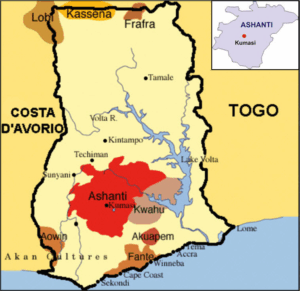
The Ashanti Empire (1701-1901)
Origins and Formation
The Ashanti (also spelled Asante) Empire began in the late 1600s and was formally established in 1701. It was founded by Osei Tutu, who united several Akan-speaking groups in the forest region of what is now central Ghana. With the help of his advisor, the priest Okomfo Anokye, Osei Tutu created a confederacy of Akan states:
- According to tradition, Okomfo Anokye called down the Golden Stool from the sky, which became the sacred symbol of the Ashanti nation
- The Golden Stool was believed to contain the soul (sunsum) of the Ashanti people
- Each chief was required to swear loyalty to the Asantehene (king) and the Golden Stool
- The new capital city, Kumasi, became the center of the empire
Political Organization
The Ashanti Empire had a well-organized political system:
- At the top was the Asantehene (king), who held great power
- The Asantehene was advised by a council of elders called the Asantemanhyiamu
- The empire was divided into states, each led by a paramount chief
- Each state had its own government but answered to the Asantehene
- The government had different departments for war, treasury, foreign affairs, and justice
- Women played important roles, especially the Queen Mother (Asantehemaa) who helped choose the next king
Military Power
The Ashanti had one of the strongest armies in West Africa:
- The army could gather up to 200,000 soldiers when fully mobilized
- Soldiers were organized into units based on age groups
- They were famous for their discipline and courage
- They used European firearms combined with traditional weapons
- The Ashanti military had a special unit called the Ankobia (royal guards)
- They developed a signal corps using drums to communicate on the battlefield
- Their military success allowed them to expand their empire through conquest
Economy and Trade
The Ashanti built a strong economy based on trade and natural resources:
- Gold was their most valuable resource and was mined throughout the empire
- They controlled important trade routes between the coast and interior
- Kola nuts, ivory, and slaves were important export items
- They imported salt, cloth, and firearms
- Craftspeople created beautiful gold weights, jewelry, and Kente cloth
- They used gold dust as currency
- They established trade relationships with European nations at the coast
- Weekly markets were held in towns and villages throughout the empire
Religion and Culture
The Ashanti had rich religious beliefs and cultural practices:
- They believed in a supreme god called Nyame, as well as lesser gods
- Ancestors were honored and believed to influence daily life
- The Golden Stool was the most sacred object in Ashanti religion
- Festivals like Odwira brought people together annually
- Drumming and dancing were important in religious and social life
- Storytelling preserved history and taught moral lessons
- Art forms included wood carving, brass casting, and weaving
- Kente cloth, with its colorful patterns, became a symbol of Ashanti culture
Conflicts with the British
The Ashanti fought several wars with British colonial forces:
- First Anglo-Ashanti War (1823-1831): Ashanti forces defeated the British
- Later wars in 1863, 1873, and 1874 weakened the empire
- In 1896, the British captured the Asantehene, Prempeh I, and exiled him to the Seychelles
- When the British governor demanded the Golden Stool in 1900, the Ashanti revolted under the leadership of Queen Mother Yaa Asantewaa
- After the War of the Golden Stool (1900), the British finally defeated the Ashanti in 1901
- The empire became part of the British Gold Coast colony
Legacy of the Ashanti Empire
Despite colonization, the Ashanti maintained their cultural identity:
- The position of Asantehene continues today as a traditional role
- The current Asantehene, Osei Tutu II, is highly respected in Ghana
- The Golden Stool remains a sacred symbol
- Ashanti cultural practices, art, and festivals continue
- The former empire is now part of the Ashanti Region in Ghana
- Kumasi remains an important cultural and economic center
- Kente cloth is recognized worldwide as a symbol of African heritage
The Dahomey Kingdom (1600s-1904)
Origins and Formation
The Kingdom of Dahomey arose in the early 1600s on the Abomey Plateau in what is now southern Benin Republic:
- It was founded by the Fon people, led by King Wegbaja
- The kingdom began as a smaller state among the Aja kingdoms
- Under King Agaja (1708-1740), Dahomey conquered the Kingdom of Allada in 1724
- Dahomey gained access to the coast after conquering the Kingdom of Whydah in 1727
- The capital city was Abomey, where royal palaces were built by each king
Political Organization
Dahomey had a highly centralized government:
- The kingdom was ruled by a king called the “Ahosu”
- Unlike many African kingdoms, power was not shared with chiefs but held tightly by the king
- The kingdom was divided into provinces governed by royal appointees
- The government had a complex bureaucracy with ministers responsible for different tasks
- The king’s authority was absolute, and his word was law
- Each king built his own palace within the royal compound at Abomey
- Women held important government positions, especially in the royal court
The Famous Dahomey Amazons
One of the most unique features of Dahomey was its female warriors:
- Called “Mino” (“our mothers”) in the Fon language, they were known to Europeans as the “Dahomey Amazons”
- These female soldiers formed the king’s bodyguard and an elite fighting force
- They were selected from among the king’s wives and daughters
- They received military training and were known for their fierce fighting skills
- At its peak, the female army numbered between 4,000 and 6,000 soldiers
- They used muskets, machetes, and clubs in battle
- They took an oath of celibacy and were dedicated to warfare
- They were feared by neighboring kingdoms and European observers
Economy and Trade
Dahomey built its wealth through trade and conquest:
- Palm oil became an important export in the 19th century
- The kingdom controlled important trade routes to the interior
- They participated in the transatlantic slave trade, selling captives from conquered territories
- They taxed goods passing through their territory
- Craftspeople created bronze and brass figures, textiles, and wooden objects
- The kingdom had a royal monopoly on certain trade goods
- They traded with European merchants at coastal ports like Whydah
- Agriculture, including palm oil production, was an important economic activity
Religion and Culture
Dahomey had distinctive religious and cultural practices:
- The people practiced Vodun (also spelled Vodoun), a religion that later influenced Haitian Vodou
- Kings were believed to have divine status
- Annual Customs ceremonies included sacrifices to honor ancestors
- The leopard was a royal symbol representing the king’s power
- Appliqué cloth banners told stories of kings and battles
- Each king added sayings and symbols to the royal history
- Brass and bronze figurines depicted kings and important events
- Music and dance were important in religious ceremonies
Relationship with European Powers
Dahomey had complex relationships with European nations:
- They traded with Portuguese, French, British, and Dutch merchants
- They maintained their independence while European influence grew along the coast
- They adapted European firearms and tactics to strengthen their army
- King Ghezo (1818-1858) tried to reduce dependence on the slave trade as Europeans began to oppose it
- In the late 19th century, they resisted French colonial expansion
- Under King Behanzin (1889-1894), they fought two wars against the French
The End of the Kingdom
Dahomey’s independence ended with French colonization:
- The Franco-Dahomean Wars (1890 and 1892-1894) were fought against French colonial forces
- Despite fierce resistance, including by the female warriors, Dahomey was defeated
- King Behanzin surrendered in 1894 and was exiled to Martinique and later Algeria
- France made Dahomey a colony (now the Republic of Benin)
- The kingdom officially ended, though royal descendants maintained cultural traditions
Legacy of the Dahomey Kingdom
The kingdom’s influence continues today:
- The Royal Palaces of Abomey are a UNESCO World Heritage site
- Vodun religion is still practiced in Benin and has influenced religions in the Americas
- Traditional art forms continue, including appliqué textiles and bronze work
- Stories of the female warriors have inspired books, films, and popular culture
- The kingdom’s history is taught in schools in modern Benin
- Annual festivals celebrate the kingdom’s cultural heritage
- Museums in Abomey preserve royal artifacts and tell the kingdom’s story
Comparing Ashanti and Dahomey
Similarities
- Both were powerful West African kingdoms that resisted European colonization
- Both had strong, centralized governments with powerful kings
- Both controlled important trade routes and resources
- Both developed unique military strategies and organizations
- Both maintained strong cultural identities that have survived into modern times
- Both were eventually colonized by European powers (British and French)
- Both are remembered for their artistic achievements
Differences
- Ashanti was a larger empire covering more territory
- Dahomey was famous for its female warriors, which Ashanti did not have
- Ashanti had a confederacy structure with more shared power, while Dahomey was more centralized
- The Ashanti Golden Stool was a unique symbol not found in Dahomey
- Dahomey relied more heavily on the slave trade for its economy
- Ashanti was inland with gold resources, while Dahomey expanded to gain coastal access
- Ashanti resistance to colonization lasted longer than Dahomey’s
Conclusion
The Ashanti Empire and Dahomey Kingdom were two of West Africa’s most powerful and well-organized states. They developed complex political systems, strong economies, and rich cultural traditions. They fought to maintain their independence against European colonial powers and left lasting legacies that continue to influence Ghana and Benin today.
These kingdoms demonstrate Africa’s rich history of state-building, military innovation, artistic achievement, and cultural development. Their stories challenge the myth that Africa had no history or civilization before European colonization. The cultural heritage of Ashanti and Dahomey remains an important source of identity and pride for people in West Africa and throughout the African diaspora.

Third Term Nigerian History Lesson Notes for Other Topics
Songhai Empire
Explore lesson notes covering all topics.
Mali Empire
Explore lesson notes covering all topics.

Ghana Empire
Explore lesson notes covering all topics.
Muslim States In The Face Of Colonization In West Africa
Explore lesson notes covering all topics.
Christian Missionary Activities In West Africa
Explore lesson notes covering all topics.
Empire In Western Sudan: Old Ghana, Mali And Songhai Empire In Africa
Explore lesson notes covering all topics.
Factors Responsible For The Decline Of Great Empires In Western Sudan
Explore lesson notes covering all topics.
Non-Centralized States
Explore lesson notes covering all topics.
Trans-Atlantic Slave Trade
Explore lesson notes covering all topics.
Spread of Islam in Kanem-Bornu Empire
Explore lesson notes covering all topics.

Early European Contacts With The Coastal States
Explore lesson notes covering all topics.
Islam in Hausa Land
Explore lesson notes covering all topics.
Early External Influences: Contact With The North African Trade And Islam
Explore lesson notes covering all topics.

Indigenous Technology: Crafts And Industries
Explore lesson notes covering all topics.


Lesson Notes for Other Classes

JSS1 Lesson Note
The complete lesson note to guide your studies.

JSS2 Lesson Note
The complete lesson note to guide your studies.

SS1 Lesson Note
The complete lesson note to guide your studies.

SS3 Lesson Note
The complete lesson note to guide your studies.