
Public Opinion SS2 Government Lesson Note
Download Lesson NoteTopic: Public Opinion
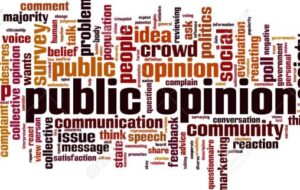
Public opinion can be defined as the belief, values and attitudes, which are commonly held and expressed by the majority of the people on a given public issue. It, therefore, refers to what the members of the public think or feel about government-proposed policies or actions already taken by the government.
FEATURES OF PUBLIC OPINION
- Issues of public importance are involved in public opinion.
- The opinion is held or shared by the majority of people of a particular country.
- The opinion is expressed by private individuals and not by the government or any of its agencies.
- In the formation of public opinion, communication and information play a significant role.
- Public opinion is dynamic; it changes from time to time.
- Specific issues are focused on expressing public opinions rather than general issues.
FORMATION OF PUBLIC OPINION
- The Mass Media: Mass media like newspapers; radio, magazines, television, journals, films, handbills, leaflets, etc act as the basis for the formation of public opinion.
- Through Election: Political parties educate the people on important public issues during campaigns, rallies, etc, and by this opinions are formed.
- Pressure Group: Organized social interest groups help in the formation of public opinion.
- Political Parties: Political parties with the help of their manifestos, rallies, etc, act as the basis of public opinion formation in a country.
- Individual Influence: Citizens such as traditional rulers, intellectuals, tycoons, artists and other influential citizens not in the corridors of power act as public opinion moulders in a country.
- Lectures and Symposia: Public opinion can be formed through holding lectures and symposia where ideas on matters of public importance are expressed.
- Rumors and Gossips: Many citizens who are not well informed may form their opinions from common rumours and gossip.
MEASUREMENT OF PUBLIC OPINION
- Opinion Polls: This is a method of asking questions from a selected sample of people and their views are used to represent that of the entire population.
- Through Elections: Elections serve as a means of measuring public opinion on the popularity or otherwise of the government.
- Through Mass Media: The government can determine people’s opinions through exploring all the channels of communication e.g. opinions expressed in newspapers, radio, television, etc.
- Referendum or Plebiscite: This is a method of referring a political question or government policy to the electorate for approval or disapproval.
- Telephone Calls: Most of the radio stations in Nigeria today, adopt this method by presenting the phone–in–programme.
- Letters to Government: Citizens may write letters to the government expressing their opinions on a particular issue of national importance.
- Opinions expressed by leaders of thought: Public opinion can also be measured through opinions expressed by local leaders of thought or leaders in the representative assemblies.
FUNCTIONS/MERITS OF PUBLIC OPINION
- It directs the government to know what the public thinks about its policies and actions.
- Public opinion helps the government to know the needs and aspirations of its citizens.
- It wakes the government and its agencies from slumber.
- It brings about the formulation of policies and actions that are in the best interest of the majority of the citizens.
- In the election period, it helps the government to ascertain its popularity and whether it can win or lose the election.
- It serves as an avenue through which public views are channelled to the government.
- Public opinion, especially opinion polls, helps voters to cast their votes for popular candidates.
DEMERITS OF PUBLIC OPINION
- Public opinion can easily be manipulated by those who have access to mass media in their favour.
- It is difficult to measure the opinion of the people on a particular issue.
- Public opinion may be the views of very few powerful and influential people in society.
- It may give a wrong, confusing and distorted picture on a given issue.
- It is not often reliable and therefore not advisable for the government to rely on it.
- It wastes time and money in trying to ascertain public opinion.
- It may cause political instability as a result of protests and demonstrations against an action of the government termed to be against public opinion.

First Term Government Lesson Notes for Other Topics
Electoral Process
Explore lesson notes covering all topics.

Franchise/Suffrage
Explore lesson notes covering all topics.
Types Of Electoral Systems
Explore lesson notes covering all topics.

Electoral Commission And Officials
Explore lesson notes covering all topics.

Public Administration
Explore lesson notes covering all topics.

Local Government
Explore lesson notes covering all topics.

Public Corporations
Explore lesson notes covering all topics.

Introduction To Government
Explore lesson notes covering all topics.
Basic Concepts Of Power And Authority
Explore lesson notes covering all topics.

Legitimacy And Sovereignty
Explore lesson notes covering all topics.

Democracy
Explore lesson notes covering all topics.

Communalism And Feudalism
Explore lesson notes covering all topics.

Socialism And Capitalism
Explore lesson notes covering all topics.

Fascism And Totalitarianism
Explore lesson notes covering all topics.

Military In Nigeria
Explore lesson notes covering all topics.


Lesson Notes for Other Classes

JSS1 Lesson Note
The complete lesson note to guide your studies.

JSS2 Lesson Note
The complete lesson note to guide your studies.

SS1 Lesson Note
The complete lesson note to guide your studies.

SS3 Lesson Note
The complete lesson note to guide your studies.