
Local Government SS2 Government Lesson Note
Download Lesson NoteTopic: Local Government
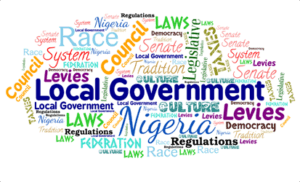
A local government can be defined as a government at the local level established by law to perform specific functions within a defined area. It has the power to take charge of local political affairs. They are created by acts of parliament as avenues by which the federal government reaches the locality. They are usually the third tier of government. In Nigeria, they were created under the 1963 Republican constitution.
TYPES OF LOCAL GOVERNMENT
Professor Harold Anderfer classified local government into 4 basic types. They are:
- French Type: This type of local government is an extension of the central government. In other words, the staff of local governments are also staff of the federal government.
- English Type: This type of local government has a feature of autonomy. Though the federal government has some measure of control over it. Nigeria has adopted this system. There is no local economy.
- Traditional Type: This system is entirely indigenous. It is neither Western nor Eastern. It is based on the leadership of a traditional ruler.
- Communist Type: Most communist countries practice this system. There is no local economy. Every local government works in conformity with the socialist ideology and values.
REASONS FOR THE CREATION OF LOCAL GOVERNMENT
- The local governments are established to bring government closer to the people at the grassroots.
- They allow the indigenous people of the different local areas to govern themselves according to their culture and traditions.
- They serve as a link between the people and the state and federal government.
- The creation of a local government gives room for even development in parts of the country.
- They act as representatives of the federal and state government in the implementation of policies and the maintaining of law and order etc.
- They can also be employed at the local level.
- They provide essential services to the people in areas like electricity, roads, water, health care centres etc.
- They are created to avoid the concentration of power in one authority.
- They are created to give the people in rural areas a sense of belonging and participation in the government.
POWERS AND FUNCTIONS OF LOCAL GOVERNMENT
- Local government constructs and maintains public roads, waterways, bridges, gutters, sidewalks and drainages.
- Establishment and maintenance of markets, motor parks public conveniences and refuse disposal.
- Collection of taxes, radio and television licenses, rents etc.
- The provision and maintenance of primary schools.
- They register deaths, births, marriages etc.
- Maintenance of forests.
- Naming of roads and streets and numbering of houses.
- Establishment and maintenance of cemeteries, burial grounds and homes for the destitute.
- Development of agricultural and natural resources.
- They make bylaws for the maintenance of law and order. They also set up customary courts as directed by the state government.
SOURCES OF REVENUE OF LOCAL GOVERNMENT
- Federal Government Grants: Local governments get their funds from the federal government. This is the major source of local government revenue. In Nigeria, local government is entitled by law to receive 10 per cent of federally derived revenue
- Grants from state government
- Loans from financial institutions
- Taxes from non-salary earners residing within their areas of jurisdiction.
- Local rates like water, market stalls, motor parks etc.
- License fees such as bicycles, dogs, radio, television, canoe etc.
- Court fees: These are fines imposed on offenders in customary courts which also help to generate revenue for local governments.
- Commercial ventures such as transport services, plantation farms, guest houses, holiday resorts, poultry farms etc.
CONTROL OF LOCAL GOVERNMENT
- Amendment of Law: The national assembly through the federal government can amend the law establishing the local government.
- Withholding of Grants: The federal government may for one reason or the other withhold the grant allocated to local government. It may be on the grounds of mismanagement of funds.
- Judicial Control: The law courts can declare bylaws made by the local government as null and void if they are not in conformity with the provisions of the country’s constitution.
- Ministerial Control: Ministers or commissioners and government officials control the activities of local councils from time to time.
- Audit control: The government officials audit the account book of the council at least once a year.
- Public control: Members of the public whom the local government are meant to serve, use constructive criticisms to control the activities of the councils.
PROBLEMS OF LOCAL GOVERNMENTS
- Bribery and corruption: Bribery and corruption are common in some councils as well as embezzlement and misappropriation of funds.
- Financial problems or poverty of local government bodies.
- Shortage of personnel: Some council officials are untrained or ill-trained and so inefficient.
- The machinery for rate collections is grossly inadequate and inefficient.
- Lack of infrastructure such as electricity, pipe-borne water, good roads etc.
- The size of local government councils: A council should not be too large as to create problems.
- Favoritism and nepotism
- Illiteracy among counselors.
- Interference from central government.
SUGGESTED SOLUTIONS TO THE PROBLEMS OF LOCAL GOVERNMENT
- Control of the central government should be reduced.
- Honest and capable hands should be used in the collection of rates and levies.
- Qualified personnel should be employed by local governments.
- Local government accounts should be audited regularly and any official found guilty of misappropriation of funds should be prosecuted by E.F.C.C. or I.C.P.C.
- More money should be allocated to local governments from the federation account to enable them to run out of their functions.
- Access to loans should not be made difficult for the local government.
- Regular in-service training and seminars should be given or organized for local government workers.
ASSIGNMENT
- All the following are sources of revenue for local government except (a)rate (b) motor parks and market fees (c) duties on the exportation of local products.
- An electoral district for local government election is—– (a) senatorial district (b) ward (C) constituency.
- One of the problems facing local government in Nigeria is the (a) withdrawal of grants by the central government (b) lack of qualified personnel (c) collection of taxes.
- Local governments impose rates because (a) the government wants the rich to become richer (b) the people are expected to finance political parties © the need to provide funds for public corporations.
- Representatives of the people in the local government areas are called (a) parliamentarians (b) congressmen (c) councilors.
- Explain the sources of revenue of local government
- Explain the problems confronting local government.

First Term Government Lesson Notes for Other Topics
Electoral Process
Explore lesson notes covering all topics.
Franchise/Suffrage
Explore lesson notes covering all topics.
Types Of Electoral Systems
Explore lesson notes covering all topics.
Electoral Commission And Officials
Explore lesson notes covering all topics.
Public Opinion
Explore lesson notes covering all topics.
Public Administration
Explore lesson notes covering all topics.
Public Corporations
Explore lesson notes covering all topics.
Introduction To Government
Explore lesson notes covering all topics.
Basic Concepts Of Power And Authority
Explore lesson notes covering all topics.
Legitimacy And Sovereignty
Explore lesson notes covering all topics.
Democracy
Explore lesson notes covering all topics.

Communalism And Feudalism
Explore lesson notes covering all topics.

Socialism And Capitalism
Explore lesson notes covering all topics.
Fascism And Totalitarianism
Explore lesson notes covering all topics.
Military In Nigeria
Explore lesson notes covering all topics.


Lesson Notes for Other Classes
JSS1 Lesson Note
The complete lesson note to guide your studies.

JSS2 Lesson Note
The complete lesson note to guide your studies.
SS1 Lesson Note
The complete lesson note to guide your studies.

SS3 Lesson Note
The complete lesson note to guide your studies.