
Estuarine And Freshwater Habitat SS2 Biology Lesson Note
Download Lesson NoteTopic: Estuarine And Freshwater Habitat
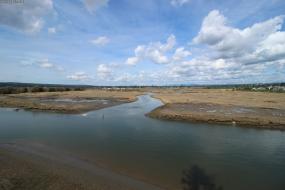
ESTUARINE HABITATS (BRACKISH WATER HABITATS)
An estuary is a body of water formed at the coast where freshwater flowing towards the sea mixes with the sea (salt water) flowing inland. Estuarine habitats include deltas, lagoons and bays.
Characteristics Of Estuaries
- The salinity fluctuates.
- The specific gravity is less than that of the sea.
- They have high turbidity due to frequent disturbances. Hence the rate of photosynthesis and respiration by organisms reduces.
- The water is shallow.
- They have a low diversity of species compared to marine habitats.
- They have high levels of nutrients
- They have low oxygen content, hence anaerobic activities are common.
Plant Distribution And Adaptation In Estuaries
Plants found in estuaries include plankton, algae, and red and white mangroves and they have the following adaptive features;
- Planktons (diatoms) have:
- air spaces in their tissues.
- Rhizoid for the attachment to rock shores.
- Air bladder for buoyancy.
- Algae have:
- chlorophyll for photosynthesis.
- small size or large surface area for floating in water.
- Red mangrove has:
- Stilt roots with rootlets that have air spaces for air conduction to the root tissues and support to prevent the washing away of the plant by the tide.
- Seeds which germinate while they are still on the parent plant, thus preventing the carrying away of the seedlings by water current.
- White mangrove has pneumatophores (breathing roots) for gaseous exchange.
Animals Distribution And Adaptation
Animals including mosquitoes, crustaceans, molluscs, worms, fishes etc. found in estuaries survive by possessing the following features;
- Mosquito larvae and pupae possess breathing trumpets for gaseous exchange.
- Crustaceans and water snails burrow into the mud against predators, strong waves or tides.
- Worms have strong protective and impermeable covering against high salinity.
- Mudskippers have fins for crawling on land and swimming in water.
- Fishes have fins for movement and swimming bladders for buoyancy.
Food Chain In Estuarine Habitats
Detritus → worms → snails → birds
Diatoms → shrimps →fishes
Diatoms → small fish → sharks → man
FRESHWATER HABITATS
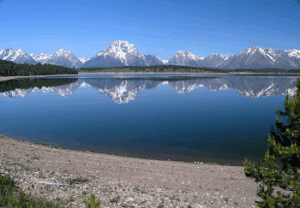
This is a body of water formed mainly from inland waters and it contains very low or no salt. Fresh water is of two types based on its mobility;
- Lotic fresh waters: – These are running waters flowing continuously in a specific direction e.g. rivers, springs, streams.
- Lentic fresh waters: – These are stagnant waters which do not flow e.g. lakes, ponds, puddles, swamps and dams.
Characteristics Of Freshwater Habitats
- It contains little or no salt. Salinity is 5 parts per thousand i.e. 0.5%.
- It is small in size.
- Oxygen concentration is high, being available in all parts of the water body, especially at the surface.
- The water is shallow, hence sunlight penetrates to the bottom.
- The temperature varies with seasons and depth.
- It has seasonal variation; decreasing or drying up in the dry season and increasing in the rainy season.
- Water currents affect the distribution of organisms, salts and gasses, especially in lotic fresh waters.
PLANTS DISTRIBUTION AND ADAPTATION IN FRESHWATER
Plants of fresh water include water lilies, spirogyra, water lettuce, water weeds etc.. and they have the following adaptive features:
- Water lily has:
- air bladder
- Expanded tips and lightweight which keep it afloat.
- Spirogyra has a mucilaginous cover for protection.
- Water lettuce has hairs in leaves to trap air and keep it afloat.
- Water weed (elodea) has a long and flexible petiole for swinging with water currents.
Animals Distribution And Adaptation
Animals of freshwater habitats include protozoa, ducks, pond skaters, hydra, fishes etc. Their adaptive features include:
- Protozoa have contractile vacuole for osmoregulation in water.
- A duck has webbed feet for locomotion and a serrated beak for sieving food in water into its mouth.
- Hydra has a slippery surface, hooks and suckers for attachment to water particles.
- Pond Skaters have long legs for skating on water surfaces.
- Fishes have swim bladders for buoyancy and gills for respiration.
Food Chain In Freshwater Habitats
Diatoms → fish fry →tilapia
Spirogyra → tadpoles → carps → kingfish
Algae → mosquito larva → small fish
ASSIGNMENT
- Buoyancy in salt water is ensured by the following except A. divided leaves B. chlorophyll C. floating devices D. air bladder
- The mucilaginous cover in seaweed and spirogyra is mainly for A. protection B. osmoregulation C. avoiding desiccation D. feeding
- Which of the following is not a freshwater habitat? A. puddle B. swamp C. stream D. sea
- Which of these is not an adaptive feature in a marine habitat? A. bladder for floating B. hold fast for attachment C. fur to prevent water loss D. rhizoid for attachment to rock
- The following are characteristics of freshwater habitats except A. low salt content B. high salinity C. shallow water D. can be stagnant or running water
- In a tabular form, state five differences between freshwater and marine habitat

Third Term Biology Lesson Notes for Other Topics
Grassland Habitats
Explore lesson notes covering all topics.
Terrestrial Habitat
Explore lesson notes covering all topics.
Habitat - Marine Habitat
Explore lesson notes covering all topics.
Fruits
Explore lesson notes covering all topics.
Pollination In Plants
Explore lesson notes covering all topics.
Reproductive System In Flowering Plants
Explore lesson notes covering all topics.
Ecology Of Population
Explore lesson notes covering all topics.

Food Storage
Explore lesson notes covering all topics.
Reproduction In Unicellular Organisms And Invertebrates
Explore lesson notes covering all topics.
Arid Land/Deserts
Explore lesson notes covering all topics.
Terrestial Habitat
Explore lesson notes covering all topics.
Towards Better Health - How to Control Harmful Microorganisms
Explore lesson notes covering all topics.
Freshwater Habitat
Explore lesson notes covering all topics.
Aquatic And Estuarine Habibat
Explore lesson notes covering all topics.
Microoraganisms In Action
Explore lesson notes covering all topics.


Lesson Notes for Other Classes
JSS1 Lesson Note
The complete lesson note to guide your studies.
JSS2 Lesson Note
The complete lesson note to guide your studies.

SS1 Lesson Note
The complete lesson note to guide your studies.

SS3 Lesson Note
The complete lesson note to guide your studies.