
Carbon And It’S Compounds VI – Hydrocarbon SS1 Chemistry Lesson Note
Download Lesson NoteTopic: Carbon And It’S Compounds VI – Hydrocarbon
INTRODUCTION TO HYDROCARBONS
PETROLEUM CHEMISTRY
HYDROCARBON AND CRUDE OIL:
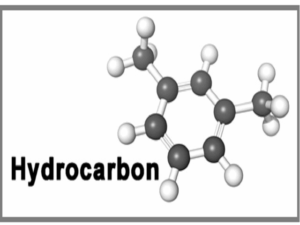
Hydrocarbons are very simple organic compounds composed mainly of hydrogen and carbon only.
The sources of hydrocarbons are coal, natural gases and petroleum.
Hydrocarbon can be divided into two main classes:
- Aliphatic hydrocarbon
- Aromatic hydrocarbon
ALIPHATIC HYDROCARBON: They are further divided into three groups: Alkanes, Alkenes and Alkynes. The Aliphatic may be Acyclic or Cyclic. The acyclic hydrocarbons are straight or branched chain hydrocarbons while the cyclic hydrocarbons consist of closed ring chains such as cycloalkane e.g. cyclopropane.
- AROMATIC HYDROCARBON
Contain ring structure having non-localized orbital e.g. C6H6. Aromatic hydrocarbons are all cyclic hydrocarbons. The basic cyclic structure is the benzene ring.
PETROLEUM (CRUDE OIL)
Petroleum is the chief source of aliphatic hydrocarbon. It is a dark viscous liquid which is usually trapped or found under the ground or sea beds in certain parts of the world e.g. Nigeria, Saudi Arabia, Iran, USA, Iraq and Russia. Petroleum is a mixture of Alkanes, alkenes, cyclo alkanes and aromatic hydrocarbons together with about 1 – 6% impurities consisting mainly of compounds of sulphur and minute quantity of H2 and O2 compounds. Natural gas consists mainly of methane.
ORIGIN OF CRUDE OIL AND NATURAL GAS
Natural gas and petroleum are formed by the decomposition of vast quantities of organic material, undoubtedly of marine origin, buried in sediment. When these tiny aquatic organisms died, their remains gradually settled on the sea beds.
Over the years, the remains became covered by mud, silt and other sediments. As the sediment piled up, their mass exerted great pressure on the lower layers, changing them to hard sedimentary rocks. During this process, bacterial activity, heat and pressure probably changed the plants and animal remains into crude oil and natural gas. The oil and gas so formed slowly moved to other areas through the tiny holes or pores in the porous rocks around them.
Since oil and gas are not dense, they tend to seep upwards until they meet a non-porous layer or rocks and are trapped under it, thus forming an oil trap.
REFINING OF PETROLEUM
The process of petroleum refining is that of converting crude oil into a range of products required to meet an economic market demand. How is this achieved? Crude oil consists of a very complex mixture of hydrocarbons, which individually, exist as gas, liquid or solid at normal temperatures and pressures.
The crude oil can be separated into fractions by comparatively simple distillation and for every given variety of crude oil; their relative proportions and properties are fixed.
Modern competitive marketing conditions, however, demand that these fractions from crude oil are of such a quality that simple distillation is not enough.
Fractional distillation, necessitating more advanced refinery techniques is now adopted.
Crude oil (petroleum) is composed mainly of a complex mixture of hydrocarbons. By using fractional distillation, crude oil can be separated into fractions or groups of similar compounds. Each fraction contains several compounds all of which fall within a certain range of boiling points. These fractions can be differentiated from one another by their different volatility, odour texture and their relative rate of ignition and burning. The fractional distillation is carried out in a fractionating column of towers. The crude oil is passed into a fractionating column with a temperature ranging between 4000C at the bottom of the column of the steel pipe and 400C at the top part of the column.
The fractionating column is divided into several compartments by perforated plates called trays, each of which is maintained within a specified range of temperature. The crude oil is first heated to about 400oC so that all the components are vaporised. The vapour enters the bottom of the fractionating column. They raise the column and cool. Those with high boiling points will soon condense to liquids and will not move far up the column, whereas those with low boiling points will have to cool considerably before they condense and so will move towards the top of the column.
This means that substances with higher boiling points are separated in the trays on the lower part of the column, while those with lower boiling points are separated in the trays on the upper part of the column. The fractions are collected in horizontal trays at different heights on the column, redistilled to improve purity and then further treated to obtain different liquid fuels and petrol chemicals.
The petroleum fractions are gases, petrol, kerosene, diesel oil, lubricating oil and bitumen.
USES OF PETROLEUM FRACTION
- Natural gas: The gas fractions consist mainly of hydrocarbon containing 1 – 4 carbon atoms per molecule and distilling around 40°C.
These are methane, ethane, ethane, propane and butane. Methane and ethane are usually burnt as fuel. The propane and butane are liquefied and distributed in high-pressure gas cylinder tanks to the public for lighting and heating purposes in homes. They are also used for synthesising a large number of undsnds e.g. methanol, butadiene etc, They are also used for the manufacture of products like hydrogen, carbon(iv)sulphide, tetrachloromethane and ethyne.
- Petrol or Motor gasoline: Petrol is the most important product derived from petroleum because of the rapid increase in the use of motor vehicles. Petrol is a complex mixture of volatile hydrocarbons containing C6 – C10 carbon atoms per molecule. (such as hexane, heptane and octane) distilling off between 500C – 2000C.
Petrol is used as a fuel for aeroplanes and vehicles. It is also a good solvent for paints, grease stains etc. It is a volatile liquid. Since straight chains of hydrocarbons making up the petrol fraction of petroleum usually cause engine knock and engine wear, they have to be reformed to branched-chain hydrocarbons which are not prone to knocking.
- Kerosene or paraffin oil: This is a mixture of hydrocarbons containing C10 – C16 carbon atoms per molecule and boiling between 1700C – 2500C. It is a fairly volatile liquid and is used as a fuel for lighting and heating. It is also used as a major fuel in jet engines, aeroplane tractors and gas turbines. It is a good solvent for grease and paints.
- Gas Oil or Diesel oil: This is a mixture of hydrocarbons containing C14 – C18 carbon atoms per molecule and boiling between 3000C – 3600C.It is used in the internal combustion of diesel engines of trains, lorries tractors etc, They are also used as raw materials in the cracking process.
- Lubricating oil, Grease and wax: It is a mixture of long-chain hydrocarbons with more than 20 carbon atoms per molecule which distil over in the temperature range of 3500C – 5000C. They are viscous liquids used as a lubricant for moving parts of engines and machines and also for making Vaseline or petroleum jelly. Paraffin wax is used for making candles, waterproof materials, polish, grease ointment and cream
- Bitumen or Asphalt: It is a complex mixture of non-soluble solids made of polycyclic hydrocarbons. It is used as a binding agent for roofing materials and in road surfacing as a protective coating.
CRACKING AND REFORMING
- CRACKING: Cracking is the process used in breaking down large hydrocarbon molecules into two or more smaller hydrocarbon molecules. This is the method used in increasing the quantity of petrol.
The fraction from which petrol is produced (C6 – C12) is small compared with other fractions with a greater number of carbon atoms. The petroleum refineries find it difficult to cope with large demands of petrol from users, while on the other they are left with a large surplus of the less volatile fractions like kerosene and diesel oil. They are therefore been forced to think of a method of converting these less volatile fractions into petrol. This method is known as CRACKING.
There are two types of cracking in use in the petroleum industry:
- THERMAL CRACKING: This involves vaporizing the oil fractions of the long carbon chain (C12 – C18) and heating them for a short time to temperature around 6000C under very high pressure of about 300atoms.
- CATALYTIC CRACKING: The long-chain hydrocarbons are heated in the presence of a silica-alumina or zeolite catalyst. The catalyst speeds up the process which requires less energy. The pressure needed is lower and high grades of petrol are produced by increasing the octane number of petrol. The temperature is still about 5000C. This catalytic cracking is more widely used. Catalytic cracking is better because:
- a) The process is more controllable; i.e. the conditions can be adjusted such that desirable products of certain chain lengths are obtained. This process thus yields a source of alkenes which serve as raw materials for a great variety of organic chemicals.
- b) The process does not only yield more petrol but also gives petrol a high quality. This petrol is a higher grade petrol than the one obtained directly from the petrol fractions during the distillation of crude oil.
- C16H34 > C8H18 + C8H16.
- CH3(CH2)8CH3 > CH3C > (CH3)2CH2CH(CH 3)CH3 + C2H4
The overall benefits of the cracking process are:
(i)It increases the yield of petroleum
(ii)It provides a petrol mixture rich in branched chain hydrocarbons with an attendant increase in octane number.
(iii)It yields as by by-product, a large quantity of ethane, propane, butane etc used for making plastics, synthetic rubber, detergent and many important chemicals like ethanol and phenol.
- REFORMING: This is the process used in converting long-chain hydrocarbons to shorter and branched-chain molecules to improve their anti-knock properties.
The process usually takes place in the presence of catalysts such as oxides of silicon and aluminium at about 6000C and pressure between 8 and 15 atm to increase its octane number and to produce high-grade petrol.
NOTE: Cracking is a breaking-down process while reforming is an isomerisation process (i.e. changing a compound into its isomers)

Third Term Chemistry Lesson Notes for Other Topics

Water
Explore lesson notes covering all topics.

Solubility
Explore lesson notes covering all topics.

Mass-Volume Relationship
Explore lesson notes covering all topics.
Volumetric/Quantitative Analysis
Explore lesson notes covering all topics.

Hydrocarbons
Explore lesson notes covering all topics.

Unsaturated Hydrocarbons
Explore lesson notes covering all topics.

Alkanols
Explore lesson notes covering all topics.

Carbon And It'S Compounds VII - Octane & Petrol
Explore lesson notes covering all topics.

Carbon And It'S Compounds V - Trioxocarbonate (IV) Acid
Explore lesson notes covering all topics.

Carbon And It'S Compounds IV - Coal & Fuel Gases
Explore lesson notes covering all topics.
Carbon And It'S Compounds III
Explore lesson notes covering all topics.

Carbon And Its Compounds II
Explore lesson notes covering all topics.
Carbon And Its Compounds I
Explore lesson notes covering all topics.
Chemical Industries
Explore lesson notes covering all topics.
Chemical Industries II
Explore lesson notes covering all topics.


Lesson Notes for Other Classes

JSS1 Lesson Note
The complete lesson note to guide your studies.

JSS2 Lesson Note
The complete lesson note to guide your studies.

SS2 Lesson Note
The complete lesson note to guide your studies.

SS3 Lesson Note
The complete lesson note to guide your studies.