
Three Column Cash Book SS1 Book Keeping Lesson Note
Download Lesson NoteTopic: Three Column Cash Book
This type of Cash Book combines a discount column on both sides to the cash and bank column. The discounts allowed column is on the debit side, while the discounts received column is on the credit side. The principle of double entry is also applicable in the three-column Cash Book. It must be noted however that the discount allowed and the discount received columns though they have the appearance of account columns, are merely memoranda, from them, we can obtain periodic totals that will be entered into the discount accounts.
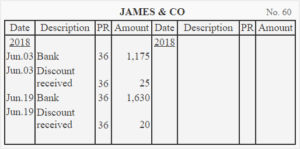
NOTE: The discount columns in the Cash Book are totalled and not balanced. They are to be added weekly or monthly at the time the cash and bank columns are balanced and ruled off. the totals of the discount columns are taken to the discount accounts in the ledger and are entered on the same sides of these accounts as they are found in the Cash Book
DISCOUNTS
Discounts are allowances which could be a deduction in price or percentage payment made to retailers by suppliers or manufacturers.
TYPES OF DISCOUNTS
- Cash Discount
This is an allowance in consideration for prompt payment. This type of discount is allowed by businesses or suppliers where buyers or customers make payment immediately or within a specified period. For instance, within 7 days – 30 days.
i. Discount Allowed: It is a reduction of cash to be paid by a debtor for prompt payment.
When a discount is allowed, the amount is usually entered into the debit column of the discount-allowed cash book.
ii. Discount Received: this is the value of discount received off accounts paid by a trader or a creditor.
When this happens, the amount received is entered in the credit column of the cash book.
- Trade Discount
It is a reduction from the retail list price offered to the trader. It could also be seen as an allowance made to retailers by the manufacturers or suppliers in the form of a deduction from catalogue prices of goods.
The catalogue or list price is the gross selling price. When the trade discount is deducted, it gives the net selling price.
Trade discounts are also not entered into a cash book.
REASONS FOR GRANTING DISCOUNTS.
- It is given to encourage bulk purchases
- To ensure prompt payment
- To attract customers
- It is granted to avoid the risk of bad debts
- It is also granted to provide for the buyer’s or customer’s profit margin.
ASSIGNMENT
- State four features of each of the following
(a) Trade Discounts
(b) Cash Discounts
- List five reasons why a trader will grant a discount to his customers

Third Term Book Keeping Lesson Notes for Other Topics

Basic Concepts Of Marketing
Explore lesson notes covering all topics.

Income And Expenditure Account
Explore lesson notes covering all topics.

Receipt And Payment Account
Explore lesson notes covering all topics.

Account Of Non-Profit Making Organizations
Explore lesson notes covering all topics.

Single Entry And Incomplete Records
Explore lesson notes covering all topics.

Petty Cashbook
Explore lesson notes covering all topics.

Trial Balance
Explore lesson notes covering all topics.


Lesson Notes for Other Classes

JSS1 Lesson Note
The complete lesson note to guide your studies.

JSS2 Lesson Note
The complete lesson note to guide your studies.

SS2 Lesson Note
The complete lesson note to guide your studies.

SS3 Lesson Note
The complete lesson note to guide your studies.