
The State Formation Process SS1 Nigerian History Lesson Note
Download Lesson NoteTopic: The State Formation Process
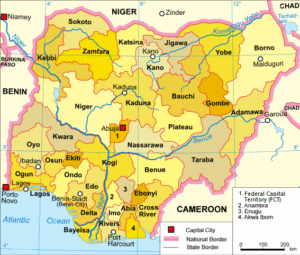
The state formation process in Nigeria is the story of how different areas and peoples came together to form the country we know today as Nigeria. This process started with British colonization in the late 1800s and continued until Nigeria became independent in 1960. Even after independence, the process of building and shaping the Nigerian state has continued. This lesson explains how Nigeria was formed, the different ideas about how it should be governed, and the key events in this long journey.
What is State Formation?
State formation means the process of creating a country with:
- A central government
- Control over a specific territory
- People who are considered citizens
- Laws and ways to enforce them
- Recognition by other countries
In Nigeria, this process was complicated because the area had many different ethnic groups, languages, religions, and traditional systems of rule before the British arrived.
British Colonization and Early State Formation
Pre-Colonial Nigeria
Before the British came:
- The area now called Nigeria had over 250 ethnic groups
- There were powerful kingdoms like the Sokoto Caliphate, Benin Kingdom, and Oyo Empire
- Each had their own ways of governing, traditions, and histories
- There was no single country called “Nigeria”
- People identified with their ethnic group or kingdom, not as “Nigerians”
British Arrival and Conquest
The British gradually took control:
- Trading started along the coast in the 1800s
- Lagos became a British colony in 1861
- The Royal Niger Company controlled trade in the Niger area
- By 1900, Britain had created the Protectorate of Northern Nigeria and the Protectorate of Southern Nigeria
- British military forces defeated resistance from local kingdoms
The Amalgamation of 1914
A crucial moment in Nigerian state formation:
- In 1914, Lord Frederick Lugard joined Northern and Southern Nigeria together
- This created a single colony called Nigeria
- The name “Nigeria” comes from the Niger River that flows through the country
- This was done mainly for British administrative convenience
- Many different peoples were suddenly part of one political unit
- This laid the foundation for today’s Nigeria
- However, the North and South were still administered differently
Different Models for Nigerian State Formation
Ahmadu Bello’s Federal Model
Sir Ahmadu Bello, the Sardauna of Sokoto, proposed:
- A federal system with strong regions
- Each region would have significant control over its affairs
- The central government would handle only matters like defense and foreign affairs
- This would respect the differences between Nigeria’s peoples
- The North would maintain its distinct identity and traditions
- This model appealed to those who wanted to preserve regional cultures
Nnamdi Azikiwe’s Unitary Model
Dr. Nnamdi Azikiwe (later Nigeria’s first President) advocated:
- A strong central government
- Less power for the regions
- One Nigerian identity above ethnic identities
- A more integrated nation
- Equal citizenship for all Nigerians regardless of origin
- This model appealed to those who wanted a more united Nigeria
Obafemi Awolowo’s Confederal Model
Chief Obafemi Awolowo suggested:
- An arrangement giving even more power to the regions
- Regions based on ethnic groups
- The central government would have limited powers
- Each ethnic region would control most of its affairs
- Unity would be voluntary rather than forced
- This model recognized Nigeria’s ethnic diversity
Path to Independence and State Formation
Indirect Rule and Its Impact
The British system of governing shaped Nigeria:
- British ruled through traditional leaders
- Different approaches in different regions
- Worked well in the North with its emirate system
- Was less successful in the East where traditional leadership was more democratic
- Created or deepened differences between regions
- Set patterns that continued after independence
Growth of Nigerian Nationalism
Calls for independence strengthened state formation:
- Western-educated Nigerians began demanding more rights
- Newspapers spread ideas about self-government
- Political organizations formed to fight for independence
- The National Council of Nigeria and the Cameroons (NCNC) formed in 1944
- The Action Group formed in 1951
- The Northern People’s Congress (NPC) formed in 1949
- These became regional rather than truly national parties
Constitutional Development
Step by step, Nigeria moved toward independence:
- Richards Constitution (1946) brought the regions together in one legislative council
- Macpherson Constitution (1951) gave Nigerians more say in government
- Lyttleton Constitution (1954) established a true federal system
- Independence Constitution (1960) created the framework for independent Nigeria
- Each step increased Nigerian control and shaped how the country would be governed
Independence and Continuing State Formation
Achievement of Independence
A major milestone in Nigerian state formation:
- On October 1, 1960, Nigeria became an independent country
- Abubakar Tafawa Balewa became the first Prime Minister
- Nnamdi Azikiwe became Governor-General, later President
- Nigeria adopted a federal system with three regions
- This was a compromise between the different models
- The formal colonial phase of state formation was complete
- But the process of building the Nigerian state continued
Republican Status
Further development of the Nigerian state:
- In 1963, Nigeria became a republic
- This ended the role of the British monarch as head of state
- Azikiwe became the President
- This completed Nigeria’s break from British political control
- Showed Nigeria’s desire to be truly independent
Creating More States
Restructuring to address ethnic concerns:
- In 1963, the Mid-Western Region was created from part of the Western Region
- In 1967, General Yakubu Gowon created 12 states out of the 4 regions
- By 1996, Nigeria had 36 states plus the Federal Capital Territory
- Each new state creation was meant to:
- Give recognition to minority groups
- Spread development more evenly
- Reduce fears of domination by larger ethnic groups
- Bring government closer to the people
Challenges to State Formation
The Nigerian Civil War (1967-1970)
A serious threat to Nigerian unity:
- Eastern Region declared independence as “Biafra” in 1967
- Led by Colonel Odumegwu Ojukwu
- Followed killing of Igbos in the North
- The war lasted 30 months
- About 1-3 million people died
- Showed the fragility of the Nigerian state
- After Biafra’s defeat, Nigeria remained one country
- “No victor, no vanquished” policy helped healing
Military Rule
The military shaped Nigerian state formation:
- First military coup occurred in January 1966
- Military ruled Nigeria for nearly 30 of its first 40 years
- Centralized more power in the federal government
- Created more states
- Suspended and rewrote constitutions
- Moved the capital from Lagos to Abuja in 1991
- Military rule delayed democratic development
Resource Control and Revenue Sharing
Disputes over Nigeria’s wealth affected state formation:
- Oil was discovered in commercial quantities in 1956
- Became Nigeria’s main source of income
- Created debates about who should control resources
- Arguments over how to share revenue between states
- Derivation principle (states get percentage of resources produced there)
- Special funds for oil-producing areas
- These issues remain contentious in Nigerian politics
Recent Developments in State Formation
Return to Democracy
Resuming democratic state formation:
- Military rule ended in 1999
- New constitution established current democratic system
- Fourth Republic began with President Olusegun Obasanjo
- Regular elections since 1999
- Longest period of continuous civilian rule in Nigeria’s history
- Democracy allowed for more citizen participation
- But political stability remains a challenge
The 1999 Constitution
Current framework for Nigerian governance:
- Created a presidential system
- Maintained federal structure with 36 states
- Established a bicameral legislature (Senate and House of Representatives)
- Listed exclusive, concurrent, and residual powers
- Created a Federal Character principle to ensure ethnic balance
- Remains controversial with calls for amendments
- Some argue it centralizes too much power
Creation of Federal Capital Territory
A symbol of Nigerian unity:
- Abuja was designated as new capital in 1976
- Actual move from Lagos completed in 1991
- Located in the center of Nigeria
- Meant to be neutral ground away from any major ethnic group
- Planned city with modern infrastructure
- Represented a fresh start for the Nigerian state
- Now the political center of Nigeria
Ongoing Challenges in Nigerian State Formation
National Identity vs. Ethnic Identity
Balancing different loyalties:
- Many Nigerians identify more with their ethnic group than the nation
- Phrase “the Nigerian project” suggests nation-building is ongoing
- National symbols, sports teams, and shared experiences help build unity
- Ethnic and religious tensions still affect politics
- Creating a true national identity remains a work in progress
Calls for Restructuring
Debate continues about Nigeria’s structure:
- Some call for return to regional governments
- Others want more states
- Resource control remains contentious
- Arguments for and against more federal power
- Debates about revenue sharing formula
- Shows that state formation is an ongoing process
Security Challenges
Threats to state authority:
- Boko Haram insurgency in the Northeast
- Militancy in the Niger Delta
- Farmer-herder conflicts
- Separatist movements like IPOB (Indigenous People of Biafra)
- These challenge the state’s control over its territory
- The government’s response affects its legitimacy
Conclusion
The state formation process in Nigeria has been long and complex. It began with British colonization and the 1914 amalgamation, developed through the independence movement, and continues today with ongoing debates about how Nigeria should be structured and governed.
Different models of state formation were proposed by leaders like Ahmadu Bello, Nnamdi Azikiwe, and Obafemi Awolowo, reflecting different visions of what Nigeria should be. The actual process involved compromise between these visions and responded to events like the Civil War and periods of military rule.
Key moments in Nigerian state formation include the 1914 amalgamation, independence in 1960, republic status in 1963, the creation of states, the Civil War, military interventions, and the return to democracy in 1999. Each of these events shaped the Nigerian state we know today.
State formation in Nigeria is not complete. Debates continue about national identity, resource control, power sharing, and the best structure for governance. These ongoing discussions show that building a nation is a continuous process that involves compromise, adjustment, and responding to new challenges.
Understanding this complex history helps us appreciate both the achievements and challenges of the Nigerian state and the continuing efforts to create a country that works for all its diverse peoples.

First Term Nigerian History Lesson Notes for Other Topics
Relationship Between People From Different Centers Of Civilization In Precolonial Nigeria: Kanem Bornu/Hausa Empire
Explore lesson notes covering all topics.
Relationship Between People From Different Centers Of Civilization In Precolonial Nigeria: Igbo/Ibibio
Explore lesson notes covering all topics.
Relationship Between People From Different Centers Of Civilization In Precolonial Nigeria: Igbo/Niger Delta City States
Explore lesson notes covering all topics.
Relationship Between People From Different Centres Of Civilization In Precolonial Nigeria: Ife/Benin
Explore lesson notes covering all topics.
Non-Centralized States: The Idoma
Explore lesson notes covering all topics.
Non-Centralized States: The Igbo
Explore lesson notes covering all topics.
Non-Centralized States - The Tiv
Explore lesson notes covering all topics.
Major Non-Centralized States In Pre-Colonial Nigeria
Explore lesson notes covering all topics.

Drama
Explore lesson notes covering all topics.

Poetry
Explore lesson notes covering all topics.

Prose: Literary And Non-Literary
Explore lesson notes covering all topics.

Genres/Branches Of Literature
Explore lesson notes covering all topics.
Centers Of Ancient Civilization
Explore lesson notes covering all topics.
Traditions Of Origin Of Various Groups
Explore lesson notes covering all topics.
Land And The People Of Nigeria
Explore lesson notes covering all topics.


Lesson Notes for Other Classes

JSS1 Lesson Note
The complete lesson note to guide your studies.
JSS2 Lesson Note
The complete lesson note to guide your studies.

SS2 Lesson Note
The complete lesson note to guide your studies.

SS3 Lesson Note
The complete lesson note to guide your studies.