
Introduction To History SS1 Nigerian History Lesson Note
Download Lesson NoteTopic: Introduction To History
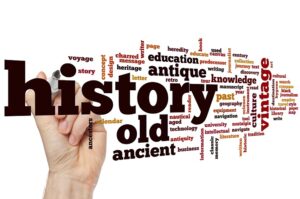
History is the study of important past events. Traditionally, the word “history” is derived from the Greek word “historie”. This Greek word means “to know” or “to learn by inquiry”.
Therefore, history can be seen as a kind of research or science, since science itself seeks to know or to have a knowledge of the past, to understand the present and to plan for the future.
TYPES OF HISTORY SOURCES
- Primary Source.
Primary sources are materials produced by the people or groups directly involved in the event or topic under discussion, either as participants or as witnesses.
Examples are Oral tradition:
i. Verbal information by a witness or handed down from one generation to another.
ii. Artifacts objects made by man in the early days.
iii. Folklores – material and non-material expression of people of their culture.
iv. Legend- stories of human actions with supernatural content etc.
- Secondary Source
Secondary sources are materials that are views, personal interpretations and views of people who did not witness or have first-hand information about events. For example, textbooks, journals, newspapers, biographies etc
It is important to note that both Primary and Secondary sources can either be WRITTEN OR UNWRITTEN.
Examples of Written Sources include:
- Newspapers
- Diaries
- Travellers’ account
- Journals
- Reports of commissions of enquiry
- Manifesto parties
- Government official records
- Minutes of meetings
- Private letters
- Official reports of officers
- Court records
- Books
- Anniversary brochures
- Tributes
- Magazines etc
An example of Unwritten sources is oral tradition, etc.
OTHER SOURCES OF HISTORY
- Archaeology: the study of a people’s culture of years past through excavation and material remains that are found.
- Linguistics: is the scientific study of the origin, structure and changes of a language that occur in the languages over some time.
- Ethnography: is the study of present-day social institutions as well as the crafts and artistic skills of people. An example is the collaboration of festivals, the process of making pottery, beads, weaving, construction etc.
- Numismatics: is the study of coins. This study helps us to know where the coins were minted and found.
- Art history: udy of art forms such as engravings, paintings, carvings and stone sculptures, tombs, slabs or walls of caves, palaces and shrines.
IMPORTANCE OF HISTORY
- The study of history like other disciplines helps some individuals to earn a living (career aspect). It serves as a source of employment for people who study the subject at a higher level.
- The study of African history has helped in the discovery of the activities of man in far-off times.
- The study of African history allows the individual to relate his past with the present in a better way.
- African history has addressed the notion and misconception that Africa has contributed insignificantly to history.
- African history enables the student to develop a critical mind to the variety of human behaviour and motives and understand politics, economics and society.
- The study of African history is beneficial since it helps to acquire knowledge about African traditions, culture, norms, and values and to take pride in them and present them.
- African history enables the history student to acquire knowledge of their own country and the African continent.
- African history has practical use in international relations and diplomacy.
- Studying African history will enable the history student to acquire the skills and values that our past can give.
- A proper examination of the past can tell us a great deal about how we came to be who we are.
- One studies African history to be able to appreciate the use of other sources in the writing and reconstruction of African history apart from written sources.
- It enables the student to develop an accurate sense of African historical chronology.

First Term Nigerian History Lesson Notes for Other Topics
Relationship Between People From Different Centers Of Civilization In Precolonial Nigeria: Kanem Bornu/Hausa Empire
Explore lesson notes covering all topics.
Relationship Between People From Different Centers Of Civilization In Precolonial Nigeria: Igbo/Ibibio
Explore lesson notes covering all topics.
Relationship Between People From Different Centers Of Civilization In Precolonial Nigeria: Igbo/Niger Delta City States
Explore lesson notes covering all topics.
Relationship Between People From Different Centres Of Civilization In Precolonial Nigeria: Ife/Benin
Explore lesson notes covering all topics.
Non-Centralized States: The Idoma
Explore lesson notes covering all topics.

Non-Centralized States: The Igbo
Explore lesson notes covering all topics.

Non-Centralized States - The Tiv
Explore lesson notes covering all topics.
Major Non-Centralized States In Pre-Colonial Nigeria
Explore lesson notes covering all topics.

Drama
Explore lesson notes covering all topics.

Poetry
Explore lesson notes covering all topics.

Prose: Literary And Non-Literary
Explore lesson notes covering all topics.

Genres/Branches Of Literature
Explore lesson notes covering all topics.

The State Formation Process
Explore lesson notes covering all topics.
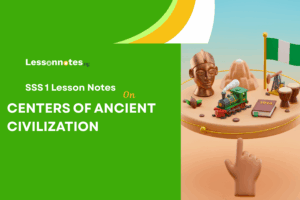
Centers Of Ancient Civilization
Explore lesson notes covering all topics.
Traditions Of Origin Of Various Groups
Explore lesson notes covering all topics.


Lesson Notes for Other Classes

JSS1 Lesson Note
The complete lesson note to guide your studies.

JSS2 Lesson Note
The complete lesson note to guide your studies.

SS2 Lesson Note
The complete lesson note to guide your studies.

SS3 Lesson Note
The complete lesson note to guide your studies.