
Indigenous Technology: Crafts And Industries SS1 Nigerian History Lesson Note
Download Lesson NoteTopic: Indigenous Technology: Crafts And Industries
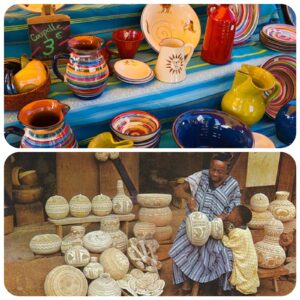
Although agriculture was the major economic activity in Nigeria in the past, people still participated in other activities like trading, hunting, fishing and manufacturing. These industries produced services such as tools, weapons, utensils, ornaments and clothing.
TYPES OF INDUSTRIES
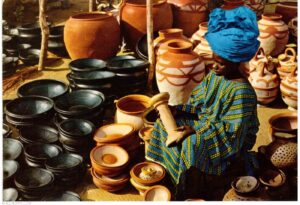
- Pottery: Pottery is the production of items with clay. It is usually produced by women because the most popular product of clay is pots. Pottery was used for:
- Fetching water
- Storage and cooking
- Plates and bowl
- Ritual purposes
- Metalwork: Iron technology that is mining the ore, smelting and smithing is a landmark in pre-colonial history. Tools produced from iron include hoes, knives, spears and swords.
Uses include:
- Iron made agriculture easier.
- Iron weapons were used as weapons of war.
- Iron was important in legendary stories like Ogun was worshipped in Yorubaland etc
- It was used as currency
- Bronze and brass: Uses of bronze include:
- Used in casting heads and figures.
- Used to decorate Oba’s palace
- Salt production: Produced on a high scale but was also scarce. The production was a woman’s work with taboos and ceremonies. It was used for:
- Preservation
- Cooking
- Used as currency
- Cloth industry: Earliest clothes made from animal skin, the bark or leaves and raffia palm leaves. But later, locally grown cotton became the main raw material for cloth making. Processes involve spinning, weaving and dyeing.
- Leather industry: The North is the major place for leather and skin work. Kano is the major city for the sale and production of leather goods.
Other Industries include Carving, Food processing, Soap making, canoe building, and grass weaving.

Third Term Nigerian History Lesson Notes for Other Topics
Songhai Empire
Explore lesson notes covering all topics.
Mali Empire
Explore lesson notes covering all topics.
Ghana Empire
Explore lesson notes covering all topics.
Muslim States In The Face Of Colonization In West Africa
Explore lesson notes covering all topics.
Christian Missionary Activities In West Africa
Explore lesson notes covering all topics.
Empire In Western Sudan: Old Ghana, Mali And Songhai Empire In Africa
Explore lesson notes covering all topics.
Great Empires And Kingdoms In West Africa
Explore lesson notes covering all topics.
Factors Responsible For The Decline Of Great Empires In Western Sudan
Explore lesson notes covering all topics.
Non-Centralized States
Explore lesson notes covering all topics.
Trans-Atlantic Slave Trade
Explore lesson notes covering all topics.
Spread of Islam in Kanem-Bornu Empire
Explore lesson notes covering all topics.

Early European Contacts With The Coastal States
Explore lesson notes covering all topics.
Islam in Hausa Land
Explore lesson notes covering all topics.
Early External Influences: Contact With The North African Trade And Islam
Explore lesson notes covering all topics.


Lesson Notes for Other Classes

JSS1 Lesson Note
The complete lesson note to guide your studies.

JSS2 Lesson Note
The complete lesson note to guide your studies.

SS2 Lesson Note
The complete lesson note to guide your studies.

SS3 Lesson Note
The complete lesson note to guide your studies.