
Introduction To Accounting And Its History SS1 Financial Accounting Lesson Note
Download Lesson NoteTopic: Introduction To Accounting And Its History
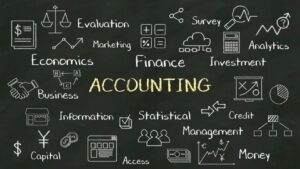
WHAT IS ACCOUNTING?
Accounting is the act of recording, classifying, analyzing, summarizing, interpreting and communicating financial information of an organisation to various end-users of such information.
USERS OF ACCOUNTING INFORMATION/FINANCIAL STATEMENTS
The following interested users of financial information should be noted as well as the reasons/purpose for which they would require or utilize the relevant information:
- Owners of Businesses: They use it to:
i. Determine the profitability of the business
ii. assess the competence of the managers of the business
iii. assist them in making important business/investment decisions
- Shareholders of a Company: They use it to:
i. Determine the profitability of the business
ii. assess the ability of the company to pay its expected dividends
iii. project the future growth of the company
- Loan Creditors (i.e. lenders to the business): They use it to:
i. Assess the ability of the business to repay loans
ii. assess the ability of the business to repay the interest as and when due
iii. assess the possibility/probability of the borrowing company defaulting on repayments
iv. know whether adequate assets are available as security
v. determine the level of credit to grant
4. Trade Creditors/Suppliers i.e. those that supply goods to the business on credit. They use it to:
i. assess the creditworthiness of the business
ii. assess the ability of the business to pay back its debts
iii. determine their level of exposure to the business
- Competitors
i. Fix their prices relative to the prices of similar products produced by the business
ii. determine their position in the market i.e. market share as to sales, profits, number of employees etc.
6. Customers
i. Know if the business is a guaranteed/secured source of supply
ii. assess the financial position of the business
7. Employees of the Business
i. Know the profitability of the business
ii. know the extent of job security and the prospects of their future careers
iii. negotiate for better conditions of service and improved wages/salaries
8. Tax Authorities e.g. Lagos State Board of Internal Revenue (LSBIR) or Federal Board of Inland Revenue (FBIR). They use it to determine the amount of tax to be paid by the business
9. The Government: They use it to:
i. Compute statistics about businesses operating in the country
ii. enhance the formulation of government policies e.g. on industrialization
iii. regulate the activities of business by government agencies e.g. CBN, NDIC, SEC, CAC, NSE etc.
10. The Public: They use it:
i. For employment and economic considerations
ii. To know whether to invest in the enterprise.
WHAT IS BOOKKEEPING?
Bookkeeping is the systematic recording of the daily financial transactions of an organization so that the financial position of a business can be readily ascertained or determined at any time.
DIFFERENCES BETWEEN BOOK-KEEPING AND ACCOUNTING
- Book-keeping concentrates only on the routine recording of transactions while accounting goes beyond the aspect of recording to classify, analyse, summarise and interpret financial information.
- Bookkeeping is limited in scope (i.e. area of coverage) while accounting has a wider scope.
- The time required for training to be a qualified book-keeper is shorter (about a few months) compared to an accountant (about five years)
- Book-keeping records are mainly for internal use in an organisation while accounting records are for both internal and external use.
- Book-keeping is an integral part of accounting while accounting is more complex and has book-keeping as one of its components.
IMPORTANCE OF BOOK-KEEPING AND ACCOUNTING/REASONS WHY ACCOUNTING RECORDS ARE KEPT
- To determine the profit or loss made by the business during a particular trading period
- The existence of financial records helps in decision-making by managers of the business
- Financial records help in the prevention of fraud
- To assess and ascertain the financial position of the business as of a particular date
- To determine the solvency and liquidity of a business
- It serves as a basis for assessing the tax to be paid by the business
- To ascertain the assets and liabilities of the business
- It is useful for making economic comparisons among businesses and comparing recent financial results with past financial results.
- Properly kept records are used for planning purposes i.e. setting targets and determining the best ways to achieve them.
HISTORY OF THE DEVELOPMENT OF ACCOUNTING
There is no accurate record as to when accounting started but available information suggests that record keeping is as old as man.
The double-entry system of modern bookkeeping was developed in 1494 by an Italian named Luca Pacioli. In Nigeria, the earliest formal record of business transactions came with the granting of a royal charter to the Royal Niger Company in 1886.
On 1st September 1965, the Institute of Chartered Accountants of Nigeria was established while the Association of National Accountants of Nigeria was established on 31st July 1979 as the second professional accounting body in Nigeria.

First Term Financial Accounting Lesson Notes for Other Topics
Discounts
Explore lesson notes covering all topics.
The Cash Book
Explore lesson notes covering all topics.

The Ledger
Explore lesson notes covering all topics.
Accounting Equation And Double Entry Principle
Explore lesson notes covering all topics.
Career Opportunities In Bookkeeping And Accounting
Explore lesson notes covering all topics.
Advantages And Limitations Of Accounting
Explore lesson notes covering all topics.
Nigeria Financial System
Explore lesson notes covering all topics.
Capital Market I
Explore lesson notes covering all topics.
Capital Market II
Explore lesson notes covering all topics.
Loan Capital
Explore lesson notes covering all topics.
Securities And Exchange Commissions (SEC)
Explore lesson notes covering all topics.

Nigerian Stock Exchange
Explore lesson notes covering all topics.
Acquisition/Purchase Of Business
Explore lesson notes covering all topics.
Purchase Of Business Account
Explore lesson notes covering all topics.
Public Sector Accounting
Explore lesson notes covering all topics.


Lesson Notes for Other Classes

JSS1 Lesson Note
The complete lesson note to guide your studies.

JSS2 Lesson Note
The complete lesson note to guide your studies.

SS2 Lesson Note
The complete lesson note to guide your studies.

SS3 Lesson Note
The complete lesson note to guide your studies.