
Values I SS1 Civic Education Lesson Note
Download Lesson NoteTopic: Values I
MEANING OF VALUES
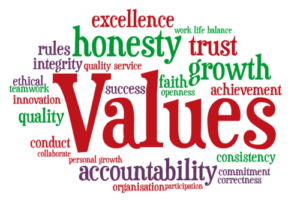
Values can be defined as the monetary and non–monetary worth of a thing, but it is appropriate to define it from the perspective of the subject matter – civic education. We may define it as the esteem quality of or importance that a person or group give to certain ideas or beliefs accepted and maintained by individuals and the society they live in. Value again can be the set of moral principles and standards guiding our interactions with people in society.
Value points out things that are good and constructive and this should be instilled in a good or an active citizen. It solves human and societal problems like; corruption, terrorism, cultism, thuggery, robbery etc. It emanates from what a group or society accept as a standard of behaviour and ideals as its sources include the family, the environment, its people and so on.
TYPES OF VALUE
The following are types or forms of values:
- Selflessness
- Hard work
- Discipline
- Justice
- Love
- Contentment
- Integrity etc.
- SELFLESSNESS: This is the ability to work for and care for other people more than oneself. Late Chief Ganiyu Fawehinmi, got an unofficial titled Senior Advocate of the Masses (SAM) as he fought and stood for justice and the eradication of man’s humanity against man.
- JUSTICE: This is being fair, reasonable and right in meeting people. It is the absence of favouritism, bias or sentiment in dealing with issues of conflict between two or more people. From the foregoing, we can say that human society exists without justice and is at peace.
TYPES OF JUSTICE
There are four types of justice
- Distributive justice: this implies fair share i.e. fairness in what people receive on income, just recompense.
- Procedure justice: this is using fair process in deciding goods or whatever is distributed. Its absence can cause revolt where people demand their rights.
- Restoration justice: it is otherwise referred to as restitution. It seeks to appease someone who has been cheated or a heartfelt apology for writing a wrong by converting all justice done to persons or a group of persons.
- Retributive justice: this is revenge, sought when someone offends, aggrieves or betrays another. He wants the offender to suffer exactly what he has suffered.
Importance Of Justice
- It prevents unnecessary conflict among the people in the society
- It encourages good relationships and interaction in the society
- It promotes peace in the society
- It makes all happy
IMPORTANCE OF VALUES
- They help in resisting pressure to conform to values we do not appreciate people of integrity do not compromise their beliefs
- They help in goal setting: goals are functions of our moral principles someone with good values will set goals that fall in line with his good principles.
- They make us influence others positively. Having a mentor or role model of integrity one would as a result influence others positively
Assignment
Discuss at least four (4) values showing their attributes manifestation

First Term Civic Education Lesson Notes for Other Topics
Nationalism
Explore lesson notes covering all topics.
Citizenship II - Functions of Government
Explore lesson notes covering all topics.
Citizenship I - Meaning & Benefit of Citizenship Education
Explore lesson notes covering all topics.
Youth Empowerment I
Explore lesson notes covering all topics.
Youth Empowerment II
Explore lesson notes covering all topics.

HIV/AIDS II
Explore lesson notes covering all topics.
HIV/AIDS I
Explore lesson notes covering all topics.
Values III - Opportunity to Defend Oneself
Explore lesson notes covering all topics.
Values II - Community Service
Explore lesson notes covering all topics.
Human Rights I & II
Explore lesson notes covering all topics.
Human Rights III - Limitation of Human Rights
Explore lesson notes covering all topics.
Fighting Political Apathy
Explore lesson notes covering all topics.
Public Service In Democracy I
Explore lesson notes covering all topics.
Civil Society
Explore lesson notes covering all topics.
Popular Participation
Explore lesson notes covering all topics.

Lesson Notes for Other Classes

JSS1 Lesson Note
The complete lesson note to guide your studies.
JSS2 Lesson Note
The complete lesson note to guide your studies.
SS2 Lesson Note
The complete lesson note to guide your studies.

SS3 Lesson Note
The complete lesson note to guide your studies.