
Agriculture SS1 Economics Lesson Note
Download Lesson NoteTopic: Agriculture
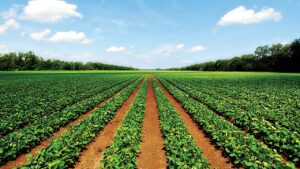
Agriculture can be defined as the production of crops, animals, fish and forest resources for the consumption and other benefit of humans. It is a dominant occupation which employs about 65-70% of the total population of West Africa.
COMPONENTS OF AGRICULTURE:
Agriculture is made up of the following:
- Live stock
- Fishing
- Crop production
- Forestry
- LIVESTOCK
This involves rearing domestic animals, e.g. pigs, cattle, horses, donkeys, goats, sheep, etc. Most of these animals are reared to satisfy domestic consumption.
- FORESTRY
It concerns the preservation of economic trees or plants. Also, it involves the extraction of various forms of resources associated with forest e.g. furniture, plywood, boats, manufacturing of papers, and electric pools, These are some of the things we derive from plant preservation.
- CROP PRODUCTION
It involves the cultivation of various crops. Crops are divided into two categories: food crops and cash crops.
- Food Crops: these are majorly for consumption e.g. maize, rice, beans, coco yams, yam, tomatoes, corn, millet etc.
- Cash Crops: these are meant for sale either locally or export. E.g. cocoa, palm oil, rubber, palm kernels, cotton, groundnut, etc.
- FISHING
This involves the breeding and catching of fish from the rivers for human consumption. it constitutes a major occupation of people who reside in the riverine area.
SYSTEM OF AGRICULTURE
Systems of agricultural production include:
- Plantation farming
- Peasant farming
- Cooperative farming
- Mechanized farming
- Plantation Farming
It involves the use of large estates of land permanently planted with economic or commercial crops. Examples of crops planted on plantation farming include sugar, cotton, rubber, sugar cane, tobacco, etc. In plantation farming, land could be owned by the government, private individuals, or corporate bodies.
2. Peasant Farming
This is also known as subsistence agriculture. It involves cultivation on a small scale (acres of land). Land in this situation is often owned communally and they employ mainly their family labour. The size of land used by peasant farmers is majorly determined by the size of their family members and their family land. Rudimentary farming equipment such as cutlasses, axes, hoes, e.t.c.which are crude and are usually used in peasant farming.
3. Cooperative farming
In this nature of farming, farmers come together to form a sort of association or union. This form of union is adopted to obtain loans and aid from the government, to hire or purchase farming equipment.
4. Mechanized farming
This involves the extensive use of machines and other types of advanced mechanical devices in agricultural production. It ensures large-scale production because the use of human labour is replaced with that of machines. E.g. harvesters, ploughs, tractors. e.t.c. this form of farming has not been popularized in West Africa.
IMPORTANCE OF AGRICULTURE IN WEST AFRICA
- Source of raw materials
- Provision of food
- Provision of employment
- Creation of a market for industrial product
- Source of income
- Source of Labour for industries
PROBLEMS OF AGRICULTURE IN WEST AFRICA
- Illiteracy/ignorance
- Lack of medical facilities
- Use of crude implement
- Poverty
- Lack of credit facilities
- Lack of storage facilities
- Poor transportation
- Problem of the land tenure system
- Pests and diseases
- Natural disaster
SOLUTION TO THE PROBLEMS OF AGRICULTURE
- Granting of credit facilities to farmers
- Improvement of transportation system
- Discouraging migration
- Mechanization of agriculture
- Effective control of pests and diseases
- Provision of medical facilities
- Education
- The use of research
- Use of irrigation
- Control of erosion
ASSIGNMENT
- What is trade by barter?
- Highlight the problems posed by trade by barter.
- What is partnership?
- Explain the function of money as the:
- store of value
- measure of values
- Give three reasons why primary production pre-dominates in developing countries.

Third Term Economics Lesson Notes for Other Topics
Inflation
Explore lesson notes covering all topics.

Financial Institutions
Explore lesson notes covering all topics.
Public Finance
Explore lesson notes covering all topics.

Money
Explore lesson notes covering all topics.
Budget
Explore lesson notes covering all topics.
Capital Market
Explore lesson notes covering all topics.
National Income
Explore lesson notes covering all topics.
Theory Of Income Determination
Explore lesson notes covering all topics.
Theory Of Multiplier
Explore lesson notes covering all topics.

Financial Institutions
Explore lesson notes covering all topics.
The Nature Of Nigerian Economy
Explore lesson notes covering all topics.

Mining
Explore lesson notes covering all topics.

Channels Of Distribution
Explore lesson notes covering all topics.


Lesson Notes for Other Classes

JSS1 Lesson Note
The complete lesson note to guide your studies.

JSS2 Lesson Note
The complete lesson note to guide your studies.

SS2 Lesson Note
The complete lesson note to guide your studies.

SS3 Lesson Note
The complete lesson note to guide your studies.