
Songhai Empire JSS2 Nigerian History Lesson Note
Download Lesson NoteTopic: Songhai Empire
Songhai Empire
The Songhai Empire was one of Africa’s largest and most powerful kingdoms. It existed from around 1375 CE to 1591 CE and was the last of the three great West African empires, following Ghana and Mali. At its peak, Songhai controlled an enormous territory that stretched from the Atlantic Ocean to present-day Nigeria and included parts of what are now Mali, Niger, Nigeria, Senegal, Mauritania, Guinea, Gambia, and Burkina Faso.
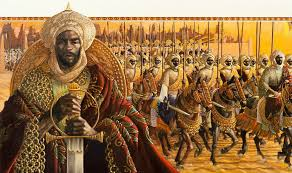
The Songhai people originally lived along the middle part of the Niger River, with their main city at Gao. As the Mali Empire began to weaken in the late 1300s, Songhai leaders saw an opportunity to gain power. They built their own empire by conquering important trading cities, controlling trans-Saharan trade routes, and creating a strong government and military.
Under its greatest rulers, Sunni Ali Ber and Muhammad Touré (also known as Askia the Great), the Songhai Empire became the largest state in African history up to that time. The empire supported trade, learning, and the arts, making cities like Timbuktu, Gao, and Djenné famous centers of commerce and education.
Origins and Early Development
The Songhai People
The Songhai people have lived along the middle Niger River for thousands of years. They were originally fishermen who lived in the area around Gao, a city that became an important trading center because of its location on the Niger River. As trade across the Sahara Desert grew, the Songhai began to participate more in long-distance commerce.
Before creating their empire, the Songhai had a kingdom centered at Gao. This kingdom was conquered by the Mali Empire in the early 1300s. For about 50 years, Gao was ruled as part of Mali. During this time, many Songhai people converted to Islam, and their leaders learned about how to govern a large state by watching Mali’s government system.
Independence from Mali
As the Mali Empire began to weaken in the late 1300s, the Songhai saw a chance to break free. Around 1375, a Songhai leader named Sunni Ali seized control of Gao and declared independence from Mali. For the next hundred years, Songhai gradually grew stronger while Mali became weaker.
The Songhai leaders who ruled during this early period were called the Sunni dynasty. They worked to build up their military strength and expand their control along the Niger River. They conquered smaller kingdoms and villages, creating a growing state centered around Gao.
The Rise to Imperial Power: Sunni Ali Ber
Military Conquests
Songhai became a true empire under the leadership of Sunni Ali Ber, who ruled from 1464 to 1492. His name “Ber” means “the Great” in the Songhai language, showing how important he was to their history. Sunni Ali was a brilliant military commander who led his army on horseback and created a powerful navy of war canoes that controlled the Niger River.
During his 28-year reign, Sunni Ali:
- Captured Timbuktu from the Tuareg people in 1468
- Conquered the important city of Djenné after a seven-year siege
- Took control of many former territories of the Mali Empire
- Built a professional army with both cavalry (soldiers on horseback) and a river navy
- Created the largest empire in West Africa at that time
Sunni Ali was known for his military skill and sometimes harsh treatment of conquered peoples. He was especially tough on Islamic scholars who opposed him, which made him unpopular with the Muslim elite despite being Muslim himself.
Government Organization
To control his growing empire, Sunni Ali created a new government system:
- He divided the empire into provinces governed by loyal officials
- He placed military commanders in charge of newly conquered areas
- He required regular tax payments and tribute from all regions
- He maintained a large standing army to enforce his rule
- He created a messenger system to carry orders throughout the empire
This government structure allowed Songhai to control a vast territory with many different ethnic groups and cultures. Sunni Ali successfully united these diverse regions into a single state.
The Golden Age: Askia Muhammad Touré
Rise to Power
When Sunni Ali died in 1492, his son briefly took power. However, one of Sunni Ali’s generals, Muhammad Touré, led a rebellion against the son. After winning, Muhammad Touré became the new ruler and took the title “Askia,” starting a new dynasty.
Askia Muhammad Touré (often called Askia the Great) ruled from 1493 to 1528. While Sunni Ali had been a warrior who built the empire through conquest, Askia Muhammad focused on organizing the government, promoting Islam, and developing trade and education.
Administrative Reforms
Askia Muhammad improved the empire’s government system:
- He divided Songhai into more carefully managed provinces
- He appointed loyal governors called “koys” to administer regions
- He created specialized ministers for finance, justice, agriculture, and other areas
- He standardized weights and measures to make trade easier
- He established an efficient tax collection system
These reforms made the empire more organized and easier to govern. The improved administration helped maintain peace and stability across Songhai’s vast territory.
Islamic Scholarship and Education
Askia Muhammad was a devout Muslim who supported Islamic learning and culture:
- He went on a famous pilgrimage to Mecca, bringing back scholars and ideas
- He built many new mosques and schools throughout the empire
- He appointed Islamic judges (qadis) to apply Muslim law in the cities
- He gave money and land to scholars and religious teachers
- He established libraries that collected books from across the Muslim world
Under Askia’s rule, cities like Timbuktu became world-famous centers of Islamic scholarship. The University of Sankore in Timbuktu attracted students and scholars from throughout Africa and the Middle East. Thousands of hand-written books were collected, copied, and studied in Timbuktu’s libraries.
Economic Development and Trade
Askia Muhammad understood that trade was the key to Songhai’s wealth:
He improved the safety of trade routes by posting guards and building rest houses
He standardized currency to make business transactions easier
He encouraged foreign merchants to visit Songhai cities
He removed unnecessary taxes that hindered commerce
He developed mining of salt, gold, and copper
Under Askia’s leadership, trade flourished across the empire. Caravans carrying gold, salt, textiles, leather goods, and slaves regularly crossed the Sahara Desert. Goods from Europe, North Africa, and the Middle East flowed into Songhai, while African products were exported northward.
The Empire at its Height
Territorial Extent
At its peak under Askia Muhammad, the Songhai Empire controlled an enormous area:
- In the west, it reached parts of present-day Senegal and Gambia
- In the east, it extended to the borders of modern Nigeria
- In the north, it included parts of the Sahara Desert in what is now Mauritania and Mali
- In the south, it reached the edges of the forest regions in what is now Burkina Faso
This vast territory made Songhai the largest state in African history up to that time. It took months to travel from one end of the empire to the other.
Major Cities and Centers
Several important cities flourished during the Songhai period:
- Gao served as the empire’s capital and royal residence
- Timbuktu became famous as a center of Islamic learning and trans-Saharan trade
- Djenné developed as an important market city and architectural center
- Taghaza in the desert was a crucial source of salt for the empire
- Walata served as a major trading post on the western trade routes
These cities were connected by trade routes that followed the Niger River and crossed the Sahara Desert. Each city had its own character and specialized economic activities, but all were part of Songhai’s impressive trade network.
Daily Life and Society
Most people in the Songhai Empire were farmers who grew crops like millet, rice, and sorghum. They lived in small villages and paid taxes to the empire through their local chiefs. Fishing was important along the Niger River, providing food and items for trade.
Songhai society was divided into several classes:
- The royal family and nobles formed the ruling class
- Islamic scholars and wealthy merchants made up an influential group
- Free commoners included farmers, craft workers, and smaller traders
- Slaves (often captured in wars) worked for wealthy families and the government
Cities had diverse populations that included people from many different ethnic groups and regions. Urban residents often worked as craft specialists making textiles, pottery, leather goods, or metal items. Markets were busy places where products from across Africa and beyond were bought and sold.
Decline and Fall
Internal Problems
After Askia Muhammad was removed from power by his sons in 1528, the Songhai Empire began to face problems:
- Conflicts over succession led to fighting between different branches of the royal family
- Provinces began to assert more independence from central control
- Corruption increased among government officials
- The army became less disciplined and effective
- Economic problems developed as trade was disrupted by political instability
These internal weaknesses made the empire vulnerable to outside threats. While Songhai remained powerful, it was no longer as well-governed as it had been under Askia Muhammad.
The Moroccan Invasion
The final blow to the Songhai Empire came from an unexpected direction. In 1591, the Sultan of Morocco, Ahmad al-Mansur, sent an army across the Sahara Desert to attack Songhai. The Moroccan force was small (about 4,000 men) but had advanced firearms that the Songhai army lacked.
At the Battle of Tondibi in 1591, the Moroccan forces defeated the much larger Songhai army. Their muskets and cannons proved decisive against Songhai’s traditional weapons. After this defeat, the Moroccans captured Gao, Timbuktu, and other major cities.
The Songhai government collapsed, and the empire broke apart into smaller kingdoms. While the Moroccans controlled the major cities for a time, they never managed to rule the entire former empire effectively. The region entered a period of political fragmentation that lasted for centuries.
Legacy and Significance
Cultural and Intellectual Achievements
Despite its political end, the Songhai Empire left an important legacy:
Thousands of manuscripts produced during this period preserved knowledge in mathematics, astronomy, medicine, history, and literature
Architectural styles developed during the Songhai era continue to influence West African building design
Islamic educational traditions established in cities like Timbuktu continued long after the empire’s fall
Trade networks created during this period formed the basis for later regional commerce
The memory of Songhai’s greatness inspired later West African states and resistance to European colonization
The intellectual achievements of Songhai scholars show that Africa was an important center of learning during this period. Many of the manuscripts written in Timbuktu and other cities have survived to the present day, preserved by families and now being studied by modern scholars.
Historical Significance
The Songhai Empire represents an important chapter in African and world history:
- It was the largest indigenous African state of the pre-colonial era
- Its sophisticated government system showed advanced political organization
- Its control of trans-Saharan trade connected sub-Saharan Africa with North Africa, Europe, and the Middle East
- Its educational institutions preserved and advanced knowledge in many fields
- Its military power and economic wealth made it a major world power of its time
Studying Songhai helps us understand that Africa had a rich history of state-building, international trade, and intellectual achievement long before European colonization.
Conclusion
The Songhai Empire stands as one of Africa’s greatest kingdoms and an important civilisation in world history. For over 200 years, it controlled vast territories, protected vital trade routes, built impressive cities, and fostered centres of learning and culture. Its achievements in government organisation, military power, trade networks, and scholarship made it a sophisticated state comparable to other major powers of its era.
Even after its political collapse, Songhai’s cultural and intellectual legacy continued through the knowledge preserved in its manuscripts and the traditions maintained by its people. The story of this powerful empire reminds us that African history includes remarkable states whose accomplishments deserve recognition alongside other great civilizations of the world.

Third Term Nigerian History Lesson Notes for Other Topics
Mali Empire
Explore lesson notes covering all topics.
Ghana Empire
Explore lesson notes covering all topics.
Muslim States In The Face Of Colonization In West Africa
Explore lesson notes covering all topics.
Christian Missionary Activities In West Africa
Explore lesson notes covering all topics.
Empire In Western Sudan: Old Ghana, Mali And Songhai Empire In Africa
Explore lesson notes covering all topics.
Great Empires And Kingdoms In West Africa
Explore lesson notes covering all topics.
Factors Responsible For The Decline Of Great Empires In Western Sudan
Explore lesson notes covering all topics.
Non-Centralized States
Explore lesson notes covering all topics.
Trans-Atlantic Slave Trade
Explore lesson notes covering all topics.
Spread of Islam in Kanem-Bornu Empire
Explore lesson notes covering all topics.

Early European Contacts With The Coastal States
Explore lesson notes covering all topics.
Islam in Hausa Land
Explore lesson notes covering all topics.
Early External Influences: Contact With The North African Trade And Islam
Explore lesson notes covering all topics.
Indigenous Technology: Crafts And Industries
Explore lesson notes covering all topics.


Lesson Notes for Other Classes

JSS1 Lesson Note
The complete lesson note to guide your studies.

SS1 Lesson Note
The complete lesson note to guide your studies.

SS2 Lesson Note
The complete lesson note to guide your studies.

SS3 Lesson Note
The complete lesson note to guide your studies.