
Mali Empire JSS2 Nigerian History Lesson Note
Download Lesson NoteTopic: Mali Empire
Mali Empire
The Mali Empire was one of West Africa’s greatest kingdoms. It existed from about 1230 CE to 1600 CE, rising to power after the decline of the Ghana Empire. At its height, Mali controlled a vast territory stretching from the Atlantic Ocean in the west to the trading centers of Timbuktu and Gao in the east, covering parts of what are now the modern countries of Mali, Senegal, Mauritania, Gambia, Guinea, and Niger.
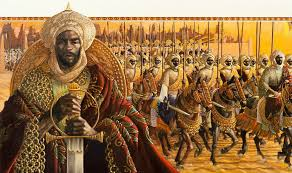
The Mali Empire became famous for its wealth, especially its gold, and for the legendary pilgrimage of its ruler Mansa Musa to Mecca. Mali grew powerful by controlling important trade routes across the Sahara Desert. The empire connected gold-producing regions of West Africa with North African and Middle Eastern traders who brought salt, textiles, and other goods from across the desert and beyond.
Under Mali’s protection, cities like Timbuktu grew into major centers of Islamic learning and culture. The empire’s government system, military strength, and economic policies created a period of peace and prosperity that made Mali one of the most important states in the medieval world.
Origins and Rise to Power
The Mandinka People
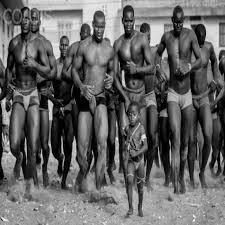
The Mali Empire was founded by the Mandinka (also called Malinke) people, who lived in the upper Niger River valley. The Mandinka were farmers who grew crops like millet, rice, and sorghum. They also traded along the Niger River and kept livestock like cattle and goats.
Before creating their empire, the Mandinka lived in small kingdoms led by chiefs called “faamas.” These Mandinka states paid tribute to the Ghana Empire for many years. When Ghana began to decline around 1200 CE, various groups competed to fill the power vacuum in West Africa. The Mandinka, under strong leadership, eventually emerged as the dominant power.
Sundiata Keita and the Founding of Mali
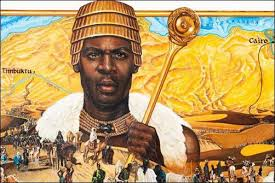
The founder of the Mali Empire was Sundiata Keita, a figure so important in West African history that he is sometimes called “the Lion King” or “the Lion of Mali.” His story is preserved in oral traditions called epic poems, which were memorized and recited by special storytellers known as griots.
According to these traditions, Sundiata was born around 1217 CE as the son of a Mandinka chief. Though he was physically disabled as a child and couldn’t walk until he was a teenager, Sundiata grew into a powerful warrior. After being forced into exile, he returned to defeat a cruel king named Soumaoro Kanté at the Battle of Kirina around 1235 CE.
This victory allowed Sundiata to unite many Mandinka clans and other ethnic groups under his leadership. He created a new state centered at the town of Niani along the Niger River. Sundiata established the foundations of Mali’s government by:
- Creating a system where each territory was governed by a representative who reported to him
- Establishing laws and customs that would govern the empire
- Organizing a strong army to protect trade routes and expand Mali’s territory
- Building alliances with neighboring peoples through diplomacy and marriage
- Supporting trade throughout the region
Sundiata ruled until his death around 1255 CE. He established a royal lineage that would continue to rule Mali for several generations.
Government and Political Organization
The Mansa and Royal Court
The Mali Empire was ruled by a king called the “mansa,” which means “sultan” or “emperor” in the Mandinka language. The mansa had both political and religious authority. He was considered a living link between the people and their ancestors, giving the position sacred importance.
The royal court of Mali displayed impressive wealth and ceremony:
- The mansa sat on a raised platform decorated with gold
- He was surrounded by officials, advisors, guards, and musicians
- Visitors had to approach the king barefoot and put dust on their heads to show respect
- Court musicians played instruments and sang praise songs about the royal family’s history
- The mansa wore fine clothes adorned with gold and precious stones
The royal court traveled between different cities throughout the year, allowing the king to maintain personal control over various regions of the empire.
Administrative Structure
The Mali Empire was divided into provinces led by governors appointed by the mansa:
- Core provinces were ruled directly by members of the royal family
- Conquered territories were often allowed to keep their local rulers, who paid tribute to Mali
- Important trading cities had special governors who collected taxes and maintained order
- Each village had a chief responsible for local affairs
- Religious leaders and councils of elders helped govern at the local level
This system allowed Mali to control a vast territory with relatively few administrators. As long as tribute was paid and trade routes remained secure, local communities often maintained considerable autonomy.
Justice and Law
The Mali Empire maintained law and order through several methods:
- The Mansa served as the highest judge in the land
- Islamic law (Sharia) was applied in Muslim regions, especially in cities
- Traditional customs and laws governed rural areas
- Local chiefs and elders resolved most everyday disputes
- More serious cases were brought to provincial governors
Travellers reported that Mali was exceptionally safe for merchants. The famous Moroccan traveller Ibn Battuta, who visited Mali in 1352, wrote that people could travel throughout the empire without fear of robbery because thieves were punished severely and justice was applied equally to everyone.
Economy and Trade
Trans-Saharan Trade
Like Ghana before it, Mali’s wealth and power came largely from controlling trans-Saharan trade:
- Gold from mines in regions like Bambuk and Bure flowed north across the Sahara
- Salt from desert mines came south into Mali
- Copper from mines in the Sahara was traded throughout the empire
- Cloth, horses, and manufactured goods came from North Africa and the Middle East
- Kola nuts from forest regions were traded to the north where they were highly valued
Mali’s rulers made sure trade routes were safe for merchants. They stationed guards along major routes and built rest houses where traders could find shelter and water. The mansas also standardized weights and measures to make trading easier.
Taxation and Royal Treasury
The Mali Empire collected wealth through several forms of taxation:
- Traders paid taxes on goods entering or leaving the empire
- Gold miners had to give the mansa a portion of what they found
- Farmers paid a harvest tax, usually in food
- Conquered peoples paid tribute in goods, gold, or slaves
- Salt miners paid taxes on their production
The mansa’s treasury stored enormous amounts of gold. Some of this wealth was used to build mosques, palaces, and other public buildings. Much was also spent on maintaining the royal court and army. The mansa’s legendary wealth became known throughout the medieval world, especially after Mansa Musa’s famous pilgrimage.
Agriculture and Local Production
While gold and trade brought great wealth to Mali’s rulers, most people in the empire were farmers:
- They grew crops such as millet, rice, sorghum, and cotton
- Livestock included cattle, sheep, and goats
- Fishing was important along the Niger River
- Villages produced their own pottery, textiles, and household items
- Specialized craftspeople made luxury goods for the wealthy
The Niger River flooded each year, leaving behind rich soil for farming. This agricultural productivity supported Mali’s large population and allowed some people to become specialized craft workers, traders, religious scholars, or soldiers rather than farmers.
Mansa Musa and the Height of Mali
The Famous Pilgrimage
The most famous ruler of Mali was Mansa Musa (also spelled Moussa), who ruled from approximately 1312 to 1337 CE. During his reign, Mali reached its greatest size and wealth. Mansa Musa became legendary for his pilgrimage to Mecca in 1324-1325.
According to accounts written by people who witnessed this journey:
- Mansa Musa traveled with a procession of 60,000 people
- He brought 80-100 camels each carrying 300 pounds of gold
- His caravan included soldiers, officials, merchants, camel drivers, and slaves
- 500 slaves each carried a staff of gold weighing several pounds
- He gave away so much gold in Cairo that it caused inflation, lowering the value of gold in Egypt for several years
This pilgrimage brought Mali to the attention of the wider Muslim world and Europe. After his visit, Mali appeared on European maps, and stories of its wealth inspired explorers for centuries.
Building Projects and Cultural Development
During Mansa Musa’s reign, Mali experienced significant cultural and architectural development:
- He brought back architects from his pilgrimage who built many new mosques
- The famous Djinguereber Mosque in Timbuktu was constructed during his reign
- Libraries and Islamic schools were established throughout the empire
- He sent students to study in Morocco and Egypt
- Scholars were invited to Mali from across the Muslim world
Mansa Musa also expanded Mali’s territory, adding cities like Timbuktu and Gao to the empire. Under his rule, Mali reached its greatest geographical extent, controlling land from the Atlantic coast to well beyond the Niger River bend.
Timbuktu: Center of Learning and Trade
The Golden Age of Timbuktu
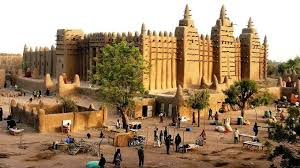
The city of Timbuktu became the intellectual and commercial heart of the Mali Empire:
- It was located near the northernmost bend of the Niger River
- The city served as a major trading center where goods from the forest regions were exchanged for desert products
- Caravans of up to 10,000 camels would arrive carrying salt and other goods
- Timbuktu became home to the University of Sankore, a renowned center of learning
- Thousands of students came to study religion, astronomy, mathematics, law, and medicine
During Mali’s golden age, Timbuktu had around 100,000 residents, including many scholars and students. The city had numerous libraries containing thousands of handwritten books and manuscripts.
Islamic Scholarship
Timbuktu and other Mali cities became major centers of Islamic learning:
- Scholars wrote books on religion, history, science, and literature
- Students memorized the Quran and studied Islamic law
- Astronomers made observations of the stars and created calendars
- Mathematicians developed advanced calculating techniques
- Doctors studied medicine and wrote medical textbooks
The achievements of Mali’s scholars showed that Africa was an important center of intellectual life during the medieval period. Many of the manuscripts produced during this time still exist today, preserved by families in Mali.
Society and Culture
Social Structure
The Mali Empire had several social classes:
- The royal family and nobles formed the ruling class
- Islamic scholars and wealthy merchants made up an influential middle class
- Free commoners included farmers, craft workers, and traders
- Slaves (often captured in wars) worked for wealthy families and the royal court
A person’s place in society was usually determined by their birth family, though talented individuals could sometimes rise to important positions through military service, scholarship, or trade.
Religious Life
The Mali Empire combined traditional African religions with Islam:
- The mansas and many urban residents practiced Islam
- Rural people often followed traditional beliefs involving ancestor worship and nature spirits
- Many people practiced a mixture of both religions
- The mansas performed both Islamic and traditional ceremonies
- Religious tolerance was generally practiced throughout the empire
While the rulers of Mali were Muslim, they did not force their subjects to convert. Over time, Islam spread peacefully through the influence of traders and scholars rather than by force.
Arts and Culture
Mali developed rich artistic and cultural traditions:
- Griots (oral historians) memorized and recited the history of families and the empire
- Musicians played instruments like the kora (a 21-string harp), balafon (wooden xylophone), and drums
- Craftspeople created beautiful textiles, pottery, and jewelry
- Architecture blended North African styles with local building techniques
- Woodcarvers made masks, doors, and household items with intricate designs
These cultural traditions preserved the history and values of the society while also creating beautiful works of art that showcased Mali’s creativity and craftsmanship.
Decline of the Empire
Factors in Mali’s Weakening
After reaching its peak under Mansa Musa, the Mali Empire gradually began to decline:
- Internal power struggles weakened the central government
- Provinces began to break away and declare independence
- The rival Songhai Empire conquered key cities like Timbuktu and Gao around 1468
- Moroccan and Tuareg raiders attacked Mali’s northern territories
- New trade routes developed that bypassed Mali’s control
- A series of weak rulers could not maintain the empire’s unity
By 1600 CE, Mali had lost most of its territory and was reduced to a small kingdom around its original homeland.
Legacy and Historical Significance
Despite its eventual decline, the Mali Empire left an important legacy:
- It established Mali as a significant cultural region that exists to this day
- The empire spread Islam throughout much of West Africa
- Mali’s educational centers preserved and advanced knowledge in mathematics, astronomy, literature, and other fields
- Stories of Mali’s wealth inspired later European exploration of Africa
- Cultural traditions established during the Mali period continue to influence West African societies
The achievements of the Mali Empire show that Africa had powerful, well-organized states with advanced learning and international connections long before European colonization.
Conclusion
The Mali Empire stands as one of Africa’s greatest kingdoms and an important civilization in world history. For over 300 years, it controlled vast territories, protected vital trade routes, built impressive cities, and fostered centers of learning and culture. The wealth of its rulers, especially Mansa Musa, became legendary throughout the medieval world.
By studying Mali, we learn that West Africa had a long history of state-building, international trade, and intellectual achievement. The empire’s control of trans-Saharan trade, its administrative system, and its support for education and the arts demonstrate the sophistication of African civilization during this period.
Even after its political decline, Mali’s cultural impact continued through the knowledge preserved in its manuscripts and the traditions maintained by its people. The story of this powerful empire reminds us that African history includes remarkable states whose achievements deserve recognition alongside other great civilizations of the medieval world.

Third Term Nigerian History Lesson Notes for Other Topics
Songhai Empire
Explore lesson notes covering all topics.
Ghana Empire
Explore lesson notes covering all topics.
Muslim States In The Face Of Colonization In West Africa
Explore lesson notes covering all topics.
Christian Missionary Activities In West Africa
Explore lesson notes covering all topics.
Empire In Western Sudan: Old Ghana, Mali And Songhai Empire In Africa
Explore lesson notes covering all topics.
Great Empires And Kingdoms In West Africa
Explore lesson notes covering all topics.
Factors Responsible For The Decline Of Great Empires In Western Sudan
Explore lesson notes covering all topics.
Non-Centralized States
Explore lesson notes covering all topics.
Trans-Atlantic Slave Trade
Explore lesson notes covering all topics.
Spread of Islam in Kanem-Bornu Empire
Explore lesson notes covering all topics.

Early European Contacts With The Coastal States
Explore lesson notes covering all topics.
Islam in Hausa Land
Explore lesson notes covering all topics.
Early External Influences: Contact With The North African Trade And Islam
Explore lesson notes covering all topics.

Indigenous Technology: Crafts And Industries
Explore lesson notes covering all topics.


Lesson Notes for Other Classes

JSS1 Lesson Note
The complete lesson note to guide your studies.

SS1 Lesson Note
The complete lesson note to guide your studies.

SS2 Lesson Note
The complete lesson note to guide your studies.

SS3 Lesson Note
The complete lesson note to guide your studies.