
Relationship Between People From Different Centers Of Civilization In Precolonial Nigeria: Kanem Bornu/Hausa Empire JSS2 Nigerian History Lesson Note
Download Lesson NoteTopic: Relationship Between People From Different Centers Of Civilization In Precolonial Nigeria: Kanem Bornu/Hausa Empire
Relationship Between People From Different Centers Of Civilization In Precolonial Nigeria: Kanem Bornu/Hausa Empire
Long before Europeans came to Nigeria, different groups of people had built advanced societies across the region. These groups didn’t live in isolation – they connected with each other through trade, politics, war, religion, and culture. Two important centers that developed strong relationships were the Kanem-Bornu Empire and the Hausa States. Their interactions show how early Nigerian societies influenced each other and built complex relationships that shaped their development over many centuries.
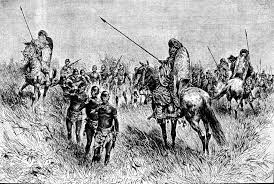
Kanem-Bornu was a powerful empire located in what is now northeastern Nigeria, parts of Niger, Chad, and Cameroon. It existed from around the 9th century until the 19th century, making it one of Africa’s longest-lasting empires. The Hausa States were a group of kingdoms in what is now northern Nigeria and southern Niger, including famous cities like Kano, Katsina, Zaria, and Gobir. Both Kanem-Bornu and the Hausa States became important Islamic centers that maintained extensive connections with each other and the wider Muslim world.
Historical Background
The Rise of Kanem-Bornu
Kanem-Bornu began as the Kingdom of Kanem, east of Lake Chad, around the 9th century. The kingdom was founded by the Kanuri people under the Sayfawa dynasty, which became one of Africa’s longest-ruling royal families. In its early days, Kanem was not a Muslim state, but followed traditional religious practices.
A major change came when King Humme Jilmi converted to Islam around 1085 CE. From then on, Kanem developed as an Islamic state with connections to North Africa and the Middle East. The kingdom grew by controlling important trade routes across the Sahara Desert.
Around the 14th century, the rulers of Kanem were forced to move their capital westward to Bornu (west of Lake Chad) due to attacks from neighboring groups. After this move, the empire became known as Kanem-Bornu. Under leaders like Mai Idris Alooma (who ruled from 1571-1603), Kanem-Bornu reached its greatest power and influence.
The Development of the Hausa States
The Hausa people established a number of city-states across what is now northern Nigeria and southern Niger. Each state had its own ruler called a Sarki, but they shared the Hausa language and many cultural practices. According to tradition, these states were founded by the descendants of a hero named Bayajidda who came from the east (possibly from Kanem-Bornu).
The most powerful Hausa states included:
- Kano, famous for its trading and manufacturing
- Katsina, known for Islamic scholarship
- Zaria, which controlled important trade routes
- Gobir, known for its military strength
- Daura, considered the oldest Hausa state
Like Kanem-Bornu, the Hausa States adopted Islam, though this happened more gradually between the 14th and 15th centuries. Islam became an important factor in the relationship between Kanem-Bornu and the Hausa States, creating religious and cultural bonds between their ruling classes.
Political Relationships
Diplomatic Exchanges
Kanem-Bornu and the Hausa States maintained regular diplomatic contact:
- The Mai (ruler) of Bornu and the Hausa Sarkis exchanged messengers and gifts
- Letters written in Arabic were sent between courts
- Royal marriages sometimes connected the ruling families
- Political refugees from one state might seek shelter in another
- During conflicts, diplomats would travel to negotiate peace
An example of these diplomatic ties occurred during the reign of Mai Idris Alooma, who maintained correspondence with several Hausa rulers. These letters, some of which have survived, discussed matters of politics, trade, and religious affairs.
Influence and Power Dynamics
The relationship between Kanem-Bornu and the Hausa States was not always equal:
- For much of their history, Kanem-Bornu was the more powerful state
- At times, some Hausa States paid tribute to Kanem-Bornu
- Kanem-Bornu sometimes intervened in conflicts between Hausa States
- Hausa rulers might request military support from Kanem-Bornu against enemies
- The Mai of Bornu claimed a position of religious leadership that gave him influence in Hausaland
However, as the Hausa States grew stronger, especially Kano, the relationship became more balanced. By the 18th century, some Hausa States were powerful enough to resist Bornu’s influence, creating a more even political relationship.
Trade and Economic Relations
Trans-Saharan Trade Network
Trade formed the strongest connection between Kanem-Bornu and the Hausa States:
- Kanem-Bornu controlled important trade routes to North Africa across the Sahara
- The Hausa States connected these routes to trading networks farther south and west
- Together, they formed part of a vast trading system that linked sub-Saharan Africa with North Africa, the Middle East, and indirectly with Europe and Asia
- Merchants traveled regularly between Bornu and the Hausa cities
- Market towns sprung up along the routes connecting these states
This trade was so important that special arrangements were made to protect merchants traveling between regions.
Goods Exchanged
Many items moved through the trading networks:
- Salt from Saharan mines passed through Kanem-Bornu to the Hausa States
- Natron (a natural mineral used as medicine and for food preservation) came from Lake Chad
- Leather goods and textiles from Hausa cities like Kano were highly valued in Bornu
- Slaves captured from non-Muslim areas were traded northward
- Horses from North Africa passed through Bornu to the Hausa States
- Kola nuts from forests further south passed through Hausa cities on their way to Bornu
- Grains and dried fish were exchanged during times of local food shortage
These goods created economic interdependence between the regions, strengthening their relationship.
Currency and Financial Practices
Trade between the regions helped develop shared economic practices:
- Cowrie shells became a common currency used in both regions
- Credit systems allowed merchants to operate across long distances
- Market regulations followed similar patterns based on Islamic commercial law
- Professional trader groups operated across both regions
- Financial practices like partnerships and profit-sharing were used in both areas
These shared economic practices made it easier for people from both regions to do business together.
Religious and Cultural Exchanges
Islamic Scholarship and Education
The spread of Islamic learning created strong cultural bonds:
- Scholars traveled between Bornu and the Hausa States to study and teach
- Books and manuscripts circulated among learned communities
- Students from Hausa cities sometimes went to study in Bornu, which had earlier connections to North African centers of learning
- Religious ideas and practices spread through these scholarly networks
- Debates about Islamic law and theology involved scholars from both regions
The city of Ngazargamu, the capital of Bornu, became an important center of Islamic learning, as did Hausa cities like Katsina and Kano. The presence of scholars from various regions created a shared intellectual culture.
Arabic Literacy and Administrative Practices
The spread of Arabic literacy influenced government in both regions:
- Official letters between states were written in Arabic
- Court record-keeping used similar methods
- Administrative titles and government structures showed mutual influence
- Islamic legal concepts were applied in both regions
- Arabic became the language of scholarship, diplomacy, and high culture
These shared administrative practices made it easier for the states to understand and interact with each other.
Religious Practices and Festivals
Common religious observances strengthened cultural ties:
- The major Islamic festivals like Eid al-Fitr and Eid al-Adha were celebrated in similar ways
- The Friday congregational prayer became a central community event in both regions
- Religious calendars guided social and political life
- Islamic ethics influenced laws and social norms
- Traditional practices were modified to fit Islamic requirements in similar ways
These shared religious experiences created a sense of common identity among the Muslim populations of both regions, despite ethnic and political differences.
Military Relations and Conflicts
Alliances and Cooperation
Military cooperation sometimes occurred between Kanem-Bornu and Hausa States:
- They might form alliances against common enemies
- Military technology and tactics were shared
- Cavalry warfare techniques spread between the regions
- Defensive strategies were sometimes coordinated
- Warning systems alerted neighboring states to approaching threats
An example of military cooperation occurred when Bornu and some Hausa States joined forces against the kingdom of Kwararafa (Jukun) when it threatened both regions in the 17th century.
Conflicts and Rivalries
Despite their connections, conflicts also occurred:
- Border disputes sometimes led to fighting
- Competition over control of trade routes caused tensions
- Stronger Hausa States occasionally resisted Bornu’s claims of superiority
- Kanem-Bornu sometimes intervened in conflicts between Hausa States, taking one side
- Raiding for slaves and cattle could lead to retaliatory actions
These conflicts were usually limited in scope and didn’t prevent the regions from maintaining their overall relationship and trading connections.
Technological and Knowledge Transfer
Military Technology
Important military innovations spread between the regions:
- The use of cavalry and cavalry tactics
- Certain types of weapons like specific spear and arrow designs
- Defensive architecture for city walls
- Military organization methods
- Strategies for desert and savanna warfare
The similar military technologies used in both regions reflected their ongoing exchange of ideas and practices.
Crafts and Manufacturing
Knowledge of craft production also moved between the regions:
- Leatherworking techniques that made Hausa goods famous
- Textile production methods including dyeing and weaving
- Metalworking skills for tools and weapons
- Architectural methods for building in the Sudanic style
- Pottery and other domestic crafts
Craftspeople sometimes traveled between regions, spreading their skills and adapting them to local materials and tastes.
Legacy of the Relationship
Creation of a Regional Culture
The long relationship between Kanem-Bornu and the Hausa States helped create a distinctive Sudanic-Islamic culture across northern Nigeria:
- Similar architectural styles, featuring clay buildings with distinctive decoration
- Shared musical traditions including certain instruments and styles
- Common forms of dress and personal adornment
- Similar court ceremonies and protocols
- Food traditions that spread throughout the region
This cultural area crossed ethnic and political boundaries, creating connections that would remain important even after the original states declined.
Language and Terminology
The relationship influenced the development of languages in the region:
- Hausa borrowed words from Kanuri (the language of Kanem-Bornu)
- Kanuri adopted terms from Hausa
- Arabic terms entered both languages through their shared Islamic heritage
- Trade terminology became similar across the region
- Place names sometimes reflected historical connections
These linguistic connections provide evidence of the deep historical relationship between the regions.
Conclusion
The relationship between Kanem-Bornu and the Hausa States shows how different centers of civilization in precolonial Nigeria maintained complex connections over many centuries. Through trade, diplomacy, religious exchange, and sometimes conflict, these societies influenced each other’s development in profound ways.
Their relationship created a network of connections that helped spread ideas, goods, and practices across a vast region. The Islamic faith became a particularly important bond between them, creating a shared religious and intellectual tradition that transcended political boundaries.
Studying these historical relationships helps us understand that precolonial African societies were not isolated from each other but engaged in sophisticated networks of exchange and influence. The connections between Kanem-Bornu and the Hausa States represent an important chapter in Nigeria’s rich precolonial history, showing how different groups interacted and shaped each other’s development long before the arrival of European colonial powers.

First Term Nigerian History Lesson Notes for Other Topics
Relationship Between People From Different Centers Of Civilization In Precolonial Nigeria: Igbo/Ibibio
Explore lesson notes covering all topics.
Relationship Between People From Different Centers Of Civilization In Precolonial Nigeria: Igbo/Niger Delta City States
Explore lesson notes covering all topics.
Relationship Between People From Different Centres Of Civilization In Precolonial Nigeria: Ife/Benin
Explore lesson notes covering all topics.
Non-Centralized States: The Idoma
Explore lesson notes covering all topics.

Non-Centralized States: The Igbo
Explore lesson notes covering all topics.

Non-Centralized States - The Tiv
Explore lesson notes covering all topics.
Major Non-Centralized States In Pre-Colonial Nigeria
Explore lesson notes covering all topics.

Drama
Explore lesson notes covering all topics.

Poetry
Explore lesson notes covering all topics.

Prose: Literary And Non-Literary
Explore lesson notes covering all topics.

Genres/Branches Of Literature
Explore lesson notes covering all topics.

The State Formation Process
Explore lesson notes covering all topics.
Centers Of Ancient Civilization
Explore lesson notes covering all topics.
Traditions Of Origin Of Various Groups
Explore lesson notes covering all topics.
Land And The People Of Nigeria
Explore lesson notes covering all topics.


Lesson Notes for Other Classes

JSS1 Lesson Note
The complete lesson note to guide your studies.

SS1 Lesson Note
The complete lesson note to guide your studies.

SS2 Lesson Note
The complete lesson note to guide your studies.

SS3 Lesson Note
The complete lesson note to guide your studies.