
Non-Centralized States: The Igbo JSS2 Nigerian History Lesson Note
Download Lesson NoteTopic: Non-Centralized States: The Igbo
Non centralized states: The Igbo
The Igbo people of southeastern Nigeria represent one of Africa’s most well-known examples of a non-centralized political system. Spread across what is now Abia, Anambra, Ebonyi, Enugu, and Imo states, as well as parts of Delta and Rivers states, the Igbo developed and maintained a sophisticated democratic system without kings or centralized authority figures. Their political organization is often summarized by the phrase “Igbo enwe eze” (meaning “the Igbo have no king”), reflecting their fundamentally democratic approach to governance.
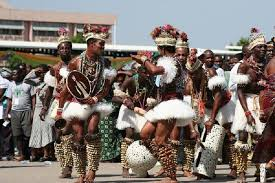
As one of Nigeria’s three largest ethnic groups, the Igbo developed a political system that was remarkably different from the centralized kingdoms that existed in other parts of Nigeria, such as the Yoruba kingdoms, the Benin Empire, or the Sokoto Caliphate. Instead of having kings who ruled over large territories, Igbo communities governed themselves through village assemblies, councils of elders, age grades, and title societies that ensured broad participation in decision-making.
Historical Background of the Igbo People
Origins and Settlement
The origins of the Igbo people remain a subject of debate among historians and archaeologists. Archaeological evidence suggests that ancestors of the Igbo have inhabited southeastern Nigeria for thousands of years. The distinctive Igbo political system likely evolved gradually over centuries in response to specific environmental, economic, and social conditions in the rainforest region they inhabited.
Unlike some ethnic groups that trace their origins to a single migration event or founding figure, Igbo oral traditions typically emphasize local origins and gradual development. Different Igbo communities have varying origin stories, reflecting the decentralized nature of their society from early times.
Early European Contact
When Portuguese traders first made contact with the Igbo in the 16th century, they found a society without kings or centralized states. This confused early European visitors who were accustomed to dealing with monarchs or clear hierarchical structures. Later, when British colonial officials encountered Igbo society in the 19th century, they struggled to implement their system of indirect rule, which relied on existing hierarchical structures that simply didn’t exist in Igbo society.
The British attempt to impose “warrant chiefs” on Igbo communities led to significant resistance, most famously in the Women’s War (Aba Women’s Riots) of 1929, when thousands of Igbo women protested against colonial policies that undermined traditional governance systems.
The Igbo Political System
Village Democracy
The foundation of Igbo political organization was the village group (often called the “village democracy”), which typically consisted of a cluster of related settlements. Each village had its own political structure with several key institutions:
- Village Assembly (Oha): A gathering of all adult males (and sometimes females in certain contexts) where important community decisions were made through discussion and consensus-building. These assemblies typically met in a central village square.
- Council of Elders (Ndi Ichie): A group of respected older men who provided leadership based on their age, experience, and wisdom rather than hereditary status. They served as advisors and mediators rather than rulers.
- Age-Grade Associations: Groups of men or women born within a few years of each other who moved through life stages together. These associations took responsibility for specific community functions like road maintenance, law enforcement, or military defense.
- Title Societies: Organizations whose membership was based on the achievement of certain titles through merit, wealth, or character. The most famous Igbo title society was the Ozo, whose members held significant influence in community affairs.
Decisions at the village level were typically made through a process of open discussion aimed at reaching consensus rather than simple majority rule. This emphasis on consensus-building ensured that all viewpoints were considered and reduced the potential for conflict within the community.
The Role of Lineages
Igbo society was organized around patrilineal kinship groups, with every individual belonging to their father’s lineage. These lineage groups formed the building blocks of political organization:
- The extended family compound (ezi na ulo) was headed by the oldest male member
- Several related compounds formed a lineage (umunna)
- Multiple lineages made up a village or village-group
- Larger units like clans contained multiple villages that recognized distant common ancestry
Political authority existed at each of these levels, with decisions affecting only one lineage handled within that group, while matters concerning multiple lineages required broader consultation.
The Dual-Sex Political System
A distinctive feature of Igbo political organization was the “dual-sex” system, where men and women had separate but complementary political institutions:
- Men’s Associations: Handled general governance, land disputes, and external relations.
- Women’s Associations: Led by a female leader often called the Omu or Iyom, these groups regulated markets, settled disputes among women, protected women’s interests, and could even sanction men who violated certain norms.
The most powerful women’s organization was the Otu Umuada (Daughters of the Lineage), composed of women born into a lineage but married elsewhere. These women retained rights in their birth community and could return to advocate for their interests or intervene in conflicts.
This dual system created important checks and balances, preventing men from making decisions that harmed women’s interests. The 1929 Women’s War demonstrated the power of these women’s organizations when they felt their traditional rights were threatened.
Title Societies and Achievement
Unlike societies where status was primarily hereditary, the Igbo emphasized personal achievement through the title system. Individuals could gain prominence and influence by taking titles that recognized their accomplishments:
- Ozo Title: One of the most prestigious titles, requiring significant wealth, moral character, and community service.
- Ichi Marks: Facial scarification that marked high status in some Igbo communities.
- Other Titles: Various communities had different titles recognizing achievements in farming, warfare, oratory, or other valued skills.
Taking a title required considerable wealth, which had to be distributed through feasts and gifts to the community. This system ensured that successful individuals reinvested their wealth in the community rather than accumulating it exclusively for themselves.
The title system created a meritocracy where individuals could gain influence through personal achievement rather than birth. However, title holders did not become rulers – they were respected advisors whose opinions carried weight in community deliberations but could be challenged by others.
Religious and Spiritual Dimensions
Religious and spiritual beliefs reinforced the non-centralized political system:
- Earth Goddess (Ala/Ani): The Igbo believed that the earth goddess oversaw moral conduct and punished violations of community norms. This created a spiritual basis for social controls that didn’t require centralized enforcement.
- Oracle Systems: Famous oracles like the Arochukwu Oracle (Ibini Ukpabi) provided judicial functions that transcended local community boundaries without creating centralized political authority.
- Masquerade Societies: Secret societies that performed with masks representing ancestral spirits enforced social norms and settled disputes.
- Dibia (Priest-Healers): Religious specialists who interpreted the will of deities and ancestors but did not hold formal political power.
These religious institutions helped maintain social cohesion and resolve conflicts without the need for a centralized political authority.
Social Control and Conflict Resolution
Village Assemblies and Dispute Resolution
Without formal courts or police forces, the Igbo developed effective methods for resolving conflicts:
- Minor disputes were first addressed within families or lineages.
- More serious matters were brought before the village assembly, where all parties could present their case.
- The council of elders would guide discussions, but decisions emerged from the broader assembly.
- Focus was placed on restoring harmony and reconciling parties rather than simply punishing wrongdoers.
- Difficult cases might be referred to oracles or divination to determine guilt or innocence.
This transparent, participatory approach to justice ensured that community members accepted and upheld decisions.
Ostracism and Social Sanctions
The primary enforcement mechanism in Igbo society was social pressure rather than physical coercion:
- Individuals who violated community norms faced public criticism and shame.
- Serious offenders might be ostracized, with community members refusing to interact with them.
- In extreme cases, individuals or families could be temporarily or permanently banished from the community.
These social sanctions were extremely effective in a society where survival depended on community cooperation and support.
The Role of Age Grades in Law Enforcement
Age-grade associations played an important role in maintaining order:
- Younger age grades often served as community police, implementing decisions made by the village assembly.
- They might confiscate property from those who refused to pay fines or perform community service as punishment for offenses.
- Age grades could also organize vigilance groups to protect against external threats.
- Their role in enforcement was temporary, as members eventually aged into elder status, preventing the development of a permanent police class.
Economic Organization
Land Tenure System
Land ownership in Igbo society reflected their non-centralized political structure:
- Land was held communally by lineages rather than individually owned.
- The eldest male of a lineage served as the trustee of land rather than its owner.
- Rights to use land were distributed among lineage members according to need.
- No central authority could appropriate land or dispossess people of their usage rights.
This system ensured that all Igbo had access to the resources they needed for survival while preventing the concentration of wealth and power that often accompanies private land ownership.
Market Networks
The Igbo developed an elaborate system of markets that facilitated trade without centralized control:
- Markets operated on a four-day or eight-day cycle, with different markets active on different days.
- Each market was protected by its own deity and governed by specific rules enforced by women’s associations.
- Specialist traders could travel between markets following the cycle.
- The market system created economic interdependence between communities without political centralization.
This market network became one of the most sophisticated indigenous economic systems in pre-colonial Africa, allowing for specialization and trade across a wide region without requiring political unification.
Inter-Village Relations
Dispute Resolution Between Communities
When conflicts arose between different Igbo villages, several mechanisms existed to resolve them without centralized authority:
- Negotiation between the councils of elders from the communities involved.
- Intervention by lineage groups with members in both communities.
- Mediation by neutral third-party villages or respected individuals.
- Consultation of regional oracles like the Arochukwu Oracle, which was respected across wide areas of Igboland.
- Marriage alliances that created kinship bonds between previously hostile groups.
These mechanisms allowed the Igbo to maintain peace and cooperation between communities without establishing permanent hierarchical structures.
Defensive Alliances
For protection against external threats, Igbo communities formed temporary defensive alliances:
- Villages might unite under a wartime leader chosen for his skill rather than hereditary status.
- Alliance members would contribute fighters from their age grades to a combined force.
- Once the threat passed, the alliance would dissolve, and the wartime leader would return to his regular status.
This flexible approach to military organization allowed for effective defense without creating permanent military hierarchies that might threaten the democratic nature of Igbo society.
Cultural Identity and Social Cohesion
Shared Values and Worldview
Despite their political decentralization, the Igbo maintained strong cultural cohesion through:
- A common language with dialectical variations.
- Shared values emphasizing individual achievement, consensus decision-making, and community harmony.
- Common religious beliefs centered on the earth goddess (Ala/Ani), ancestral spirits, and various deities.
- Distinctive cultural practices including naming ceremonies, marriage customs, and funeral rites.
- Artistic traditions in wood carving, body decoration, textiles, and music.
These shared cultural elements created a strong Igbo identity that transcended the boundaries of individual villages and lineages.
Festivals and Ceremonies
Regular gatherings reinforced social bonds across decentralized communities:
- New Yam Festival (Iriji/Iwaji) celebrated the harvest and brought entire communities together.
- Masquerade festivals connected the living with ancestral spirits and reinforced social norms.
- Market festivals celebrated the economic ties between communities.
- Age-grade initiations marked important life transitions and reinforced generational bonds.
These collective celebrations helped maintain Igbo identity and unity despite the absence of centralized political institutions.
Conclusion
The Igbo political system demonstrates that effective governance does not necessarily require centralized authority or hierarchical structures. Through village assemblies, councils of elders, age grades, and title societies, the Igbo successfully maintained order, resolved conflicts, and preserved their cultural identity for centuries without kings or centralized bureaucracy.
This non-centralized system offered several advantages, including:
- Broad participation in decision-making by community members
- Effective checks against the accumulation and abuse of power
- Flexibility and adaptability to local circumstances
- Strong social cohesion without coercive central authority
- Opportunities for individuals to gain influence through achievement rather than birth
The study of the Igbo political system enriches our understanding of the diversity of political traditions in pre-colonial Nigeria and challenges assumptions that centralized authority is necessary for effective governance. It reminds us that indigenous African societies developed sophisticated political systems adapted to their specific social and environmental contexts, many of which contained democratic elements that preceded European contact.
While modern nation-states have largely replaced traditional political systems, understanding these indigenous governance models provides valuable perspectives on alternative approaches to organization, conflict resolution, and social cohesion that may still have relevance in contemporary contexts.

First Term Nigerian History Lesson Notes for Other Topics
Relationship Between People From Different Centers Of Civilization In Precolonial Nigeria: Kanem Bornu/Hausa Empire
Explore lesson notes covering all topics.
Relationship Between People From Different Centers Of Civilization In Precolonial Nigeria: Igbo/Ibibio
Explore lesson notes covering all topics.
Relationship Between People From Different Centers Of Civilization In Precolonial Nigeria: Igbo/Niger Delta City States
Explore lesson notes covering all topics.
Relationship Between People From Different Centres Of Civilization In Precolonial Nigeria: Ife/Benin
Explore lesson notes covering all topics.
Non-Centralized States: The Idoma
Explore lesson notes covering all topics.
Non-Centralized States - The Tiv
Explore lesson notes covering all topics.
Major Non-Centralized States In Pre-Colonial Nigeria
Explore lesson notes covering all topics.

Drama
Explore lesson notes covering all topics.

Poetry
Explore lesson notes covering all topics.

Prose: Literary And Non-Literary
Explore lesson notes covering all topics.

Genres/Branches Of Literature
Explore lesson notes covering all topics.
The State Formation Process
Explore lesson notes covering all topics.
Centers Of Ancient Civilization
Explore lesson notes covering all topics.
Traditions Of Origin Of Various Groups
Explore lesson notes covering all topics.
Land And The People Of Nigeria
Explore lesson notes covering all topics.


Lesson Notes for Other Classes

JSS1 Lesson Note
The complete lesson note to guide your studies.

SS1 Lesson Note
The complete lesson note to guide your studies.

SS2 Lesson Note
The complete lesson note to guide your studies.

SS3 Lesson Note
The complete lesson note to guide your studies.