
How Political Parties Compete For Power Through Elections SS2 Civic Education Lesson Note
Download Lesson NoteTopic: How Political Parties Compete For Power Through Elections
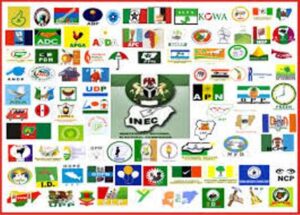
Political parties can be defined as an association of people with similar political ideologies who come together to contest elections to gain political power and control the government. The primary objective of any political party is to control the government. They usually conduct primary elections within the party to select a flag bearer or candidate that will represent them during the general election.
Their membership cuts across different interest groups, classes, ethnic boundaries and professions. Hence, a political party is a good example of a popular organization.
CHARACTERISTIC OF POLITICAL PARTIES
- Their main objective is to win elections and control the government.
- Their membership cuts across tribes, religions, professions, and ethnic and regional divides.
- They conduct primary elections.
- They present candidates for election.
- They carry out campaigns and rallies.
- They ensure political education in the society.
HOW POLITICAL PARTIES COMPETE FOR POWER THROUGH ELECTION
Political parties engage in strategies and activities that will enable them to achieve their objective of political leadership. Below are some of the activities they engage in when competing for election.
- Design of Manifesto: A Manifesto is a document that contains the agenda and key programmes which a political party intends to pursue or implement if voted into office. It is written in a way to entice people to support them during the election.
- Campaign: This is the gathering together of political party members to promote their manifesto to the public. They use such gatherings to canvass for votes.
- Primary Election: This is the election that is conducted within the political party to select the flag bearer or candidate that will represent the party at general elections either at the ward, local government, state or federal level.
- Education of Voters: Political parties teach their followers how to thumbprint and the logo to watch out for. They do this to ensure that voters are not deceived by their opponents. It also helps to reduce nullification/cancellation of votes.
- Selection of Credible Candidates: Political parties carefully select credible candidates who have a good standing in society to attract electorates. Such candidates are usually popular individuals or people from popular families who can attract followership in society.
- Welfare: Political parties sometimes engage in the distribution of souvenirs, materials, food items and money to the poor so that they can vote for their party. The voters believe that such welfare will continue if the party succeeds and takes over the control of the government.
- Mobilization: Political party members engage in door-to-door and one-on-one campaigns to woo voters for support.

First Term Civic Education Lesson Notes for Other Topics

Reasons Why Leaders Fail To Protect The Interest Of Their Followers
Explore lesson notes covering all topics.

Political Apathy
Explore lesson notes covering all topics.

Poverty And Its Effects
Explore lesson notes covering all topics.

Capitalist Democracy
Explore lesson notes covering all topics.
Nationalism
Explore lesson notes covering all topics.
Citizenship II - Functions of Government
Explore lesson notes covering all topics.

Citizenship I - Meaning & Benefit of Citizenship Education
Explore lesson notes covering all topics.
Youth Empowerment I
Explore lesson notes covering all topics.
Youth Empowerment II
Explore lesson notes covering all topics.

HIV/AIDS II
Explore lesson notes covering all topics.

HIV/AIDS I
Explore lesson notes covering all topics.
Values III - Opportunity to Defend Oneself
Explore lesson notes covering all topics.
Values I
Explore lesson notes covering all topics.

Values II - Community Service
Explore lesson notes covering all topics.

Human Rights I & II
Explore lesson notes covering all topics.


Lesson Notes for Other Classes

JSS1 Lesson Note
The complete lesson note to guide your studies.

JSS2 Lesson Note
The complete lesson note to guide your studies.

SS1 Lesson Note
The complete lesson note to guide your studies.

SS3 Lesson Note
The complete lesson note to guide your studies.