
Lowlands SS1 Geography Lesson Note
Download Lesson NoteTopic: Lowlands
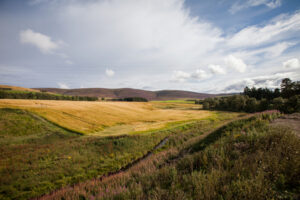
LOWLAND (PLAINS)
A plan is an extensive area of level or gently undulating land, usually a few meters above the sea-level.
Types of Plains
- Structural Plain
- Erosional Plain
- Depositional Plain
- Structural Plains
Mode of Formation: These are relatively undisturbed horizontal surfaces of the earth, formed by bedded sedimentary rocks. Examples include the Russian Platform and the Great Plains of the U.S.A.
- Erosional Plains
Mode of Formation: These plains are formed by the agents of denudation such as river, wind, rain, glacier and ocean waves which wear out irregular rock surfaces and smoothen them into plains known as erosional plains.
Plains resulting from the action of these agents of denudation are called peneplains while those formed when the wind blows and reduces a highland to a flat or level but gentle land is called peneplain. Examples of erosional plains include the Canadian Shield, Reg and Hamada of the Sahara desert.
- Depositional Plain
Mode of formation: These are plains formed by the deposition of materials or sediments transported by the various agents of transportation such as rivers, wind, waves and glaciers.
Depositional plains are grouped into the following categories:
- Alluvial Plains
- Flood Plains
- Deltaic Plains
- Outwash Plain
- Aeolian Plain’s
- Lacustrine Plains
- Coastal Plains
Importance/Uses of Plains
- Plains, especially level ones, are good for human habitation. Population and settlements are usually concentrated on plains.
- Some plains are rich sources of minerals like petroleum and coal.
- Plains, especially depositional plains are rich fertile soils which favor intensive agriculture.
- Plains generally favour the construction of roads, railways and airports.
- In areas of low rainfall, rearing of animals is carried out in plains as they favour the growth of pasture.
- Rivers in plains provide water for drinking and transportation.
- Rivers in plains provide jobs e.g. fishing.
Disadvantages of Plain
- Some plains, especially in delta areas may be flooded with water and this reduces human activities.
- Some may pose a serious barrier to communication, especially water either from the river or after rain. It therefore increases the cost of developing such areas e.g. construction of flyovers.

First Term Geography Lesson Notes for Other Topics

Rocks
Explore lesson notes covering all topics.
Mountains
Explore lesson notes covering all topics.
The Environment - Ecosystem & Its Component
Explore lesson notes covering all topics.
Geography: An Introduction
Explore lesson notes covering all topics.
The Earth's Structure
Explore lesson notes covering all topics.
Latitude & Longitude
Explore lesson notes covering all topics.
The Earth's Revolution
Explore lesson notes covering all topics.
The Earth's Rotation
Explore lesson notes covering all topics.

Satellite Remote Sensing
Explore lesson notes covering all topics.

Tourism
Explore lesson notes covering all topics.

World Trade
Explore lesson notes covering all topics.
ECOWAS
Explore lesson notes covering all topics.
Climatic Change
Explore lesson notes covering all topics.

Mass Movements
Explore lesson notes covering all topics.
Weathering
Explore lesson notes covering all topics.


Lesson Notes for Other Classes

JSS1 Lesson Note
The complete lesson note to guide your studies.

JSS2 Lesson Note
The complete lesson note to guide your studies.

SS2 Lesson Note
The complete lesson note to guide your studies.

SS3 Lesson Note
The complete lesson note to guide your studies.