
Introduction To Chemistry I SS1 Chemistry Lesson Note
Download Lesson NoteTopic: Introduction To Chemistry I
CHEMISTRY AS A SCIENCE SUBJECT
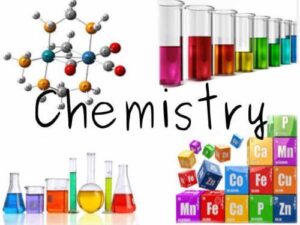
Science is an organized body of knowledge gathered through systematic experimentations and philosophical observations. Chemistry can be defined as a branch of science which deals with the study of the nature, structure, composition, properties and uses of all forms of matter and the changes in structure and composition which matter undergoes.
BRANCHES OF CHEMISTRY
Chemistry is divided into three main branches, namely
- Physical chemistry
- Organic chemistry
- Inorganic chemistry
Physical chemistry deals with the physical aspects of chemistry like quantum theory, heat and electricity.
Organic chemistry deals with the study of carbon and its compounds.
Inorganic chemistry deals with the study of elements, their properties and uses
SCIENTIFIC METHODS OF DISCOVERIES
The scientific method of discovery includes the following steps and stages:
- Observation
- Pattern
- Problem
- Hypothesis,
- Experiments
- Theory
- Law
NOTE: Hypothesis refers to a prediction or guess which explains an observed problem. When the hypothesis has been tested and found to be true within the limits of available evidence, it becomes a theory. A theory which has been extensively tested and proven correct without any exception becomes a scientific law.
APPLICATIONS OF CHEMISTRY
Chemistry is applied in our everyday life as different activities take place in the environment. The effect of chemistry is felt in different aspects of life such as cooking, washing with soaps or detergent, digestion of food, drugs etc. Other applications of chemistry include health care, transportation, food, houses and clothes.
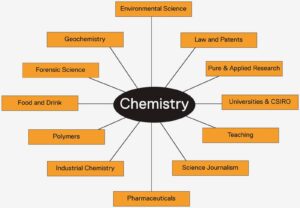
CAREER PROSPECTS IN CHEMISTRY
Chemistry is involved in our everyday lives and there is a vast range of careers open to those who have studied chemistry at any level. Great career opportunities exist both inside and outside the laboratory. You can choose a career from different fields such as:
- Pharmaceutical/drug development
- Science Education
- Chemical engineering
- Mining and Metallurgy
- Pure and applied chemistry
- Petroleum and Petrochemical Engineering
- Quality control
- Medicine and Surgery
- Chemical analysis/forensic science
- Environmental Chemistry
- Science Laboratory Technology
- Biochemistry etc
ASSIGNMENT
- State five applications of chemistry in our daily life.
- Mention five adverse effects of chemicals and how they can be controlled.
- Mention ten (10) career opportunities in chemistry.
- List the branches of chemistry.
First Term Chemistry Lesson Notes for Other Topics

Periodic Table
Explore lesson notes covering all topics.

Families Of Elements
Explore lesson notes covering all topics.

Families Of Elements II - Transition & Rare Earth Elements
Explore lesson notes covering all topics.

Oxidation And Reduction Reaction
Explore lesson notes covering all topics.

Electrolysis
Explore lesson notes covering all topics.
Electrolysis III - Faraday's Laws of Electrolysis
Explore lesson notes covering all topics.
Electrolysis II - Factors Affecting Preferential Discharge of Ions
Explore lesson notes covering all topics.
Electrochemical Cells
Explore lesson notes covering all topics.
Symbols, Formula And Equations II
Explore lesson notes covering all topics.
Chemical Combinations
Explore lesson notes covering all topics.
Symbols, Formula And Equations
Explore lesson notes covering all topics.
Particulate Nature Of Matter
Explore lesson notes covering all topics.

Alloys
Explore lesson notes covering all topics.
Alkanoic Acids/Carboxylic Acid
Explore lesson notes covering all topics.
Fats And Oils
Explore lesson notes covering all topics.


Lesson Notes for Other Classes

Basic 1 Lesson Note
The complete lesson note to guide your studies.

Basic 2 Lesson Note
The complete lesson note to guide your studies.
Basic 3 Lesson Note
The complete lesson note to guide your studies.

Basic 4 Lesson Note
The complete lesson note to guide your studies.
Basic 5 Lesson Note
The complete lesson note to guide your studies.
Basic 6 Lesson Note
The complete lesson note to guide your studies.