Citizenship I: Meaning & Benefit of Citizenship Education – SS1 Civic Education Lesson Note (First Term)
Download Lesson NoteLesson note at a glance
- Subject
- Civic Education
- Class
- SS1
- Term
- First Term
- Topic
- Citizenship I: Meaning & Benefit of Citizenship Education
- Order
- Topic 9 of 11 this term
- Reading time
- 3 min
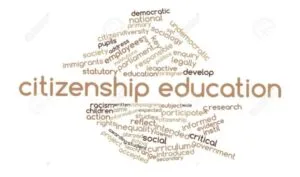
WHO is a citizen?
A citizen is a legal member of a community, state or country with full rights. He enjoys certain rights and privileges while he owes the states certain duties to perform. In other words, a citizen can be said to be a national who possesses political and legal rights. He performs his duties and owes allegiance to the government of the state. He/she is entitled to protection by the state in which he/she resides
Meaning of citizenship.
Citizenship is the legal right of a person to belong to a country and to enjoy full rights in a state, community or society and who in turn perform certain duties and obligations to the state. It is a state of being vested with the rights, privileges and duties of a state. Citizenship is the status of a person recognized under the custom or law as being a legal member of a sovereign state or part of a nation.
Put simply, citizenship is the right which every citizen has to belong to a state or a country. Citizenship entails rights and duties. For a citizen to enjoy his/her rights, he/she must perform certain duties and obligations to the state. In the same vein, the state must guarantee and protect the rights of its citizens once their duties are discharged.
What is citizenship education?
Citizenship education is a process of enlightening or training citizens on their rights and responsibilities. It is a form of education given to citizens to make them responsible individuals who are committed to the meaningful development of their societies. Also, it is a type of education which instils desirable values, attitudes, skills and knowledge into individuals to enable them to participate in their group or adjust functionally as good
Goals of citizenship education
- To balance regional and cultural diversity with national unity
- To eliminate inequalities related to race, gender, age, class, and ethnicity
- To ensure the successful functioning of the economy
- To equip young people to deal with situations of conflict and controversy knowledgeably and tolerantly.
- To understand the consequences of their actions and those of the adults around them.
- To recognize bias, evaluate an argument, weigh evidence, and look for alternative interpretations, viewpoints and sources of evidence.
- To give good reasons for the things they say and do, and to expect good reasons to be given by others.
- To build character and development, such as communication, initiative, social interaction and teamwork the soft skills that employers are crying out for.
Benefits of citizenship education
- Promotes Good Values: It teaches the importance of honesty, respect, and responsibility.
- Encourages Active Participation: Students learn how to be involved in their communities and make a positive impact.
- Develop Critical Thinking: It helps students think about issues in society and find solutions to problems.
- Fosters Tolerance: It teaches respect for different cultures, beliefs, and opinions.
- Builds Awareness: Students become more aware of their rights and duties as citizens.
- Enhances Social Skills: It encourages teamwork, communication, and understanding in diverse groups.
- Prepares for Leadership: It helps students develop the skills needed to lead and make informed decisions.
This term's Civic Education topics
SS1 First Term · 11 topics
- Responsibilities of Individuals and Groups in Maintaining UDHR
- Values I
- Values II: Community Service
- Values III: Opportunity to Defend Oneself
- HIV/AIDS I
- HIV/AIDS II
- Youth Empowerment I
- Youth Empowerment II
- Citizenship I: Meaning & Benefit of Citizenship Education
- Citizenship II: Functions of Government
- Nationalism
First Term Civic Education Lesson Notes for Other Topics
Ways Through Which Civic Education Can Be Important at Home
Read the full lesson note.
Meaning of Civic Education
Read the full lesson note.
Ways Through Which Civic Education can be Important at School
Read the full lesson note.
Ways Through Which Civic Education can be Important - The Media
Read the full lesson note.

Ways Through Which Civic Education Can be Important to the Society
Read the full lesson note.

Good Virtues
Read the full lesson note.

Values that Show Good Morals in Our Society
Read the full lesson note.
Public Health Enlightenment
Read the full lesson note.
Values that Show Bad Morals in Our Society
Read the full lesson note.
National Honors Award
Read the full lesson note.
National Heroes and Heroines
Read the full lesson note.
Reasons for National Honors Award
Read the full lesson note.

Concept of Valuing Nigeria Goods
Read the full lesson note.

Reasons for Valuing Nigeria Goods and Examples
Read the full lesson note.
Benefits of Patronizing Nigerian Goods
Read the full lesson note.
Lesson Notes for Other Classes

Basic 1 Lesson Note
The complete lesson note to guide your studies.
Basic 2 Lesson Note
The complete lesson note to guide your studies.

Basic 3 Lesson Note
The complete lesson note to guide your studies.
Basic 4 Lesson Note
The complete lesson note to guide your studies.
Basic 5 Lesson Note
The complete lesson note to guide your studies.
Basic 6 Lesson Note
The complete lesson note to guide your studies.