
Nigeria’s Foreign Policy SS3 Government Lesson Note
Download Lesson NoteTopic: Nigeria’s Foreign Policy
NIGERIA’S FOREIGN POLICY
Foreign policy refers to the decisions and actions taken by the policymakers of a state to pursue its interest within the global system. It can also be seen as a prudent course of action adopted by a state to achieve a certain national interest. The primary task of those involved in foreign policy is to promote the national interest of the country. The main target of foreign policy is to influence the decisions and actions of other nations in the international system.
AIMS AND OBJECTIVES OF NIGERIA’S FOREIGN POLICY
The aims and objectives of Nigeria’s foreign policy were first identified by the Prime Minister, Alhaji Tafawa Balewa and enunciated by Gen. Olusegun Obasanjo as follows:
- To promote the national interest of the country and the citizens.
- To promote friendship and co-operation among other nations.
- To uphold the principle of non-alignment with any power bloc.
- To show respect for the sovereign equality of all nations.
- To defend the sovereignty, independence and territorial integrity of Nigeria.
- To defend and promote world peace
- To assist African states in search of solutions to their problems.
NIGERIA FOREIGN POLICY SINCE INDEPENDENCE
Since independence, there has been a succession of military and civilian administrations whose foreign policy differs in terms of ideology, style and the personality of the leaders.
Nigeria’s foreign policy since independence is grouped into the following different phases;
- The Balewa Era (1960-1966)
- Gowon Era (crisis and civil war period, 1966-1970)
- Gowon Era (post-war era, 1970-1975; reconciliation, reconstruction and rehabilitation)
- Murtala/Obasanjo Era (1975-1979)
- The Second Republic Era (1979-1983)
- Buhari/Idiagbon Era (1983-1985)
- Babangida’s Era (1985-1993)
- Shonekan/Abacha’s Era (1993-1998)
- Abubakar Era (1998-1999)
BALEWA ERA (1960-1966)

- The government pursued the policy of non-alignment
- It was involved in the decolonization process in Africa
- The government recognized Africa as the centrepiece of Nigeria’s foreign policy
- It broke diplomatic ties with France over the testing of an atomic bomb in the Sahara Desert
- It supported the expulsion of South Africa from the Commonwealth in 1961
GOWON ERA (1966-1975)

- Nigeria’s foreign policy shifted from the West to the East
- The administration applied the 3Rs (Reconciliation, Reconstruction and Rehabilitation) after the Civil War
- The administration accepted the principle of non-interference in the sovereignty of African States
- It played a crucial role in the establishment of ECOWAS
MURTALA/OBASANJO ERA (1975-1979)

- This regime favoured decolonization and self determination of African States
- It gave its support to the struggle against apartheid policy in Africa
- The regime inaugurated a national agricultural programme called; Operation Feed the Nation (O.F.N.) in 1978.
SHAGARI ERA (1983-1985)
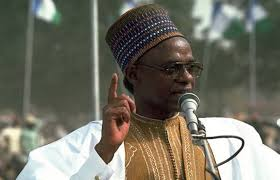
- The administration supported Zimbabwe’s independence
- This regime witnessed a lack of dynamism and radicalism in Nigeria’s foreign policy
- The regime was involved in financial mismanagement of her economic resources.
BUHARI ERA

- This regime expelled all the West Africans living illegally in the country.
- Relations with Britain were adversely affected during this regime.
- This administration maintained a strong anti-apartheid posture against South Africa
BABANGIDA ERA (1985-1993)
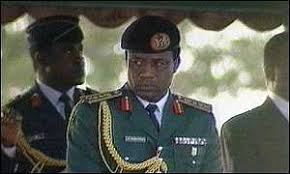
- This regime tried to bring Nigeria back to the forefront of international relation
- This regime launched a crusade against the dumping of toxic and retro-active waste in the continent
- It introduced economic diplomacy into Nigeria’s foreign policy.
- Nigeria was committed to a functional ECOWAS.
- Nigeria became very active in the area of conflict resolution and peacekeeping. operation. This led to the establishment of ECOWAS Monitoring Group (ECOMOG)
SHONEKAN/ABACHA ERA
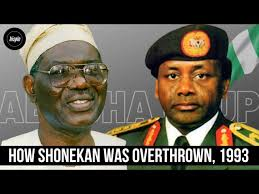
- This administration helped in restoring peace in Liberia.
- The regime adopted a confrontational posture with the international community.
- The regime was accused of abuse of human rights and as a result Nigeria was
- suspended from the CommonWealth.
ABUBAKAR ERA (1998-1999)

- The policy of reconciliation was embarked upon by this administration
- Those who were imprisoned by Abacha regained their freedom, while a transition programme was announced and carefully implemented.
EVALUATION:
- State 4 benefits of interactions among nations
- State 3 negative effects of interactions among nations.
- What is Foreign Policy?
- State four aims and objectives of Nigeria’s foreign policy
CLASSWORK: As in evaluation
CONCLUSION: The teacher commends the students positively
First Term Government Lesson Notes for Other Topics

Electoral Process
Explore lesson notes covering all topics.
Franchise/Suffrage
Explore lesson notes covering all topics.
Types Of Electoral Systems
Explore lesson notes covering all topics.
Electoral Commission And Officials
Explore lesson notes covering all topics.

Public Opinion
Explore lesson notes covering all topics.
Public Administration
Explore lesson notes covering all topics.

Local Government
Explore lesson notes covering all topics.

Public Corporations
Explore lesson notes covering all topics.
Introduction To Government
Explore lesson notes covering all topics.

Basic Concepts Of Power And Authority
Explore lesson notes covering all topics.
Legitimacy And Sovereignty
Explore lesson notes covering all topics.
Democracy
Explore lesson notes covering all topics.

Communalism And Feudalism
Explore lesson notes covering all topics.

Socialism And Capitalism
Explore lesson notes covering all topics.
Fascism And Totalitarianism
Explore lesson notes covering all topics.

Lesson Notes for Other Classes

Basic 1 Lesson Note
The complete lesson note to guide your studies.

Basic 2 Lesson Note
The complete lesson note to guide your studies.

Basic 3 Lesson Note
The complete lesson note to guide your studies.

Basic 4 Lesson Note
The complete lesson note to guide your studies.
Basic 5 Lesson Note
The complete lesson note to guide your studies.

Basic 6 Lesson Note
The complete lesson note to guide your studies.