
Minor Political Crisis In Nigeria SS2 Government Lesson Note
Download Lesson NoteTopic: Minor Political Crisis In Nigeria
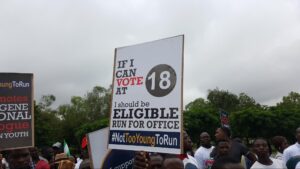
KANO RIOT OF 1953
A serious riot broke out in the ancient city of Kano in Northern Nigeria on May 16 1953. In March 1953, a member of the Action Group (AG) in the House of Representatives, Chief Anthony Enahoro, moved a motion requesting that Nigeria should be granted self-government in 1956. The leader of the Northern People’s Congress (NPC), Sir Ahmadu Bello, moved a countermotion. He proposed an amendment that self–government should be granted as soon as practicable. This led to disagreement over the motion and equally resulted in a strained relationship between the northern and southern leaders. All the AG and NCNC members in the house walked out as a result of the adjournment motion.
When the northern delegates left the house they were confronted by hostile crowds in Lagos who insulted, jeered and called them all sorts of names. Members of the northern delegation were embittered and in their Eight Point Programme in the Northern Regional Legislative House, they sought secession. The last straw that broke the camel’s back was a tour by a delegation of the AG and NCNC led by Chief S.L. Akintola. That tour which was aimed at campaigning for self-government acted as the immediate cause of the Kano riot. It sparked off a chain of disorder that culminated in the riot.
Political Implications Of The Kano Riot
- The riot worsened the relationship between the northern and southern leaders.
- The riot showed that only a federal system of government could hold Nigeria together.
- The riot ushered in the London Constitutional Conference of 1953.
- The riot also brought about a temporary working alliance between the NCNC and the Action Group.
THE CENSUS CRISIS OF 1962/63
A population census was conducted in Nigeria in 1962, but the outcome of the result was widely criticized. Some people claimed it was rigged and should be cancelled. The government had to cancel it and another one was proposed in 1963.
A census board was set up under the authority of the prime minister, to handle the 1963 population census. A new census was conducted in November 1963 and in February 1964 the provisional figures that put the population of Nigeria at 55.7 Million were published. A breakdown of the figures gave the north 29.8 Million, East 12.4 Million, West 10.3 Million, Mid-West 2.5 Million and Lagos 0.7 Million. However, it was accepted by the federal government, as well also the Northern and Western Regions.
The Eastern and Mid-Western Regions rejected the figures outright claiming that they were inflated and characterized by gross irregularities and inadequacies. The Eastern Region went to the Supreme Court challenging the authenticity and the Federal Government’s acceptance of the results.
The court ruled in favour of the Federal Government, stating that Eastern Region did not have a locus standing to sue on the issue. These figures, therefore, remained the official figures used as base figures for projections for all developmental matters, constituency delimitations, allocation of seats to the parliament, boundary adjustments, etc.
ASSIGNMENT
- The 1962 population census was criticized because —- (a) people were killed (b) it was claimed to be rigged (c) some areas were neglected (d) it was free and fair
- The prime minister of Nigeria during the 1962/63 census was —- (a) Ernest Ikoli (b) Nnamdi Azikiwe (c) Chief Obafemi Awolowo (d) Abubakar Tafawa Balewa
In the 1963 census, the Northern
- Region had ____ figures —- (a) 12.4 Million (b) 10.3 Million (c) 29.8 Million (d) 17.5 Million
- All the following were the political implications of the Kano Riot except —-
(a) It united the Northern and Southern Region
(b) it ushered in the constitutional conference of 1953
(c) It worsened the relationship between the Northern and Southern leaders
(d) It brought the unitary system of government
- The motion for self-government was moved by —-
(a) Chief Anthony Enahoro (b) Chief Obafemi Obasanjo (c) S.A. Akintola (d) Nnamdi Azikiwe
Third Term Government Lesson Notes for Other Topics
Development Of Political Parties
Explore lesson notes covering all topics.
Development Of Political Parties III
Explore lesson notes covering all topics.
The Structure Of Nigerian Federalism
Explore lesson notes covering all topics.
Federalism
Explore lesson notes covering all topics.
Development Of Political Parties II
Explore lesson notes covering all topics.
Electoral Crisis
Explore lesson notes covering all topics.
Basic Principles Of Government: Rule Of Law
Explore lesson notes covering all topics.
Fundamental Human Rights
Explore lesson notes covering all topics.
Separation Of Power
Explore lesson notes covering all topics.
Intergroup Relations
Explore lesson notes covering all topics.

Pressure Groups
Explore lesson notes covering all topics.
Political Parties And Party System
Explore lesson notes covering all topics.
Citizenship
Explore lesson notes covering all topics.

Centralization And Decentralization
Explore lesson notes covering all topics.
Representative Government & Popular Participation
Explore lesson notes covering all topics.


Lesson Notes for Other Classes

Basic 2 Lesson Note
The complete lesson note to guide your studies.

Basic 3 Lesson Note
The complete lesson note to guide your studies.

Basic 4 Lesson Note
The complete lesson note to guide your studies.
Basic 5 Lesson Note
The complete lesson note to guide your studies.

JSS1 Lesson Note
The complete lesson note to guide your studies.

JSS2 Lesson Note
The complete lesson note to guide your studies.