
Irrigation Agriculture In Nile Basin And The Niger Basin SS2 Geography Lesson Note
Download Lesson NoteTopic: Irrigation Agriculture In Nile Basin And The Niger Basin
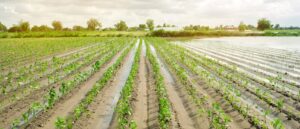
Irrigation agriculture is the type of agriculture which involves the artificial application of water to soil or land for farming purposes. Irrigation is practised in areas where rainfall is insufficient like Egypt and Sudan in the Nile Basin (using River Nile) and Mali and Northern Nigeria in the Niger Basin using River Niger.
Irrigation makes farming possible throughout the year. River Nile is so important to Egypt hence the popular saying No Nile, No Egypt.
NEEDS FOR IRRIGATION
- Rainfall is low and unreliable in both Nile and Niger basins.
- Both areas are dry.
- High rate of evaporation in the areas.
FACTORS THAT FAVOUR IRRIGATION AGRICULTURE
- Presence of rivers like River Nile and Niger.
- Presence of fertile alluvial soils.
- Incidence of low rainfall.
- Incidence of high rate of evaporation.
- The need to control flooding.
- Resourcefulness of the people.
- Presence of large population.
- The quest to increase food production.
IMPORTANCE OF IRRIGATION
- It makes farmers less dependent on rainfall.
- It makes early planting possible.
- It enables farmers to cultivate one crop twice or thrice on the same piece of land in a year.
- It increases the yield of crops.
- It helps to reduce salt concentration in the soil.
AREAS COVERED BY IRRIGATION
Irrigation agriculture is practised in areas such as:
- In the Nile Basin
- The Nile Delta
- The Nile Valley
- The Geizira plain or the manager extension
- The Lakeshores
- Aswan (Egypt)
- Khasimel Girba (Egypt)
- Sennar and Kenena regions of Sudan.
- In the Niger Basin
- Inland Niger Delta in Mali
- The Niger Valley
- The Lakeshores e.g. Kainji Lake
Similarities Between The Nile And Niger Irrigation Practices:
- Both irrigation practices depend on large dams.
- Both practices are perennial.
- Both use carnal to channel their waters.
- The manual method is used in both areas.
- They both grow food crops e.g. cereal and vegetation/cash crops e.g. cotton & sugar.
- Both have small and large farms.
- Both could be owned by both the government and individuals.
REASONS WHY IRRIGATION IS MORE IMPORTANT IN THE NILE BASIN THAN IN THE NIGER BASIN
- The Nile Basin (especially in Egypt) occupies more desert areas than the Niger basin.
- There are richer alluvial plains in the Nile than in the Niger Basin.
- There is a higher population in the Nile basin than in the Niger basin (This leads to greater demand for food production).
- The Nile basin is used for more cash crop (e.g. cotton) production.
CROPS CULTIVATED
- In the Nile Basin: Crops cultivated include cotton, sugar cane, millet, wheat, maize and rice.
- In the Niger Basin: Crops cultivated include groundnut, maize, guinea-corn, onions, sugar cane and rice.
METHODS OF IRRIGATION IN USE
The methods employed in both Nile and Niger Basins are the same. They include:
- Basin Irrigation Method:
This occurs during the annual flooding of rivers which occurs between August and October as a result of the heavy summer rain. As the river overflows its bank’s basins are created on the farmland to trap the waters and soak the farmland, to form aluminium The method is ancient and almost obsolete because it delays the farming process.
2. Shaduf Irrigation: This involves a hand-operated lever lifting buckets of water from the river to the narrow channels running along ridges or patches of irrigation.
3. Sakia Irrigation: This is the use of animals such as oxen, donkeys, Buffalo or camels to bear containers around the body to deposit water to nearby farms.
4. The Use Of Pumps: It involves the use of generators or pumping machines to get water out of the rivers or wells to farmland. This sometimes is also referred to as Sprinkler irrigation.
5. Manual Methods: This is the method where the local farmers use buckets and other water containers to fetch water from the river and pourtittofarmland
6. Perennial Method: This involves the use of dams, barrages and canals to store water and the water is released to farmlands during farming season. It promotes the growth of crops clearround.
PROBLEMS OF IRRIGATION
Some of the problems associated with irrigation include:
- Fluctuation in the volume of water in rivers can result in low yield of crops.
- Irrigation equipment is expensive to purchase.
- The construction of dams has led to the displacement of people from their original homelands
- Irrigation schemes require high technical know-how
- Most dams may collapse.
- This is the problem of silting of dams.
- Disaster can occur as a result of flooding.
ASSIGNMENT
- The Nile Basin depends on the River _______ for irrigation.(a) Nile (b) Benue (c) Niger
- Irrigation is practiced because ____ (a) Rainfall is in abundance (b) Rainfall is scarce (c) the grass is scarce
- One area of ligation ninn i theNiger Basin is ____ (a) Mali (b) Egypt (c) Sudan
- Irrigation makes food ____ (a) Scarce (b) Plenty (c) costly
(5) Irrigation in Egypt and Sudan is popular because the countries are located in ……..(a) the forest regions (b) the Mediterranean regions (c) the desert regions
Third Term Geography Lesson Notes for Other Topics

Hydrosphere (Oceanic Basins)
Explore lesson notes covering all topics.
Earthquakes
Explore lesson notes covering all topics.
Fruit Farming In The Mediterranean Regions Of Africa
Explore lesson notes covering all topics.

Climate And Vegetation
Explore lesson notes covering all topics.
Location, Size, Position And Political Division Of Africa
Explore lesson notes covering all topics.
Geographic Information System (GIS)
Explore lesson notes covering all topics.
Africa: Relief And Drainage
Explore lesson notes covering all topics.
Nigeria: Transportation
Explore lesson notes covering all topics.

Nigeria: Communication
Explore lesson notes covering all topics.

Manufacturing Industries In Nigeria
Explore lesson notes covering all topics.

Nigeria: Commercial Activities
Explore lesson notes covering all topics.

ECOWAS
Explore lesson notes covering all topics.
Map Reading And Measurements Of Distances On Maps
Explore lesson notes covering all topics.

Conventional Symbols Direction And Bearing
Explore lesson notes covering all topics.
Basic Concepts And Component Of GIS
Explore lesson notes covering all topics.


Lesson Notes for Other Classes
Basic 1 Lesson Note
The complete lesson note to guide your studies.

Basic 2 Lesson Note
The complete lesson note to guide your studies.

Basic 3 Lesson Note
The complete lesson note to guide your studies.

Basic 4 Lesson Note
The complete lesson note to guide your studies.

Basic 5 Lesson Note
The complete lesson note to guide your studies.

Basic 6 Lesson Note
The complete lesson note to guide your studies.