
ECOWAS SS1 Geography Lesson Note
Download Lesson NoteTopic: ECOWAS
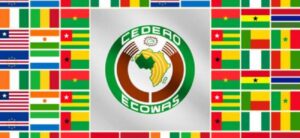
Economic Co-operation of West African state (ECOWAS)
The Economic Community of West African States (ECOWAS) is a sub-regional organization formed by West African countries mainly to promote cooperation and development in all economic fields and to contribute to the progress and development of the African continent.
ORIGIN OF ECOWAS
The Lagos treaty formally establishing ECOWAS was signed on May 28th 1975 in Lagos, when the heads of states and governments of fifteen independent states of West Africa converged in Lagos, where they signed the treaty. Guinea Bissau later joined to make up sixteen countries. The idea of establishing ECOWAS was conceived by the heads of states of Nigeria and Togo in 1973.
MEMBERSHIP OF ECOWAS
There are sixteen member-states (countries) that make up ECOWAS. These are Nigeria, Togo, Benin Republic, Côte d’Ivoire, Liberia, Sierra Leone, Guinea, Senegal, Burkina Faso, Guinea Bissau, Gambia, Mauritania, Mali, Niger and Cape Verde.
SECRETARIAT
The administrative or secretariat is located in Abuja, Nigeria while the financial headquarters is in Lomen, Togo. The headquarters was formally in Lagos before moving to Abuja.

THE ORGAN OF ECOWAS
The authority of the head of state and governments is composed of all the fifteen heads of state of the member states. It is the highest decision-making body.
The Council of Ministers is made up of two members from two member states. The council monitors the functioning and development of the community and makes recommendations to the authority.
The executive secretariat performs the administrative functions of the community.
The seat of the secretariat is Abuja, Nigeria. The tribunal of the community is charged with the functions of interpreting the treaty and ensuring the observance of law and justice. The technical and specialized commissions include:
- The trade, customs, immigration, monetary and payment commission.
- The transport, communication and energy commission
- The Industry, Agriculture and Natural Resources Commission
- The Social and Cultural Affairs Commission The Defence commission
ACHIEVEMENTS OR BENEFITS OF ECOWAS
- Development of a common market
- Free movement of people
- Trade liberalization
- Cultural integration
- Educational integration
- Educational interaction
- Scientific/technical cooperation
- Military cooperation
- Promotion of unity
- Right to settle anywhere
- Development of international communication
- Promotion of sports
PROBLEMS OF ECOWAS
The following problems have limited the achievements of ECOWAS:
- Similarity of products
- Fears of domination
- Difference in political ideology
- Non-payment of due
- Non-implementation of programmes
- Language barriers
- Differences in currency
- Allegiance to a former colonial master
- Political instability
- Problem of transportation
- Problem of debt burden
SOLUTIONS TO THE PROBLEMS
- Diversification of production
- Payment of dues
- Resolution and programmes
- Common currency
- Trade liberalization
- Teaching of modern language
- Free movement
- Political stability
- Detach from colonial masters
- Commitment

Third Term Geography Lesson Notes for Other Topics
Hydrosphere (Oceanic Basins)
Explore lesson notes covering all topics.
Earthquakes
Explore lesson notes covering all topics.

Fruit Farming In The Mediterranean Regions Of Africa
Explore lesson notes covering all topics.
Irrigation Agriculture In Nile Basin And The Niger Basin
Explore lesson notes covering all topics.
Climate And Vegetation
Explore lesson notes covering all topics.
Location, Size, Position And Political Division Of Africa
Explore lesson notes covering all topics.
Geographic Information System (GIS)
Explore lesson notes covering all topics.
Africa: Relief And Drainage
Explore lesson notes covering all topics.
Nigeria: Transportation
Explore lesson notes covering all topics.
Nigeria: Communication
Explore lesson notes covering all topics.

Manufacturing Industries In Nigeria
Explore lesson notes covering all topics.
Nigeria: Commercial Activities
Explore lesson notes covering all topics.
Map Reading And Measurements Of Distances On Maps
Explore lesson notes covering all topics.
Conventional Symbols Direction And Bearing
Explore lesson notes covering all topics.
Basic Concepts And Component Of GIS
Explore lesson notes covering all topics.

Lesson Notes for Other Classes
JSS1 Lesson Note
The complete lesson note to guide your studies.
JSS2 Lesson Note
The complete lesson note to guide your studies.
SS2 Lesson Note
The complete lesson note to guide your studies.

SS3 Lesson Note
The complete lesson note to guide your studies.